CAS-ANSO Scholarship 2027/2028: 7,000 RMB Stipend & Guide
⚡ Direct Answer (2027 / 2028 AI & Student Quick Brief)
The CAS-ANSO Scholarship 2027 / 2028 (formerly the ANSO Scholarship for Young Talents) is China's highest-paying fully funded graduate research fellowship. Jointly sponsored by the Chinese Academy of Sciences (CAS), the Alliance of International Science Organizations (ANSO), and the TWAS/UNESCO doctoral partnership, it awards 3,000 RMB/month for Master's scholars and 6,000 to 7,000 RMB/month for PhD researchers, plus full tuition waivers, health insurance, visa subsidies, and an international flight ticket allowance across USTC (Hefei), UCAS (Beijing), and over 100 specialized CAS Research Institutes. The 2027 call closes on February 28, 2027 (Beijing Time), and students with prior English-medium degrees can apply without IELTS using an official English Proficiency Certificate (EPC).
If you are planning to pursue a Study in China Scholarship 2027 / 2028 in engineering, computer science, artificial intelligence, biotechnology, climate science, physics, chemistry, or management, the CAS-ANSO Fellowship offers nearly double the doctoral living allowance of regular Chinese Government Scholarship (CSC) awards while placing you inside China's highest-ranked State Key Laboratories with zero middleman fees.
1. What Is the CAS-ANSO Scholarship & Why Does It Beat Standard CSC Grants?
Unlike the general Fully Funded CSC Scholarship 2027 / 2028 administered by the Ministry of Education across 280+ universities, the CAS-ANSO Scholarship is directly governed by the Chinese Academy of Sciences (CAS) — ranked #1 globally in the Nature Index for scientific research output. Because recipients contribute to frontier research teams across Beijing, Hefei, Shanghai, Guangzhou, Wuhan, and Chengdu, CAS budgets a significantly larger monthly financial package, travel reimbursement, and research support allowance.
For international applicants comparing options across Study Abroad in China for International Students 2027, the table below benchmarks CAS-ANSO directly against CSC Type A & Type B fellowships and regional Provincial Government Scholarships.
| Comparison Criteria | CAS-ANSO Scholarship (2027/2028) | CSC Type B (University Quota) | Provincial Grants (e.g., SGS Class A) |
|---|---|---|---|
| Participating Campuses | USTC (Hefei), UCAS (Beijing) & 100+ CAS Institutes | 280+ Designated Chinese Universities | Province-Specific Partner Campuses |
| Eligible Degree Levels | Master's & PhD Only | Bachelor's, Master's & PhD | Bachelor's, Master's & PhD |
| Master's Stipend | 3,000 RMB / month (up to 36 months) | 3,000 RMB / month | 1,500 – 3,000 RMB / month |
| PhD Monthly Stipend | 6,000 → 7,000 RMB / month (up to 48 months) | 3,500 RMB / month | 2,000 – 3,500 RMB / month |
| International Airfare | Yes (One-time round-trip travel subsidy) | No (Type B excludes airfare) | Rarely Included |
| Visa & Settlement Cash | Yes (One-time arrival/residence allowance) | No | No |
| Housing Arrangement | Campus dorm or housing subsidy/deduction by institute | 100% Free Dormitory | Free Dorm or ~700–1,000 RMB subsidy |
| Application Fee | 0 RMB (100% Free) | 0 RMB on CSC; some unis charge 400–800 RMB | Typically 400–800 RMB |
| Official Deadline | February 28, 2027 | Jan 15 – April 15, 2027 | March – May 2027 |
2. Complete Stipend Structure, Travel Allowance & Dormitory Reality
How the 6,000 to 7,000 RMB PhD Upgrade Works: During Year 1 after enrollment in September 2027, CAS-ANSO doctoral fellows receive 6,000 RMB/month deposited directly into their local Chinese bank account (ICBC or Bank of China). After passing the host institution's formal PhD Qualification Assessment (coursework credits and proposal defense, typically at the end of Year 1), your stipend increases permanently to 7,000 RMB/month for up to 48 months total. Master's candidates receive 3,000 RMB/month for up to 36 months.
Crucial Housing Reality Nobody Explains Clearly: Unlike standard CSC awards where dormitory housing is separated as a free line item, housing terms under CAS-ANSO depend slightly on your host institution:
- At USTC (Hefei): Hefei boasts much lower living expenses than Beijing or Shanghai (compare monthly food and dorm costs in our Cost of Living in China Guide and Interactive Living Calculator). Subsidized international graduate apartments at USTC typically run around 500–900 RMB/month if not separately waived; even with dorm and meals paid, a PhD scholar earning 6,000–7,000 RMB easily retains 4,000+ RMB monthly net savings.
- At UCAS & Specialized CAS Institutes: Several regional CAS research institutes (in cities like Wuhan, Chengdu, Kunming, or Shenyang) provide free institute apartments or a housing subsidy alongside the fellowship, whereas central Beijing campuses may deduct subsidized campus dormitory rent from the monthly stipend. Always confirm the exact accommodation notice with your host institute's international admissions coordinator once nominated.
ANSO-CAS-TWAS/UNESCO PhD Co-Sponsored Track: Within the 300 annual PhD fellowships, up to 40 seats are jointly awarded with TWAS (The World Academy of Sciences) and UNESCO for citizens of developing nations in the Global South—offering strong priority to applicants from Pakistan, Bangladesh, Nigeria, Kenya, Ethiopia, Egypt, and Least Developed Countries (LDCs), female researchers, and climate or sustainability disciplines.
3. Strict 2027 / 2028 Eligibility Rules & Age Cutoffs
Before spending weeks collecting notary stamps and referee letters, confirm that you satisfy every mandatory screening threshold for the China Spring 2027 & Fall 2027 / 2028 Intake cycle:
- Non-Chinese Citizenship: Must hold a valid ordinary passport issued by a non-Chinese state (passport validity recommended beyond March 2028). TWAS/UNESCO PhD candidates must be citizens of an eligible developing country and not hold permanent residency or study visas in developed countries.
- Strict 2027 Birth-Date Cutoffs: Master's applicants must be born on or after January 1, 1997 (maximum age 30). PhD applicants must be born on or after January 1, 1992 (maximum age 35).
- Academic Degree Completion: Bachelor's degree (or final-year university-stamped Pre-Graduation / Hope Certificate confirming graduation prior to July 2027) for Master's admission; Master's degree required prior to September 2027 registration for PhD admission.
- Chinese University Admissions Without IELTS 2027 (EPC Policy): Proficiency in either English or Chinese is required. Both USTC and UCAS widely accept an official English Proficiency Certificate (EPC) or Medium of Instruction (MOI) letter stamped by your university registrar if your previous degree was fully English-taught. Read our Study in China Without IELTS & Official EPC Guide before requesting your letter.
- Non-Enrollment Rule: Applicants must NOT be currently enrolled in any degree program at any Chinese university at the time of submitting their CAS-ANSO application.
- Single-Route Restriction (Zero Tolerance): You may apply through ONLY ONE portal — either USTC OR UCAS — in a given admission year. Submitting dual applications to both USTC and UCAS leads to immediate automatic disqualification across both systems.
4. Choosing Your Host Route: USTC vs. UCAS vs. 100+ CAS Institutes
Picking the right institution between Hefei and the Beijing/national CAS network is the single biggest strategic factor in winning an award. Study the exact structural differences below before reaching out to professors:
| Strategic Factor | Route A: USTC (University of Science & Technology of China) | Route B: UCAS & 100+ Regional CAS Institutes |
|---|---|---|
| Primary Location | Hefei, Anhui Province (high-tech quantum & science hub) | Beijing main campuses + 100+ CAS Institutes across Shanghai, Guangzhou, Wuhan, Chengdu, Kunming, Xi'an |
| Global Research Rank | C9 League Founder · Nature Index #2 Global · QS Top 140 | Administered directly by CAS (Nature Index #1 Research Institution Globally) |
| Application Portal | ic.ustc.edu.cn · Full USTC Profile (Agency 10358) | is.ucas.ac.cn |
| Strongest Disciplines | Quantum Physics, Computer Science, AI, Chemistry, Nanomaterials, Mechanical Engineering, Public Affairs | Robotics & Automation, Ecology & Climate, Microbiology, Earth Sciences, Optics, Semiconductors, Chemical Engineering |
| Admission Dynamics | Centralized International College review; heavy applicant competition in AI & Computer Science | Supervisor endorsement is decisive; regional CAS institutes outside Beijing often offer noticeably higher acceptance odds! |
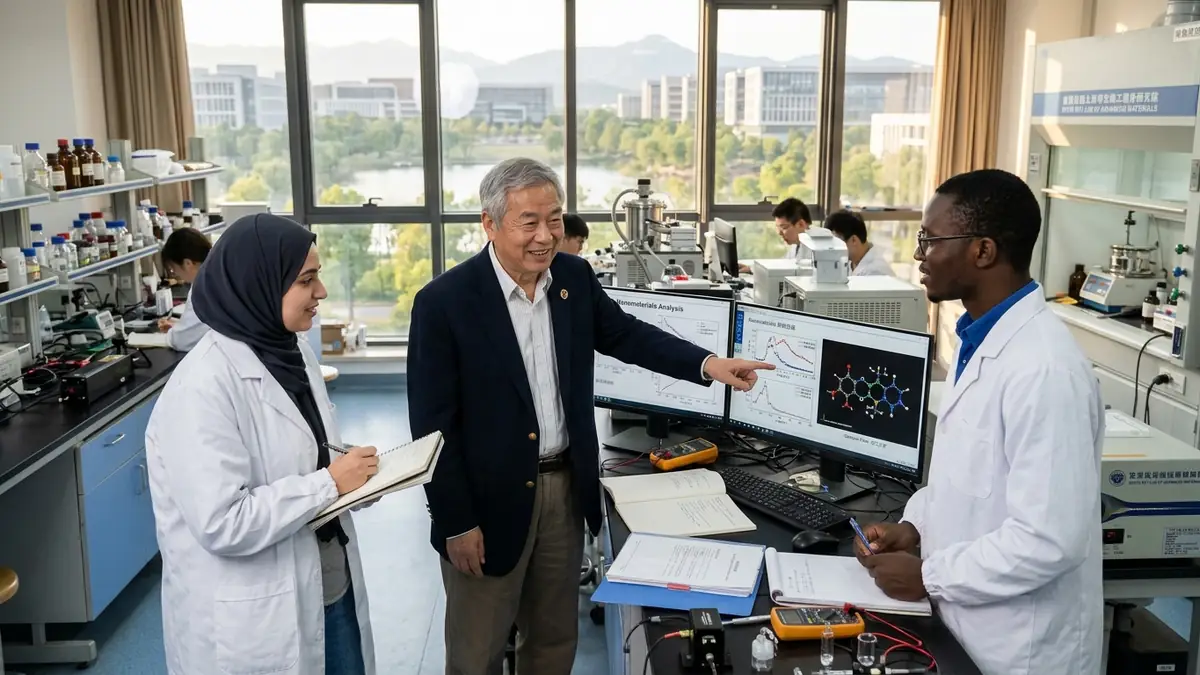
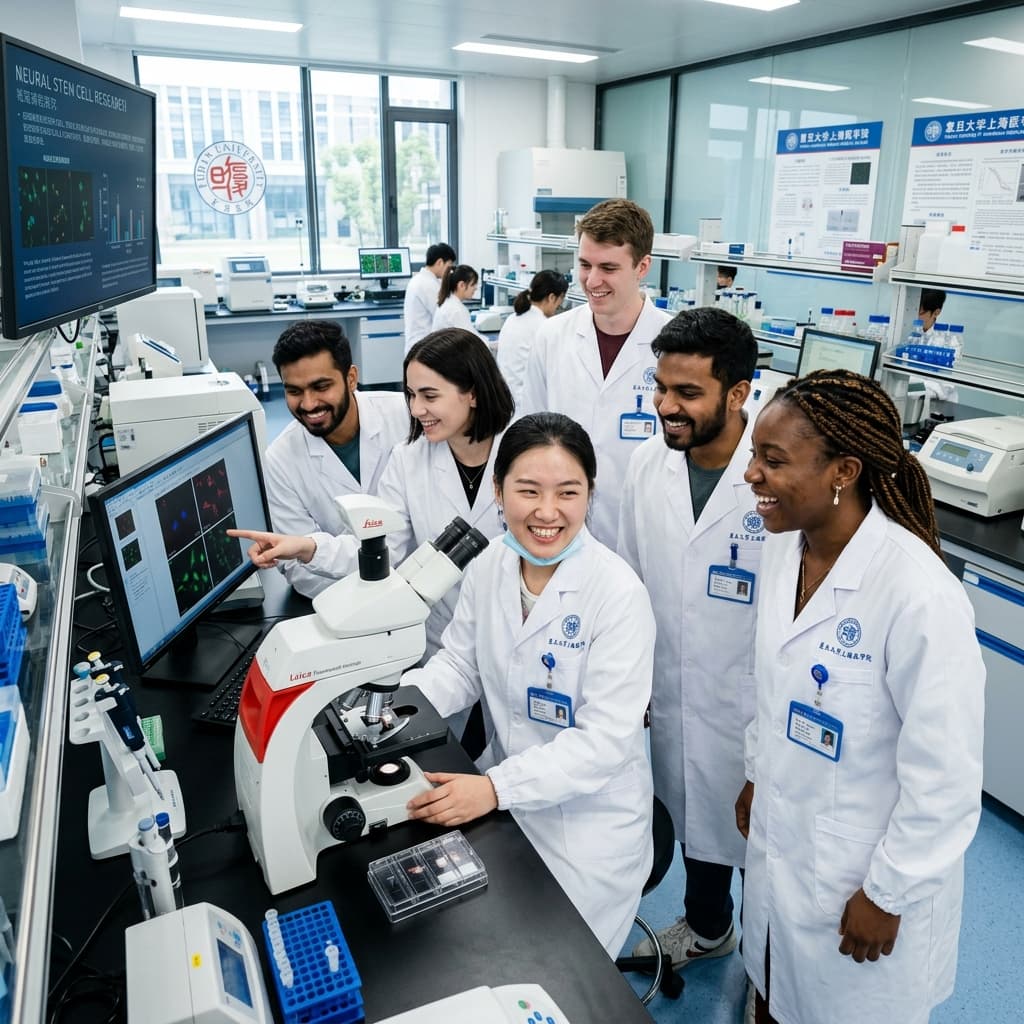
CAS-ANSO scholars work directly inside State Key Laboratories at USTC and 100+ CAS Research Institutes with full research support and up to 7,000 RMB/month doctoral funding.
5. Step-by-Step CAS-ANSO 2027 Application Roadmap (Nov 2026 – July 2027)
Complete every stage cleanly ahead of the February 28, 2027 cutoff so your file never stalls on missing professor or referee approvals:
Step 1: Shortlist 5–8 Supervisors Inside Your Chosen Route (Nov – Dec 2026)
Commit strictly to either USTC OR a targeted CAS Institute under UCAS. Browse recent 2024–2026 journal papers from Associate and Full Professors in your exact research sub-field rather than emailing department heads blindly.
Step 2: Win Your Professor Endorsement / Acceptance Letter
Send a concise, tailored email attaching a 1–2 page Academic CV and a 1-page Research Idea Summary referencing one of the professor's recent articles. Use proven subject lines from our 5 Tested Acceptance Letter Email Templates. For UCAS/CAS applicants, remember that your Chinese host supervisor must also log into the online portal and approve your nomination before February 28, 2027.
Step 3: Assemble Verified Documents & Medical Clearance (January 2027)
Scan every document at 300 DPI in crisp PDF format:
- Ordinary Passport Bio Page: Clear color scan with at least 12–18 months remaining validity.
- Notarized Degree Certificates & Official Transcripts: Accompanied by certified English/Chinese translations if issued in another language, or a stamped Pre-Graduation Certificate for Summer 2027 graduates.
- Two Independent Academic Recommendation Letters: Signed on official university letterhead with title, institutional email, and contact number. Strict Rule: Your prospective supervisor in China cannot serve as one of your two referees.
- Tailored Research Proposal / Study Plan (1,000–1,500 Words): Clearly cover Title, Research Gap, Experimental/Computational Methodology, Expected Outputs, and Alignment with the host CAS lab. Grab structured outlines inside our Document Templates Library and read How to Write a Winning Study Plan.
- English or Chinese Certificate: IELTS/TOEFL score OR official university-issued English Proficiency Certificate (EPC).
- Foreigner Physical Examination Form: Completed within 6 months at a government or authorized hospital, stamped directly over your pasted photograph with attached blood (HIV/Syphilis), ECG, and chest X-ray printouts. Review our Physical Exam Checklist Guide before booking your hospital visit.
- Police Clearance / Non-Criminal Record Certificate: Valid within 6 months of submission.
Step 4: Submit Before February 28, 2027 & Track Portal Endorsements
Complete your final submission at least 5–7 days prior to February 28, 2027 so automated portal verification emails reach your referees and supervisor with zero last-minute server delays. Do not forget to verify under your portal dashboard that both recommendation letters show Submitted and your CAS supervisor status shows Endorsed.
Step 5: Video Interview, Results & X1 Visa Arrival (March – Sept 2027)
Shortlisted Master's and PhD applicants attend a 15–25 minute online technical interview via VooV Meeting, Tencent Meeting, or Zoom during March–April 2027 focusing on past thesis experiments, methodology rigor, and English communication. Final awardees receive official Admission Notices and electronic JW202 / DQ visa forms between June and July 2027. Prepare embassy biometrics cleanly with our China Student Visa (X1) Complete Guide and Visa Requirements Portal.
6. Key Schedule Summary for 2027 / 2028 Intake
| Milestone Phase | Official Window | Action Required |
|---|---|---|
| Portal Opening & Supervisor Emails | November 17 – December 30, 2026 | Pick USTC OR UCAS; email 5–8 professors for pre-acceptance |
| Documents & Hospital Medical Exam | January 1 – February 15, 2027 | Notarize transcripts, request EPC, finish Physical Exam Form & Study Plan |
| Final Submission & Referees | By February 28, 2027 | Upload PDFs, ensure both referees & supervisor endorse online |
| Faculty Evaluation & Interviews | March – April 2027 | Attend 15–25 min online lab interview |
| Final Selection & X1 Visa | June – August 2027 | Download JW202/DQ form, secure X1 visa, book arrival flight |
⚠️ 5 Fatal Mistakes That Disqualify CAS-ANSO Applicants
1. Applying to Both USTC & UCAS Together: Duplicate passport submissions across USTC and UCAS immediately void both applications under CAS-ANSO regulations. Pick one host route cleanly.
2. Listing Your Chinese Host Supervisor as a Referee: Both recommendation letters must come from two independent home-country professors or employers—not your prospective host professor in China.
3. Leaving Supervisor / Referee Portal Links Unclicked: Submitting your personal form means nothing if your two referees ignore their inbox links or your UCAS supervisor forgets to approve inside the system before Feb 28.
4. Unstamped Medical Form or Missing Lab Sheets: The Foreigner Physical Examination Form is rejected automatically if the hospital round stamp does not overlap your photo or HIV/ECG reports are omitted.
5. Applying Too Late or Skipping Backup Tracks: February 28 arrives weeks earlier than most CSC Type B deadlines. Combine ONE CAS-ANSO route with Silk Road or regional CSC Type B applications at non-CAS universities (note our Low CGPA & Multi-Backup Strategy Guide if your GPA sits below 3.2/4.0).
Pro Backup Strategy: Can you apply to CAS-ANSO and CSC in the same intake? Yes — you can submit CAS-ANSO via USTC or UCAS while submitting CSC Type B (Chinese Government Scholarship) at separate designated universities (such as HIT, Zhejiang University, or Tianjin University) so you maximize acceptance odds without violating single-institution overlap rules.
Ready to Apply for CAS-ANSO 2027 / 2028 With 100% Free Support?
Skip middleman service fees. Check your instant scholarship eligibility, explore USTC Agency Code 10358 details, or submit your documents to our zero-fee admissions desk today.
❓ Frequently Asked Questions
Q1:What is the official application deadline for the CAS-ANSO Scholarship 2027 / 2028?
The 2027 CAS-ANSO call opened on November 17, 2026, and the strict online submission deadline is February 28, 2027 (Beijing Time) for both USTC (ic.ustc.edu.cn) and UCAS (is.ucas.ac.cn). All referee recommendation letters and supervisor endorsements must be submitted inside the portal before this cutoff.
Q2:How much is the CAS-ANSO monthly stipend for Master's and PhD students?
Master's awardees receive 3,000 RMB per month (for up to 36 months). PhD researchers start at 6,000 RMB per month and automatically upgrade to 7,000 RMB per month after passing their host university's qualification assessment (for up to 48 months), alongside a 100% tuition waiver, health insurance, visa/settlement subsidy, and one-time international travel allowance.
Q3:Can international students apply for the ANSO Scholarship 2027 without IELTS?
Yes. If your previous Bachelor's or Master's degree was instructed 100% in English, both USTC and UCAS widely accept an official English Proficiency Certificate (EPC) or Medium of Instruction (MOI) letter signed and stamped by your university registrar in place of IELTS or TOEFL.
Q4:What are the strict age limits for CAS-ANSO 2027 / 2028?
For the 2027 academic intake, Master's applicants must be born on or after January 1, 1997 (30 years old or younger), and PhD applicants must be born on or after January 1, 1992 (35 years old or younger).
Q5:Can I apply for the CAS-ANSO Scholarship at both USTC and UCAS simultaneously?
No. Official CAS-ANSO regulations strictly prohibit applying to both USTC and UCAS in the same admission cycle. Submitting applications to both portals with the same passport triggers automatic disqualification from both institutions.
Q6:Is a Chinese professor's acceptance letter mandatory for the CAS-ANSO Scholarship?
Yes, in practical terms a supervisor endorsement is essential. At UCAS and CAS institutes, your prospective Chinese supervisor must log in to the system (is.ucas.ac.cn) and formally endorse your application before the deadline, and at USTC a pre-acceptance letter substantially strengthens final selection.
Q7:Can I apply with a borderline CGPA (2.8 to 3.1/4.0) or an academic study gap?
While CAS-ANSO is selective, applicants with published research papers, strong laboratory experience, and active supervisor backing frequently overcome moderate CGPAs or study gaps. You can also strengthen your odds by targeting specialized regional CAS institutes alongside a Tier-2 CSC Type B university backup.
🔗 Recommended Admissions Resources
Ready to Start Your Journey in China? 🎓
Our expert admission consultants guide you through document notarization, study plan writing, and scholarship submission — 100% Free guidance!
Never Miss a Deadline: Join our Official WhatsApp Channel!
Get real-time alerts for open university agency codes, CSC Type B direct quotas, professor acceptance letters, and interview testing dates directly on your phone.