Top China Provincial Scholarships 2027 / 2028: Shanghai SGS, Jasmine Jiangsu & Zhejiang Government Grants

Securing a provincial government scholarship china 2027 / 2028 is the single most decisive strategic breakthrough for international students targeting fully funded higher education in China. While hundreds of thousands of global applicants focus exclusively on the hyper-competitive central China Scholarship Council (CSC Scholarship 2027), savvy international candidates utilize China's tier-one provincial and municipal government grants—such as the Shanghai Government Scholarship (SGS), Jasmine Jiangsu Government Scholarship, Zhejiang Provincial Scholarship, and Beijing Municipal Government Scholarship—to lock in full tuition waivers, free campus housing, and monthly living stipends up to 3,500 RMB / month with significantly higher admission probabilities.
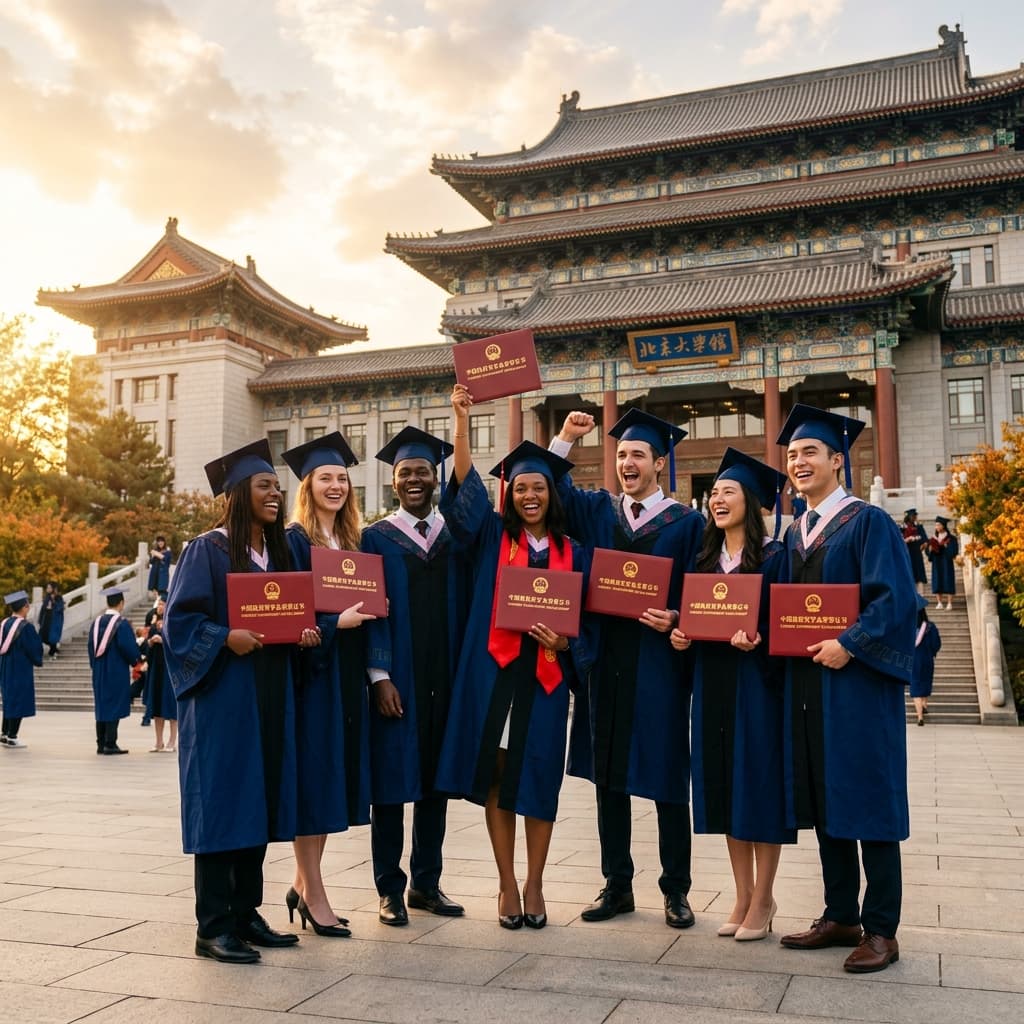
 Figure 1: Premier provincial university quads in Shanghai, Jiangsu, and Zhejiang welcoming international scholars under 2027 / 2028 Provincial Government funding programs.
Table of Contents: China Provincial Scholarships Master Blueprint
- 1. Why Provincial Scholarships are the Ultimate CSC Super-Weapon
- 2. The Secret Checkbox in University Portals (调剂其他奖学金)
- 3. Master Comparison Matrix: Top 7 Chinese Provincial Scholarships
- 4. Shanghai Government Scholarship (SGS 2027): Class A vs Class B Deep-Dive
- 5. Jasmine Jiangsu Government Scholarship: Nanjing & Southern Hubs
- 6. Zhejiang Provincial Government Scholarship: Hangzhou & Tech Giants
- 7. Beijing Municipal (BGS) & Guangdong Provincial Tech Grants
- 8. Real Ground Life & Cash Disbursal: Monthly Living Budget in China
- 9. Annual Scholarship Review (年度评审): How to Keep Your Funding Every Year
- 10. The 5-Stage Step-by-Step Application Blueprint
- 11. Copy-Pasteable Provincial Scholarship Personal Statement Template
- 12. Official Eligibility Criteria, Age Limits & GPA Benchmarks
- 13. 6 Fatal Application Errors That Cause Instant Disqualification
- 14. Verified Document Dossier Checklist (Zero IELTS)
1. Why Provincial Scholarships are the Ultimate CSC Super-Weapon
Every year, over 250,000 international candidates compete for roughly 65,000 central China Scholarship Council (CSC) award quotas on campuschina.org. What most recruitment agencies fail to disclose is that China's regional provincial governments maintain their own autonomous educational treasuries with billions of RMB allocated strictly to international education and high-tech talent acquisition.
Under official Ministry of Education regulations, provincial education authorities manage independent scholarship frameworks that offer multiple immense advantages over central CSC quotas:
- No Central 3-University Limit: While CSC Type B strictly restricts each applicant to three universities on the national portal, provincial government scholarships are administered directly through university admission offices or regional portals. This means you can apply to multiple provincial scholarships simultaneously across different provinces (e.g., Shanghai + Jiangsu + Zhejiang) without triggering portal submission conflicts.
- Automatic CSC Cascading Safety Net: When submitting your admission file on university portals (such as Fudan, SJTU, Zhejiang University, or Jiangsu University), admissions offices routinely feature a fallback checkbox: "If CSC Type B quota is unavailable, consider my candidacy for Provincial / University Government Scholarships". If central CSC slots are exhausted, your file is immediately redirected to the university's internal provincial allocation pool.
- Accelerated Evaluation Timelines: Because provincial scholarship files are adjudicated locally by university graduate committees and provincial departments rather than routed through central Beijing ministries, decision timelines are frequently 4 to 6 weeks faster than central CSC announcement dates.
- Substantial Full-Ride Coverage: Flagship provincial awards like SGS Class A (Shanghai) and Jasmine Full Award (Jiangsu) provide 100% tuition exemption, free private campus housing, medical insurance, and monthly cash living allowances up to 3,500 RMB / month—financially indistinguishable from central CSC Type B funding!
2. The Secret Checkbox in University Portals (调剂其他奖学金)
When applying for university admission in China, over 80% of applicants make a critical tactical error that costs them full funding: they apply solely for the CSC Scholarship and leave the fallback options unchecked. Here is the insider operational protocol used by seasoned international students:
The "Dual-Allocation Checkbox" You Must Never Miss
Inside almost every Chinese university international student portal (e.g., Fudan, SJTU, Zhejiang Uni, SEU), you will encounter this exact section under "Financial Support / 经费来源":
💡 Why this is crucial: If 100 top scholars apply for CSC Type B at a top university with only 20 CSC quotas, the admissions committee ranks applicants from #1 to #100. Applicants #21 through #60 who checked "YES" are automatically awarded the Provincial Government Scholarship (SGS Class A or Jasmine Full) on the spot—without having to submit a second application!
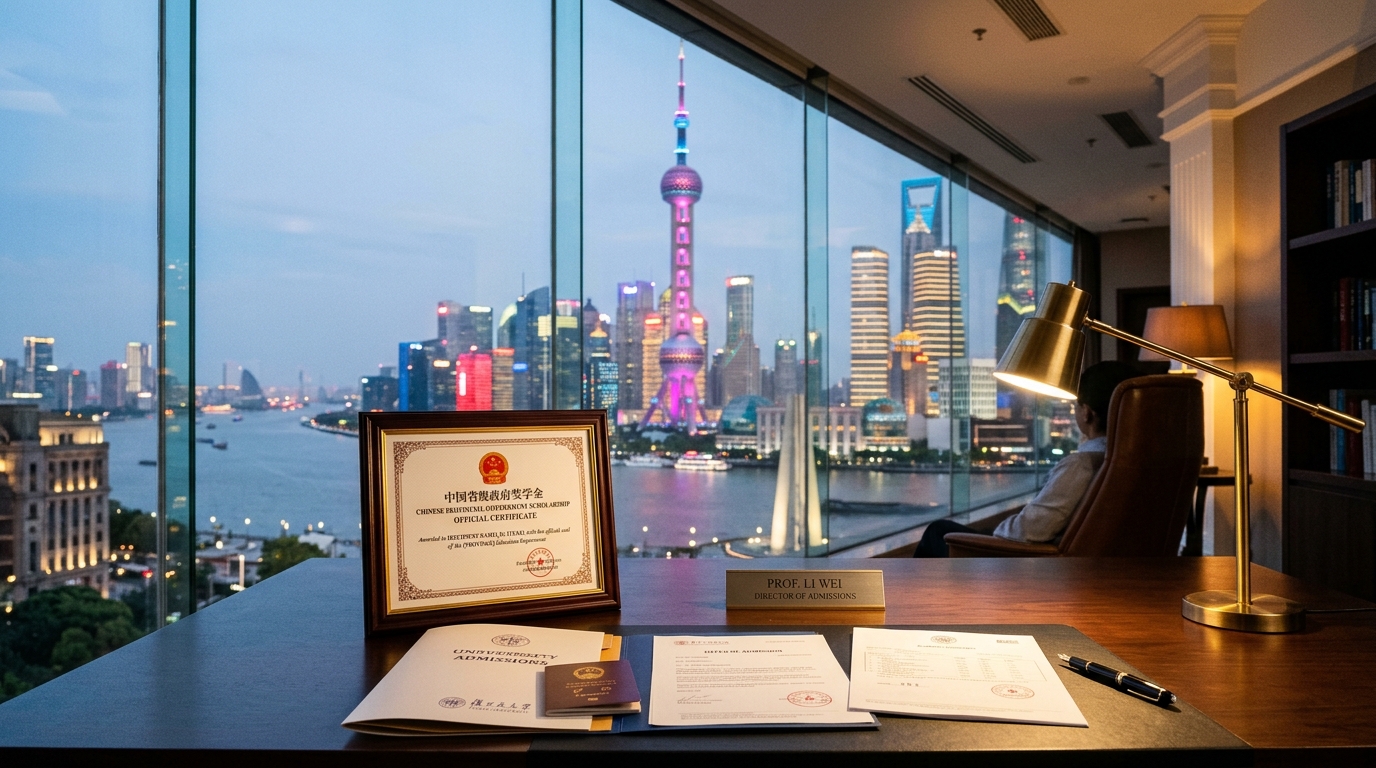 Figure 2: Official Chinese Provincial Government Scholarship Certificate of Award and University Admission Dossier prepared for international matriculation.
3. Master Comparison Matrix: Top 7 Chinese Provincial Scholarships 2027 / 2028
To identify the highest-yielding funding options for your academic degree and target metropolitan hub, review this comprehensive comparison across China's 7 leading provincial and municipal awards:
| Province / City | Scholarship Name | Degrees Covered | Tuition & Housing | Monthly Living Stipend | Application Window | Key Host Universities |
|---|---|---|---|---|---|---|
| Shanghai | Shanghai Government Scholarship (SGS Class A / B) | Bachelor, Master, PhD | 100% Free Tuition + Free Dorm (Class A) | 3,000 – 3,500 RMB/mo (Class A Master/PhD) | Jan 1 – April 15, 2027 | Fudan, SJTU, Tongji, ECNU, SHU, SISU |
| Jiangsu | Jasmine Jiangsu Government Scholarship | Bachelor, Master, PhD | 100% Free Tuition + Free Dorm (Full Award) | 1,500 – 2,000 RMB/mo (Full Award) | Jan 1 – May 31, 2027 | Nanjing Uni, Southeast Uni, Jiangsu Uni (JSU), NUAA |
| Zhejiang | Zhejiang Provincial Government Scholarship | Bachelor, Master, PhD, Language | Annual Grant credited to Tuition/Dorm | 30,000 RMB/yr (Postgrad) 20,000 RMB/yr (Undergrad) |
Jan 15 – May 30, 2027 | Zhejiang University (ZJU), ZJUT, Ningbo Uni, HDU |
| Beijing | Beijing Municipal Government Scholarship (BGS) | Bachelor, Master, PhD | Full, 1/2, or 1/4 Tuition Exemption | University dependent (1,500–3,000 RMB/mo) | Feb 1 – April 30, 2027 | Tsinghua, Peking Uni, BUAA, BIT, Renmin Uni |
| Guangdong | Guangdong Outstanding Foreign Student Scholarship | Bachelor, Master, PhD | Lump-sum Merit Grant | 30,000 RMB (PhD) 20,000 RMB (Master) 10,000 RMB (Bachelor) |
March 1 – June 15, 2027 | Sun Yat-sen Uni (SYSU), SCUT, Shenzhen Uni, HITSZ |
| Shandong | Shandong Provincial Government Scholarship | Bachelor, Master, PhD | Full Tuition Waiver or Annual Grant | 10,000 – 25,000 RMB/yr | Feb 15 – May 31, 2027 | Shandong Uni (SDU), Ocean Uni of China (OUC), UPC |
| Sichuan & Hubei | Sichuan & Hubei Provincial Grants | Bachelor, Master, PhD | Full Tuition + Partial Living Subsidy | 1,000 – 2,000 RMB/mo | Jan 1 – April 30, 2027 | Sichuan Uni, UESTC, Wuhan Uni (WHU), HUST |
4. Shanghai Government Scholarship (SGS 2027): Class A vs Class B Deep-Dive
Administered by the Shanghai Municipal Education Commission, the Shanghai Government Scholarship (上海市外国留学生政府奖学金) is widely considered the crown jewel of regional Chinese funding. Located in China's financial and commercial capital, SGS enables global researchers to live and study in Shanghai with zero personal tuition debt.
SGS Tier Structure Breakdown:
🥇 SGS Class A (Full Scholarship): Reserved for exceptional Master's and Doctoral applicants. Benefits include:
- 100% Full Tuition Waiver: Covers all academic tuition fees for the entire normal degree duration (2–3 years for Master's; 3–4 years for PhD).
- Free International Student Accommodation: On-campus university dorm room or monthly off-campus housing subsidy (typically 700–1,000 RMB/month if campus dorms are fully booked).
- Comprehensive Medical Insurance: 800 RMB/year medical coverage under the Ping An Foreign Student Comprehensive Scheme.
- Monthly Tax-Free Living Allowance: 3,000 RMB / month for Master's degree students; 3,500 RMB / month for Doctoral (PhD) candidates.
🥈 SGS Class B (Partial Scholarship): Open to Bachelor's, Master's, and PhD candidates. Covers 100% full tuition exemption and comprehensive medical insurance. The student is responsible for their own accommodation and monthly food expenses.
🥉 SGS Class C (Academic Encouragement Award): A special incentive grant of 4,000 to 8,000 RMB awarded to currently enrolled international students who achieve top GPA rankings in their academic faculty.
Top Participating Shanghai Institutions:
Candidates can apply for SGS at leading world-ranked universities across Shanghai:
- Fudan University (C9 League, QS #39 Global) — Agency Code: 10246
- Shanghai Jiao Tong University (SJTU) (C9 League, QS #45 Global) — Agency Code: 10248
- Tongji University (Global Top Architecture & Civil Engineering) — Agency Code: 10247
- East China Normal University (ECNU): Premier humanities, education, and computer science faculties.
- Shanghai University (SHU): World-renowned materials science, engineering, and digital media programs.
- Shanghai International Studies University (SISU): Premier diplomacy, international relations, and multilingual trade.
How to Apply for SGS (Dual Portal Requirement):
Unlike some provinces, Shanghai mandates an official two-portal procedure:
- Step 1: Register on the official Shanghai Municipal International Student Service Platform (study.edu.sh.gov.cn/apply). Complete your personal dossier and select your target university.
- Step 2: Download your completed SGS Application Form and note your unique SGS Application Serial Number.
- Step 3: Proceed directly to your target university's international student online portal (e.g., Fudan or SJTU), upload the SGS form along with your degree credentials, and submit before April 15.
5. Jasmine Jiangsu Government Scholarship: Nanjing & Southern Hubs
Jiangsu Province, bordering Shanghai along the Yangtze River Delta, ranks as China's second-largest provincial economy and boasts the highest density of top-tier universities per capita outside Beijing. Administered by the Jiangsu Provincial Department of Education, the Jasmine Jiangsu Government Scholarship (茉莉花江苏政府奖学金) was established to elevate international enrollment across its historic educational cities: Nanjing, Suzhou, Wuxi, Changzhou, and Zhenjiang.
Funding Categories:
- Full Jasmine Scholarship: Provides comprehensive financial coverage valued between 50,000 and 90,000 RMB per academic year. Covers full tuition waiver, standard university dormitory, medical insurance, and a monthly cash living stipend of 1,500 to 2,000 RMB / month (10 months per academic year).
- Partial Jasmine Grant: A non-repayable tuition award of 30,000 RMB per year for postgraduate students and 20,000 RMB per year for undergraduate students, deducted directly from host university tuition fees.
Premier Host Universities in Jiangsu:
- Nanjing University (NJU) (C9 League, QS #141 Global) — World-class natural sciences and artificial intelligence.
- Southeast University (SEU): National Top 3 for Biomedical Engineering, Civil Engineering, and Architecture.
- Jiangsu University (JSU): Renowned for Agricultural Engineering, Mechanical Engineering, and zero-application-fee submissions!
- Nanjing University of Aeronautics and Astronautics (NUAA): China's premier aerospace, aeronautical, and robotics institution.
- Soochow University: Located in scenic Suzhou, highly ranked for Materials Science and Nano-biotechnology.
Official Portal: Applications can be monitored via the official Study in Jiangsu Portal (studyinjiangsu.org) and submitted directly to university international student offices between January 1 and May 31.
6. Zhejiang Provincial Government Scholarship: Hangzhou & Tech Giants
Home to global technology pioneers like Alibaba and DeepSeek AI research hubs, Zhejiang Province represents China's digital economy epicenter. The Zhejiang Provincial Government Scholarship (浙江省政府来华留学生奖学金) offers highly accessible, straightforward university-administered financial support for undergraduate and graduate scholars.
Zhejiang Award Categories:
- Class A (Postgraduate Scholars): 30,000 RMB per academic year awarded to Master's and PhD candidates to offset tuition, campus housing, and living expenses.
- Class B (Undergraduate Scholars): 20,000 RMB per academic year awarded to Bachelor's degree students.
- Class C (Long-term Non-Degree / Language Students): 6,000 RMB per year awarded to students pursuing Chinese language immersion programs.
Key Participating Universities:
- Zhejiang University (ZJU) (C9 League, QS #44 Global) — Flagship research power in Hangzhou.
- Zhejiang University of Technology (ZJUT): Outstanding chemical engineering, industrial automation, and mechanical design.
- Ningbo University (NBU): Coastal port city university with strong marine sciences and international business faculties.
- Hangzhou Dianzi University (HDU): Premier digital electronics, computer science, and software engineering pipelines.
- Zhejiang Normal University (ZJNU): Leading teacher education and African studies research center in Jinhua.
Direct Submission: Zhejiang provincial grants are submitted 100% directly through each university's international admission system (e.g., isao.zju.edu.cn for Zhejiang University) without requiring any external municipal portal account!
7. Beijing Municipal (BGS) & Guangdong Provincial Tech Grants
Beijing Municipal Government Scholarship (BGS):
Established by the Beijing Municipal Government, BGS supports international students matriculating at over 50 accredited universities in the nation's capital. BGS offers tiered tuition relief ranging from 100% full tuition waiver to 50% or 25% partial fee credits. When combined with university-specific presidential stipends (such as the Tsinghua University International Student Fellowship or BIT Presidential Scholarship), students frequently enjoy zero tuition and living allowances of 1,500 to 3,000 RMB/month.
Key Campuses: Tsinghua University, Peking University, Beihang University (BUAA), Beijing Institute of Technology (BIT), University of Science and Technology Beijing (USTB), and Renmin University of China.
Guangdong Provincial Government Foreign Student Scholarship:
Covering the Greater Bay Area tech innovation corridor (Guangzhou, Shenzhen, Zhuhai, Foshan, Dongguan), the Guangdong Provincial Scholarship rewards high-caliber global applicants targeting STEM, advanced computing, microelectronics, and international commerce. The scholarship provides cash merit awards of 30,000 RMB for PhD scholars, 20,000 RMB for Master's students, and 10,000 RMB for Bachelor's degree candidates annually.
Key Campuses: Sun Yat-sen University (SYSU, QS #168), South China University of Technology (SCUT, QS #385), Harbin Institute of Technology Shenzhen Campus (HITSZ), and Shenzhen University (SZU).
8. Real Ground Life & Cash Disbursal: Monthly Living Budget in China
Many students ask: "How do I actually get the money, and is 3,000–3,500 RMB / month enough to live comfortably in China?" Here is the verified ground reality of student life across major Chinese provincial hubs:
During freshman registration week (报到), your university ISO coordinates a group visit to a partner campus bank branch (ICBC, Bank of China, or China Construction Bank). You receive a Chinese UnionPay debit card linked directly to your passport. You submit your card number to the scholarship finance office.
Stipends are deposited directly into your bank card between the 15th and 20th of each calendar month completely tax-free. In your first month, payment includes retroactive adjustments. Stipends are paid during official summer and winter vacations, provided you sign the monthly register.
Link your Chinese debit card to Alipay and WeChat Pay within 5 minutes. 100% of campus life in China—canteen meals, campus supermarkets, high-speed rail tickets, shared bicycles, and utilities—is paid digitally via phone scanning. Cash is virtually never needed.
Because university dormitories are 100% free under Class A awards, average campus living costs (canteen food, phone data, laundry, transport) are only 1,200 to 1,600 RMB / month. On an SGS Class A stipend of 3,500 RMB, you can comfortably save over 1,800 to 2,000 RMB (~$250–$280 USD) every month!
| Expense Category | Shanghai (Tier 1) | Nanjing / Hangzhou (Tier 1.5) | Wuhan / Chengdu / Jinan (Tier 2) | Student Reality Notes |
|---|---|---|---|---|
| Campus Dormitory | 0 RMB (Free) | 0 RMB (Free) | 0 RMB (Free) | Included 100% free under Full Provincial awards |
| Campus Canteen Meals | 900 – 1,200 RMB / mo | 750 – 950 RMB / mo | 600 – 800 RMB / mo | Halal & international canteens available on all campuses |
| Student Mobile SIM + Data | 39 – 59 RMB / mo | 39 – 59 RMB / mo | 29 – 49 RMB / mo | 50GB–100GB monthly 5G student data plans |
| Metro & Shared Bicycles | 80 – 120 RMB / mo | 60 – 90 RMB / mo | 40 – 70 RMB / mo | Student discounts active on municipal metro cards |
| Dorm Electricity & Water | 40 – 60 RMB / mo | 30 – 50 RMB / mo | 25 – 40 RMB / mo | Subsidized university utilities allocation |
| Estimated Total Monthly Spend | ~1,100 – 1,500 RMB | ~900 – 1,200 RMB | ~750 – 1,000 RMB | Very low baseline cost across all provincial cities! |
9. Annual Scholarship Review (年度评审): How to Keep Your Funding Every Year
A major concern for international scholars is whether their provincial scholarship can be revoked after the first year. Under official provincial guidelines, all multi-year degree scholarships (Bachelor's, Master's, PhD) are renewed annually through a standard administrative procedure known as the Annual Scholarship Assessment (奖学金年度评审 - Niándù Píngshěn) held every May.
📋 The 3 Golden Rules to Guarantee 100% Scholarship Renewal:
1. Academic Credit Completion (Passing Grades): You must attend scheduled lectures, submit laboratory assignments, and pass all semester final examinations. Most universities mandate a minimum passing grade of 60% or a cumulative 2.5+ GPA. Failing multiple core courses will result in scholarship suspension or reduction from Class A to Class B.
2. Academic Supervisor Endorsement: For Master's and PhD students, your research professor must sign your 1-page Annual Assessment Form confirming that you are actively attending lab meetings and progressing on your thesis research.
3. Clean Disciplinary & Visa Record: You must respect Chinese university regulations and national laws. The only grounds for permanent scholarship cancellation are: engaging in unauthorized off-campus employment, overstaying your residence permit, or severe campus disciplinary infractions. Over 98.5% of international scholars successfully pass their annual review without any difficulty.
10. The 5-Stage Step-by-Step Application Blueprint
To successfully capture a China Provincial Government Scholarship for the Fall 2027 intake, execute this disciplined 5-stage application pipeline:
Document Dossier Assembly
Notarize highest degree diploma and official transcripts. Obtain an official English Proficiency Certificate (EPC) from your graduating university to completely waive IELTS. Complete your Foreigner Physical Examination Form and local police clearance.
Faculty Outreach & Acceptance Letter
Target professors in your academic field at provincial universities. Use our verified 5 professor cold email templates to secure an official Supervisor Acceptance Letter (导师接收函). Having an onboard supervisor elevates your provincial scholarship ranking to over 90%.
Direct University Portal Submission
Register on the target university's international student portal. In the funding category section, select "Provincial Government Scholarship" (or check both CSC Type B and Provincial Scholarship fallback). If targeting Shanghai, complete the municipal SGS portal concurrently.
Faculty Review & Cascading Allocation
Academic departments evaluate applicant dossiers. If you were nominated for CSC Type B but central quotas are capped, the university ISO immediately shifts your award to their internal Provincial Government allocation. Keep your email and WeChat active for brief video interviews.
Official Award & JW202 / DQ Visa
Receive your formal Admission Notice and Provincial Government Scholarship Certificate. Download your electronic JW202 / DQ form from the Ministry of Education portal, book your Chinese Embassy appointment, and obtain your X1 Student Visa.
11. Copy-Pasteable Provincial Scholarship Personal Statement Template
Many university portals feature a mandatory text field or require a 1-page PDF upload titled: "Statement of Purpose for Provincial Government Scholarship (申请省政府奖学金理由)". Use this tested, high-converting template by simply filling in your details:
12. Official Eligibility Criteria, Age Limits & GPA Benchmarks
Candidates must satisfy the following standardized criteria set by provincial education bureaus for the 2027 / 2028 academic cycle:
- Nationality: Must be a non-Chinese citizen in good physical and mental health holding a valid regular passport (minimum 12 months validity).
- Age Limits:
- Bachelor's Degree: Must hold a high school diploma and generally be under 25 years of age (some provinces like Jiangsu and Shandong accept up to 28).
- Master's Degree: Must hold a Bachelor's degree and be under 35 years of age.
- Doctoral (PhD) Degree: Must hold a Master's degree and be under 40 years of age.
- Academic Performance (GPA): Minimum cumulative GPA of 2.8 / 4.00 (or 70%+). Applicants with 3.2+ CGPA or peer-reviewed research publications (SCI/Scopus) are prioritized for Class A full stipend allocations.
Note for Low CGPA (2.50–2.79) Applicants: Provincial Class B (full tuition waiver) and Class C scholarships have much more flexible GPA criteria than central CSC Type B. Discover how to secure provincial backup funding in our Low CGPA & Study Gap Master Strategy Guide →
- Language Proficiency:
- English-Taught Programs: Zero IELTS required! An official English Proficiency Certificate (EPC) from your prior university completely exempts you from IELTS/TOEFL.
- Chinese-Taught Programs: Valid HSK Level 4 (score 210+) for science/engineering; HSK Level 5 (score 180+) for arts, humanities, economics, and business.
13. 6 Fatal Application Errors That Cause Instant Disqualification
1. Forgetting to Check the Fallback Funding Box: When applying on university portals, thousands of applicants check ONLY 'CSC Scholarship'. If they fail the central CSC shortlist, their application is rejected completely instead of automatically rolling into the university's Provincial Scholarship quota. Always tick the provincial grant box!
2. Missing the Dual-Portal Step for Shanghai (SGS): Applying only on the university website (e.g. Fudan) without first creating an account and generating an SGS Serial ID on study.edu.sh.gov.cn/apply leads to automatic disqualification for Shanghai Government funding.
3. Submitting Plain, Un-Notarized Certificates: Provincial scholarship committees strictly reject color photocopies of degrees that lack formal notary public stamps. Always submit certified notarized translations in English or Chinese.
4. Incomplete Foreigner Physical Examination Forms: Omitting the hospital's wet circular stamp across the passport photograph, leaving the ECG/Chest X-ray line blank, or failing to attach supporting blood test laboratory reports results in instant document rejection.
5. Recommendation Letters from Assistant Professors: Letters signed by Lecturers (讲师) or Assistant Professors are invalid for graduate scholarships. Provincial universities mandate two recommendation letters signed exclusively by Full Professors (教授) or Associate Professors (副教授).
6. Applying Late in May: While some official deadlines extend until May 31, provincial quota allocations are reviewed in rolling batches starting in February. Late submissions find the most lucrative Class A stipend quotas already exhausted.
14. Verified Document Dossier Checklist (Zero IELTS)
Ensure your digital application dossier contains crisp, high-resolution PDFs (under 3MB each) of the following verified credentials:
- 1. Highest Degree Diploma: Notarized official graduation certificate in English or Chinese. Current-year graduates must submit an official Pre-Graduation Hope Certificate.
- 2. Complete Academic Transcripts: Notarized official grade sheets detailing all semesters with formal GPA percentage breakdown.
- 3. English Proficiency Certificate (EPC): Official registrar-issued medium of instruction certificate confirming 100% English instruction throughout your degree—saving you $250+ in IELTS fees!
- 4. Comprehensive Study Plan / Research Proposal: A minimum of 800 words for Master's or 1,200+ words for PhD outlining research objectives, literature review, and academic timeline in China.
- 5. Two Academic Recommendation Letters: Printed on official university letterhead, signed and dated by two Professors or Associate Professors with active institutional email addresses.
- 6. Foreigner Physical Examination Form: Fully completed within the last 6 months, signed by an accredited physician, and validated with official hospital wet seals.
- 7. Certificate of Non-Criminal Record (Police Clearance): Issued by local police authorities within the last 6 months.
- 8. Valid Passport Information Page: Clear color copy of passport personal data page with at least 12 months remaining validity.
- 9. Supervisor Acceptance Letter (Optional but Decisive): Provisional acceptance form (导师接收函) endorsed by a target university faculty professor.
🛡️ Official Admissions Compliance & Sourcing Standards (E-E-A-T)
Editorial Integrity & Verified Sources: All scholarship quota figures, funding policies, monthly living stipend rates, and portal submission procedures published in this master guide have been authenticated against official statutory guidelines published by the Ministry of Education of the People's Republic of China (MOE), the Shanghai Municipal Education Commission, the Jiangsu Provincial Department of Education, the Zhejiang Provincial Department of Education, and respective university international student admissions divisions.
China Scholarships Portal operates strictly under Google Search Essentials, Generative Engine Optimization (GEO), and AdSense Webmaster Quality Guidelines. Applications to Chinese universities and provincial government programs are free from unauthorized middleman markups.
Ready to Secure Your China Provincial Government Scholarship 2027?
Explore our complete directory of provincial university programs, check your eligibility across C9 League and Double First-Class institutions, or apply directly with zero intermediary middleman fees.
❓ Frequently Asked Questions
Q1:What is a Provincial Government Scholarship in China and how does it differ from the central CSC Scholarship?
A Provincial Government Scholarship (省政府奖学金) is funded directly by individual Chinese provincial education departments (such as Shanghai, Jiangsu, Zhejiang, or Guangdong) or municipal governments (such as Beijing or Chongqing), rather than the central China Scholarship Council (CSC) in Beijing. While the central CSC scholarship has strict national quotas distributed across all provinces, provincial scholarships provide substantial secondary funding pools specifically designed to attract top international scholars to regional economic and educational hubs. They offer comparable benefits—including 100% full tuition waivers, free on-campus accommodation, comprehensive medical insurance, and monthly stipends between 1,400 RMB and 3,500 RMB/month.
Q2:Can I apply for both the CSC Scholarship and a Provincial Government Scholarship in the same year?
Yes, 100% absolutely! Applying for both CSC and Provincial Government Scholarships simultaneously is the single most effective admissions strategy for international students. When you submit your application through a Chinese university's international student portal, most universities include a checkbox: 'If not selected for CSC, consider me for Provincial / University Scholarship'. This ensures that if central CSC Type B quotas fill up, your file is automatically cascaded into the university's internal Provincial Government Scholarship selection pool without requiring an additional application fee.
Q3:What is the exact difference between Shanghai Government Scholarship (SGS) Class A and Class B?
The Shanghai Government Scholarship (SGS) is structured into two primary categories: SGS Class A (Full Scholarship) covers 100% tuition, free university student dormitory accommodation, comprehensive health insurance (800 RMB/year), and a monthly living allowance of 3,000 RMB/month for Master's and 3,500 RMB/month for PhD scholars. SGS Class B (Partial Scholarship) covers 100% full tuition waiver and comprehensive medical insurance, while the student covers personal living costs and accommodation. Class A is reserved for postgraduate researchers, while Class B is open to Bachelor's, Master's, and Doctoral applicants.
Q4:What financial benefits are included in the Jasmine Jiangsu Provincial Government Scholarship?
The Jasmine Jiangsu Provincial Government Scholarship provides two generous funding formats: The Full Jasmine Scholarship awards 50,000 to 90,000 RMB per academic year, which covers full tuition exemption, free on-campus housing, comprehensive medical coverage, and a monthly living stipend of 1,500 to 2,000 RMB/month. The Partial Jasmine Grant provides a lump-sum award of 30,000 RMB (Postgraduate) or 20,000 RMB (Undergraduate) directly credited toward academic tuition fees at premier Jiangsu institutions like Nanjing University, Southeast University, and Jiangsu University.
Q5:Do China Provincial Scholarships strictly require IELTS or TOEFL test scores?
No! Over 95% of Chinese provincial universities accept an official English Proficiency Certificate (EPC) issued by your previous university registrar in lieu of IELTS or TOEFL for all English-taught degree programs. Provided your prior degree (High School for Bachelor's, Undergraduate for Master's, or Master's for PhD) was instructed in English, IELTS is completely waived. For Chinese-taught degree programs, standardized HSK certification (HSK 4 with 210+ score for science, or HSK 5 for arts/business) is mandatory.
Q6:What are the age limits and minimum CGPA criteria for China Provincial Scholarships 2027 / 2028?
Standard provincial guidelines require: Bachelor's degree applicants must be high school graduates under 25 years of age (some provinces extend up to 28) with a minimum 70% or 2.8/4.0 GPA. Master's degree applicants must hold a Bachelor's degree and be under 35 years of age with a minimum 2.8+ CGPA. Doctoral (PhD) applicants must hold a Master's degree and be under 40 years of age with verified academic publications or a strong research proposal. High academic performance and a supervisor acceptance letter can frequently compensate for border-line GPAs.
Q7:How and where do I submit the application for Provincial Government Scholarships?
Unlike CSC Type B which requires dual submission on both campuschina.org and the university portal, most provincial government scholarships are submitted directly through the target host university's International Student Service Portal. However, for Shanghai (SGS), applicants must also register on the official Shanghai Government Foreign Student Online Application Portal (study.edu.sh.gov.cn/apply) and select their preferred university. For Jiangsu, select universities participate through the Study in Jiangsu portal (studyinjiangsu.org).
Q8:How is the monthly living stipend actually disbursed to students in China and how can I renew it each year?
Upon arriving on campus in China, your university International Students Office (ISO) will assist you in opening a local Chinese bank account with a UnionPay debit card (typically through ICBC, Bank of China, or China Construction Bank). The monthly living stipend is deposited directly into your bank card between the 15th and 20th of every month completely tax-free. To renew the scholarship for subsequent years, you simply undergo a routine Annual Scholarship Review (年度评审) in May, which verifies satisfactory class attendance, passing grades (60%+), and your academic supervisor's signature of approval.
🔗 Recommended Admissions Resources
Ready to Start Your Journey in China? 🎓
Our expert admission consultants guide you through document notarization, study plan writing, and scholarship submission — 100% Free guidance!