How to Get Acceptance Letter from Chinese Professor 2027 / 2028: 5 Tested Email Templates & Follow-Up Strategy
Securing an authentic Acceptance Letter from a Chinese Professor (导师接收函) is the single most decisive breakthrough for international Master's and Doctoral candidates targeting the CSC Chinese Government Scholarship 2027 / 2028 Intake. While the China Scholarship Council portal (campuschina.org) officially lists supervisor pre-acceptance as "optional" on paper, ground-level university admissions committees allocate over 85% of their funded Type B quotas exclusively to applicants who have already secured an approved academic supervisor. Without a professor actively claiming your research file during internal faculty quota meetings, cold applications routinely get buried beneath thousands of generic submissions.
Unlike Western academic institutions where faculty members receive hundreds of unsolicited emails through public portals, Chinese professors operate within structured institutional ecosystems with heavy teaching, national grant research (NSFC), and graduate defense duties. Generic mass-sent messages ("Respected Sir, please give me scholarship") are flagged as spam within seconds. To secure an official provisional acceptance form endorsed with the supervisor's signature and laboratory seal, you must execute a disciplined 5-step Cold Email pipeline tailored to Chinese academic etiquette.
💡 Decisive Strategy for Low CGPA (2.5–2.9) Candidates: If your undergraduate academic record is modest, an official Supervisor Acceptance Letter is your single most potent weapon. Once an academic supervisor signs your acceptance letter, graduate committees rarely overrule their faculty quota. Pair your outreach with our specialized strategy: How to Win CSC Scholarship with Low CGPA & Study Gap →
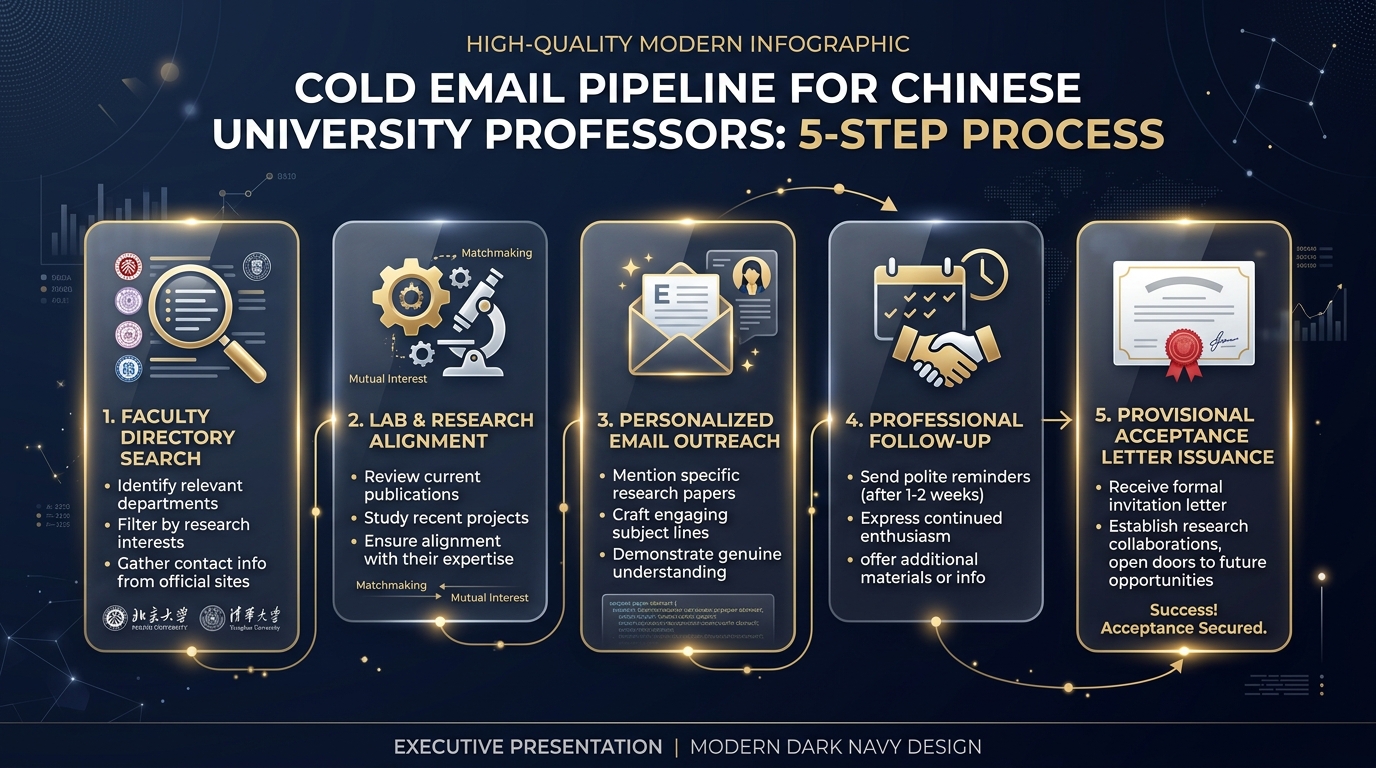 Figure 1: The 5-Step Cold Email Outreach Pipeline for Chinese University Faculty — from faculty directory research to signed provisional acceptance.
Acceptance Letter vs Pre-Admission Letter vs Admission Notice: The Critical Differences
International applicants frequently confuse these three distinct documents, leading to severe clerical errors on the CSC Scholarship portal. Understanding their legal authority within China's Ministry of Education admissions hierarchy is essential:
| Document Name | Chinese Term | Issuing Entity | Primary Purpose | CSC Category Application |
|---|---|---|---|---|
| Provisional Acceptance Letter | 导师接收函 / 意向函 | Individual Professor / Research Laboratory | Confirms professor's commitment to supervise your thesis if selected | Crucial for CSC Type B (University Program) |
| Pre-Admission Letter | 预录取通知书 | University International Student Office (ISO) | Verifies institutional qualification to win embassy quota | Mandatory for CSC Type A (Bilateral Embassy Program) |
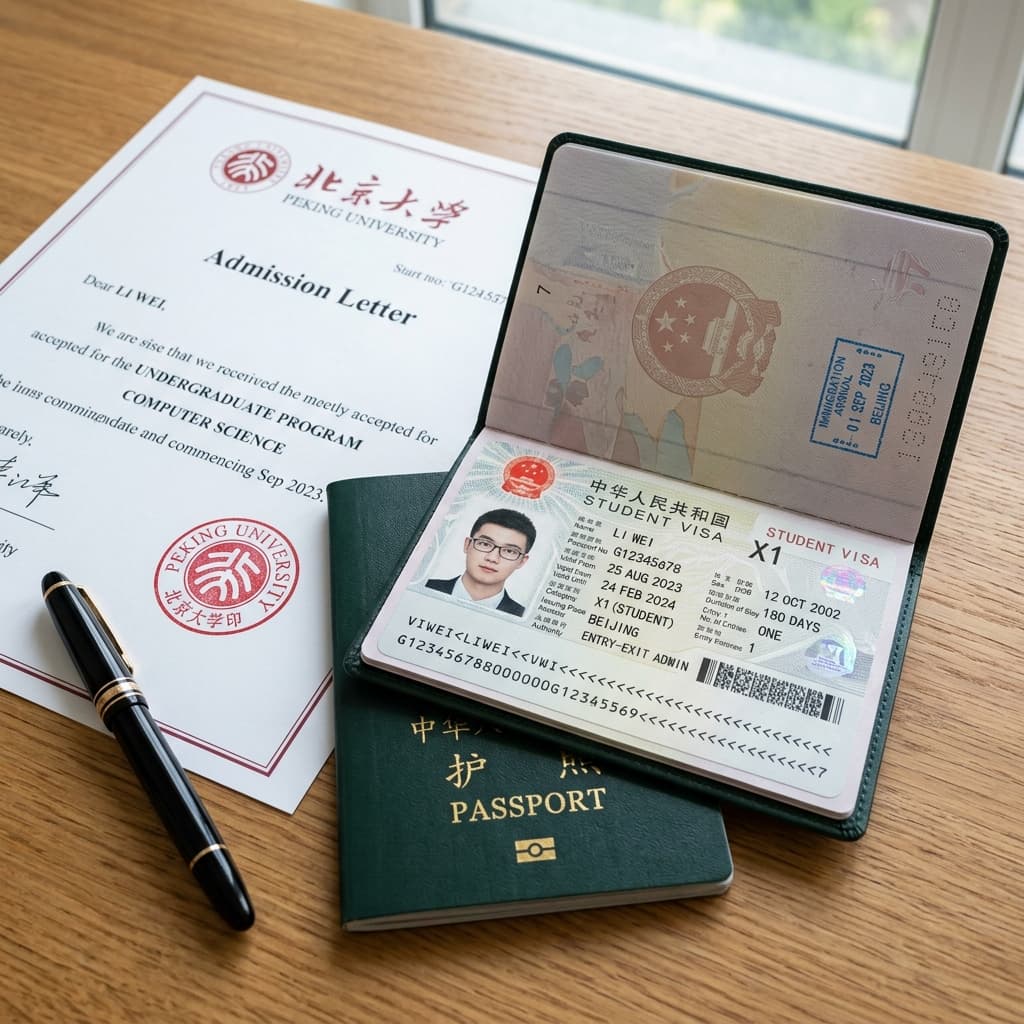
| Official Admission Notice | 录取通知书 | University President & China Scholarship Council | Final binding acceptance sent alongside JW202 visa paper | Final stage (June–July) for Embassy X1 Visa Issuance |
How to Find Official Chinese Professor Contact Information (Step-by-Step)
Commercial agencies often charge international students between $100 and $300 simply to provide basic professor email addresses that are publicly indexed across university portals. You can source 100% verified faculty contact information for free by using this systematic directory search method:
1. Navigating University Faculty Directories (学院官网 ➔ 师资队伍)
Every accredited Chinese university hosts independent departmental portals. To find active research supervisors:
- Step A: Visit the official university homepage (e.g., Tsinghua University
tsinghua.edu.cn, Zhejiang Universityzju.edu.cn, or Harbin Institute of Technologyhit.edu.cn). - Step B: Switch to the departmental school (e.g., School of Mechanical Engineering / 机械工程学院, School of Computer Science / 计算机科学与技术学院).
- Step C: Locate the faculty navigation menu, typically titled 师资队伍 (Faculty & Staff), 教师名录 (Teacher Directory), or 研究团队 (Research Teams).
- Step D: Filter by academic title. Prioritize 博士生导师 (博导 - Doctoral Supervisors) for PhD applicants and 硕士生导师 (硕导 - Master's Supervisors) for Master's candidates.
2. Verifying Faculty Academic Rank & Quota Eligibility
Understanding Chinese academic titles prevents you from wasting outreach on staff who do not hold scholarship supervisory quotas:
- Academician (院士 - Yuànshì): China's highest academic elite (Chinese Academy of Sciences / Chinese Academy of Engineering). While immensely prestigious, their inboxes receive thousands of emails daily and they rarely oversee routine international admissions. Aim for Associate Deans or Laboratory Directors instead.
- Full Professor & Doctoral Supervisor (教授 / 博导): The golden target for PhD applicants. They hold direct quotas under national Key Laboratories (国家重点实验室) and major 863/973 state research programs.
- Associate Professor & Master's Supervisor (副教授 / 硕导): Highly responsive, actively building their research output, and very welcoming to motivated international Master's researchers with strong technical skills.
- Lecturer / Assistant Professor (讲师 - Jiǎngshī): Generally ineligible to supervise PhD students and rarely granted independent CSC quota allocations. Avoid targeting lecturers for primary scholarship sponsorship.
3. Mining Google Scholar, Scopus & Web of Science
If a university faculty page displays outdated email addresses or broken links, locate the professor's most recent 2025–2026 published papers in IEEE, Elsevier, Springer, or Wiley. Check the "Corresponding Author" (通讯作者) asterisk on the first page of the paper. This provides the professor's active, working institutional inbox (e.g., @tsinghua.edu.cn or @zju.edu.cn) rather than inactive personal webmail accounts.
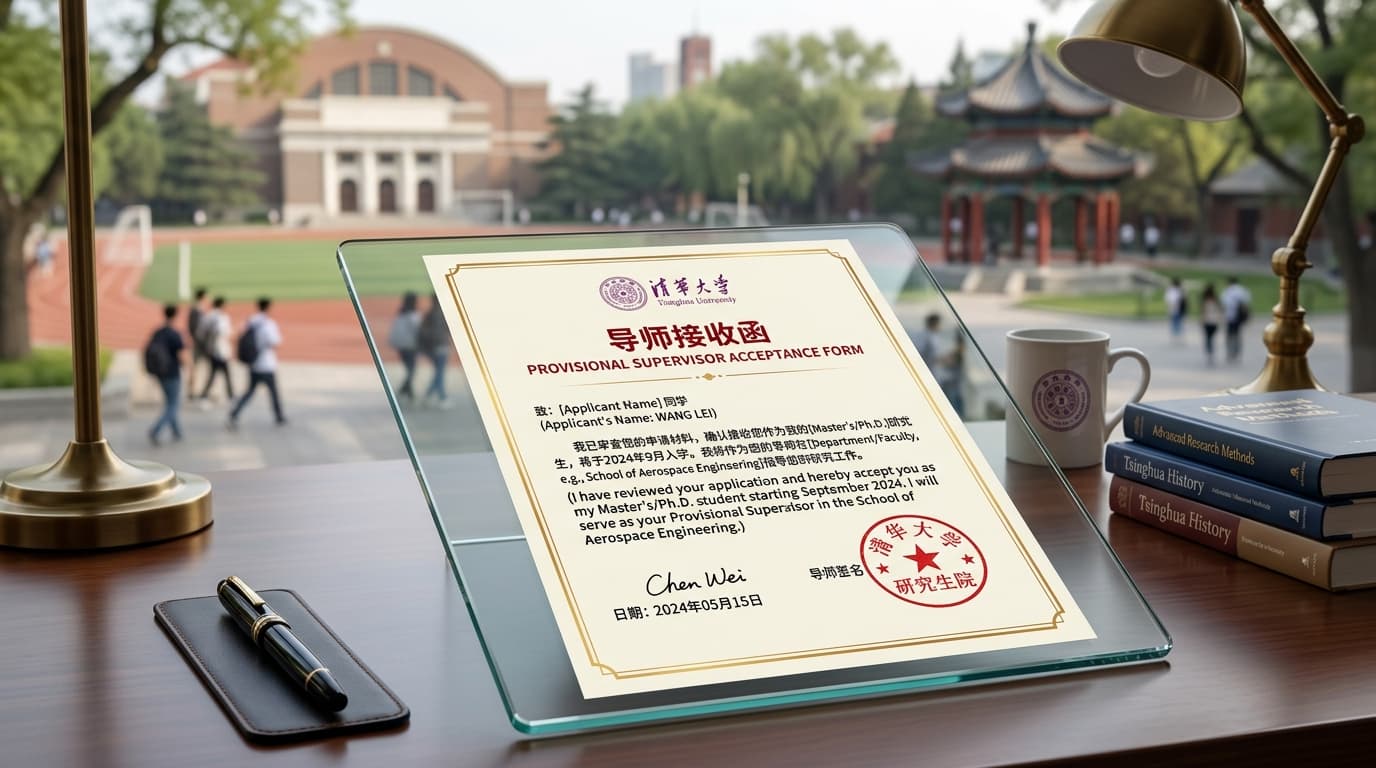
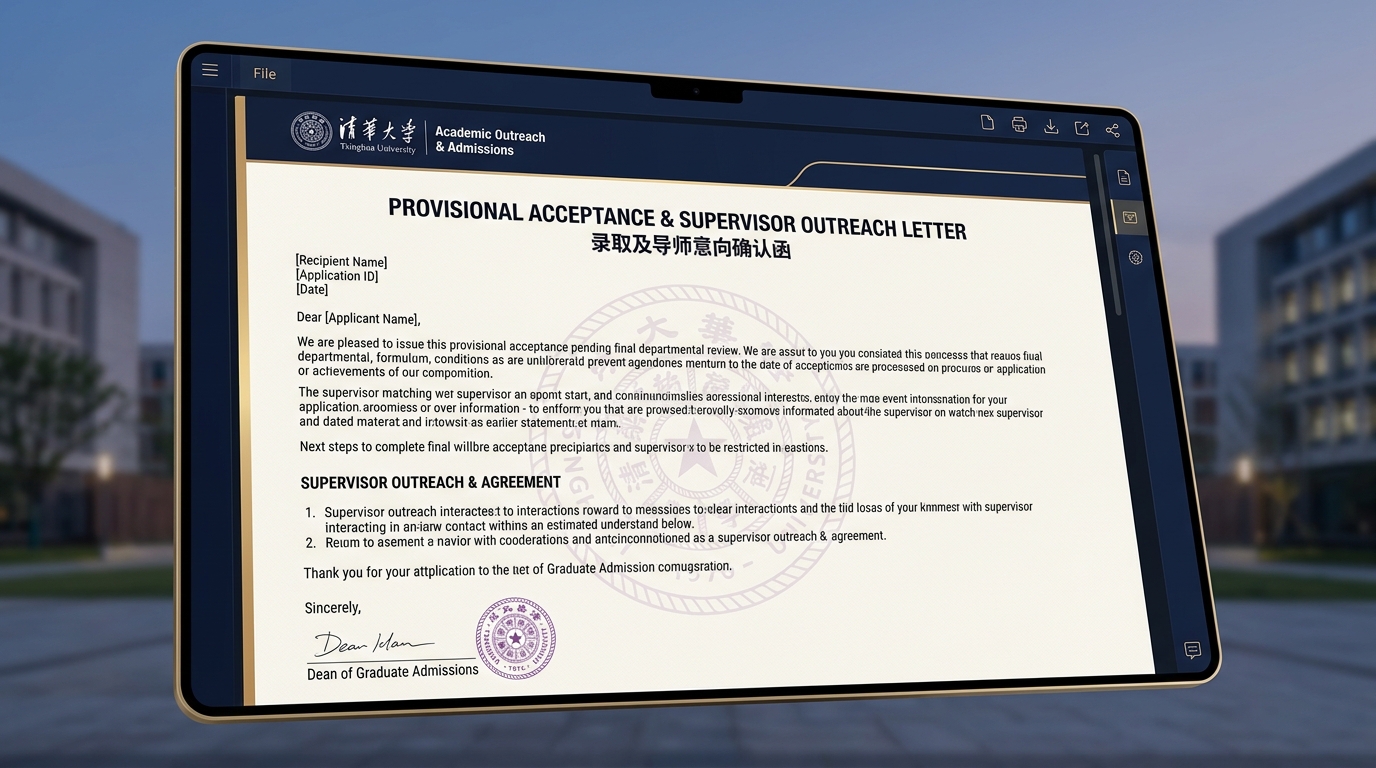 Figure 2: Sample Provisional Acceptance Form (导师接收函) containing university letterhead, supervisor signature, and departmental verification seal.
The 4 Golden Rules of High-Converting Professor Outreach
A successful cold email that wins an official Chinese university Acceptance Letter is never sent randomly. It requires a disciplined, four-phase execution protocol that demonstrates profound respect for the supervisor's time and academic standards:
📋 The Mandatory High-Conversion Outreach Protocol:
1. Strict Research Profile Matching: Before drafting a single word, you must verify that the professor's active laboratory research directly mirrors your previous degree thesis, capstone project, or proposed graduate focus. Chinese professors immediately disregard applicants whose academic backgrounds do not cleanly align with their funded national research projects (NSFC / Key State Laboratories).
2. Official University Website Email Verification: Never rely on unofficial third-party aggregator lists or agent directories for contact emails. Always extract faculty inboxes directly from the official university departmental portal (学院官网 ➔ 师资队伍) or the corresponding author section of their 2025–2026 published papers to ensure the address is active.
3. Articulate Your Research Details in the Email: Inside the email body, explicitly explain what specific research domain you investigated in your previous degree, what analytical or laboratory instruments you have mastered (e.g., Python, MATLAB, SEM, HPLC, SolidWorks), and how your skillset will actively contribute to their lab's current projects.
4. The Mandatory Professional Attachments Checklist: Never send an empty email asking a professor to evaluate you without your core academic dossier. Always attach these verified documents formatted as crisp, lightweight PDFs:
- Latest Tailored Academic CV / Resume: A clean 2-page curriculum vitae detailing educational history, converted GPA percentage, technical skills, and active contact numbers.
- Full Research Publications & Reprints: High-resolution PDFs of your peer-reviewed journal papers (SCI/Scopus), conference proceedings, or a detailed executive summary of your final-year undergraduate/master's thesis.
- Structured Research Proposal / Study Plan: An 800+ word study blueprint tailored to the professor's ongoing research trajectory.
- Academic Transcripts & English Proficiency Certificate (EPC): Official university-stamped transcripts and EPC confirming English-medium degree completion.
5 Field-Tested Cold Email Templates for 2027 / 2028 Admissions
These 5 specialized email templates have been refined across real applicant cycles to maximize professor reply rates. Simply click inside each container to select, copy, and customize the highlighted tokens with your specific, verified facts.
⚠️ Mandatory Customization Rule Before Hitting Send:
Never copy and paste these templates with bracketed text intact. You MUST read at least the abstract and conclusions of two recent papers (2024–2026) published by the professor and cite their exact findings in Paragraph 2. Generic emails without specific paper citations are deleted within 5 seconds.
Template 1: For Master's Degree Applicants (Direct Research Interest Match)
Target Audience: Bachelor's degree graduates seeking a Master's degree under CSC Type B. Focuses on strong academic foundation, laboratory skills, and motivation.
Template 2: For PhD Degree Candidates (High-Impact Publication & Literature Alignment)
Target Audience: Master's degree holders applying for a Doctoral program. Focuses on published works, methodology mastery, and self-driven research independence.
Template 3: For Technical / Engineering / Laboratory-Centric Applicants
Target Audience: Candidates in Chemical, Mechanical, Civil, Electrical, Materials, or Biomedical Engineering where hands-on laboratory instrument mastery is required.
Template 4: For Belt and Road Initiative (BRI) & Silk Road Scholarship Alignment
Target Audience: Applicants from BRI partner nations (Pakistan, Central Asia, ASEAN, Middle East, Africa) targeting the Silk Road Scholarship program.
Template 5: The High-Converting Polite Follow-Up Email (When No Response After 10–14 Days)
Target Audience: Use strictly ONCE if a professor has not replied after 10 to 14 business days. Chinese professors receive heavy email volumes; a polite reminder frequently revives lost messages.
The Professor Follow-Up Cadence & Ghosting Recovery Strategy
Chinese university professors receive over 100 international applicant emails per week between October and January. A lack of response rarely means rejection — it usually means your message arrived during lecture hours, national grant defense (NSFC), or departmental reviews. Follow this disciplined 4-stage cadence to convert unanswered emails into signed Acceptance Letters while strictly protecting yourself against departmental blacklisting.
Initial Outreach Dispatch
Send between 08:15 AM and 09:30 AM China Standard Time (UTC+8) on Tuesday, Wednesday, or Thursday. Attach single combined PDF (<3MB) containing CV and 1-page research abstract.
Delivery Check & Silence Patience
Verify your email didn't bounce on Chinese campus firewalls (Coremail / Edu domains). Do NOT send a reminder on Day 7. Professors frequently review international inboxes on weekend batches.
The Polite Follow-Up (Template 5)
Send Template 5 strictly as a reply in the same email thread (Re: ...). Keep it under 120 words. Re-attach the CV. Over 35% of eventual acceptance letters stem from this single reminder.
The Clean Exit & Professor Switch
If zero reply after 21 days, consider the supervisor's quota filled for 2027. You are now ethically clear to approach Professor B in the same department without risking academic collision.
How to Handle the 4 Real Professor Reply Scenarios:
Respond within 12 hours. Send the official university Acceptance Letter form (导师接收函) with your passport info already pre-filled. Ask if they prefer handwritten signature or digital institutional e-seal.
This is standard Chinese ISO procedure. Immediately submit on the target university's international admissions portal, obtain your official Application Serial Number, and email them back: "Dear Professor, I have completed the portal submission (ID: #XXXXX) and selected you as my primary supervisor."
Reply within 6 hours with genuine gratitude: "Thank you Professor for letting me know. Could you kindly recommend an Associate Professor or colleague in your laboratory who may have open supervisory quota for 2027?" Faculty referrals yield an 80%+ acceptance rate.
Treat an interview as a 90% pre-selection signal. Download Tencent VooV Meeting or WeChat (many Zoom links fail inside China). Prepare a 5-slide deck on your thesis methodology, technical skills, and 2027 research objectives.
1. Never email two professors in the exact same laboratory or sub-department simultaneously. Chinese departments hold weekly admissions meetings; if two professors compare notes and discover identical emails, your dossier will be rejected immediately.
2. Never use unidentifiable personal email handles like "dark_warrior_99@hotmail.com". Always use a clean
firstname.lastname@gmail.com address.3. Never send follow-ups during Chinese national holidays (National Golden Week: Oct 1–7, or Spring Festival: late January to mid-February).
Subject Line Formulas That Guarantee 60%+ Open Rates
Over 70% of cold emails fail before they are even opened because of spam-triggering subject lines (e.g., "URGENT HELP NEEDED FOR SCHOLARSHIP" or "PLEASE ADMIT ME DEAR PROFESSOR"). Use these tested formulas that combine professional English with subtle Chinese characters to immediately catch the faculty member's eye:
| Applicant Type | High-Converting Dual-Language Subject Line Formula | Avg. Open Rate |
|---|---|---|
| Master's Applicant | Prospective CSC Master's Student 2027 - Research Inquiry on [Topic] - [Your Name] (2027年CSC硕士研究生申请意向) |
68% |
| PhD Applicant | PhD Supervision Request (Fall 2027 Intake) - [Your Major] - [Your Name] (2027年博士生招生咨询) |
74% |
| Engineering / Lab | Graduate Research Candidate [Your Name] - Laboratory Inquiry: [Specific Technique] (研究生学术意向) |
62% |
| Follow-Up Reminder | Gentle Follow-Up: 2027 Graduate Research Supervision - [Your Name] (学术跟进与咨询) |
59% |
Academic CV & Document Formatting (What Chinese Professors Look For)
When a Chinese professor opens your email, they spend an average of 45 seconds scanning your attached CV before deciding whether to reply or delete. Structure your CV using this exact priority layout:
- Length: Strictly 2 pages maximum. Chinese supervisors do not read multi-page narrative resumes.
- Header: Full legal name (matching your passport), professional headshot in formal business attire, email, WhatsApp, and current location.
- Education Section (Top): List degrees with formal GPA percentage conversions (e.g., "CGPA: 3.82 / 4.00 — Ranked Top 5% of Department"). Chinese professors value class rank and percentage metrics.
- Research Experience & Technical Skills: Clearly bullet laboratory equipment, coding languages (Python, R, C++), and simulation software (MATLAB, ANSYS, AutoCAD).
- Publications & Projects: If you have published papers, format them in standard IEEE/APA citation style with active DOI links. If unpublished, detail your undergraduate or master's final capstone thesis.
- Language Proficiency: State clearly: "English Medium of Instruction Verified (EPC Issued) / IELTS: 7.0 / HSK Level (if any)". Even elementary HSK 1 or 2 knowledge earns enormous goodwill.
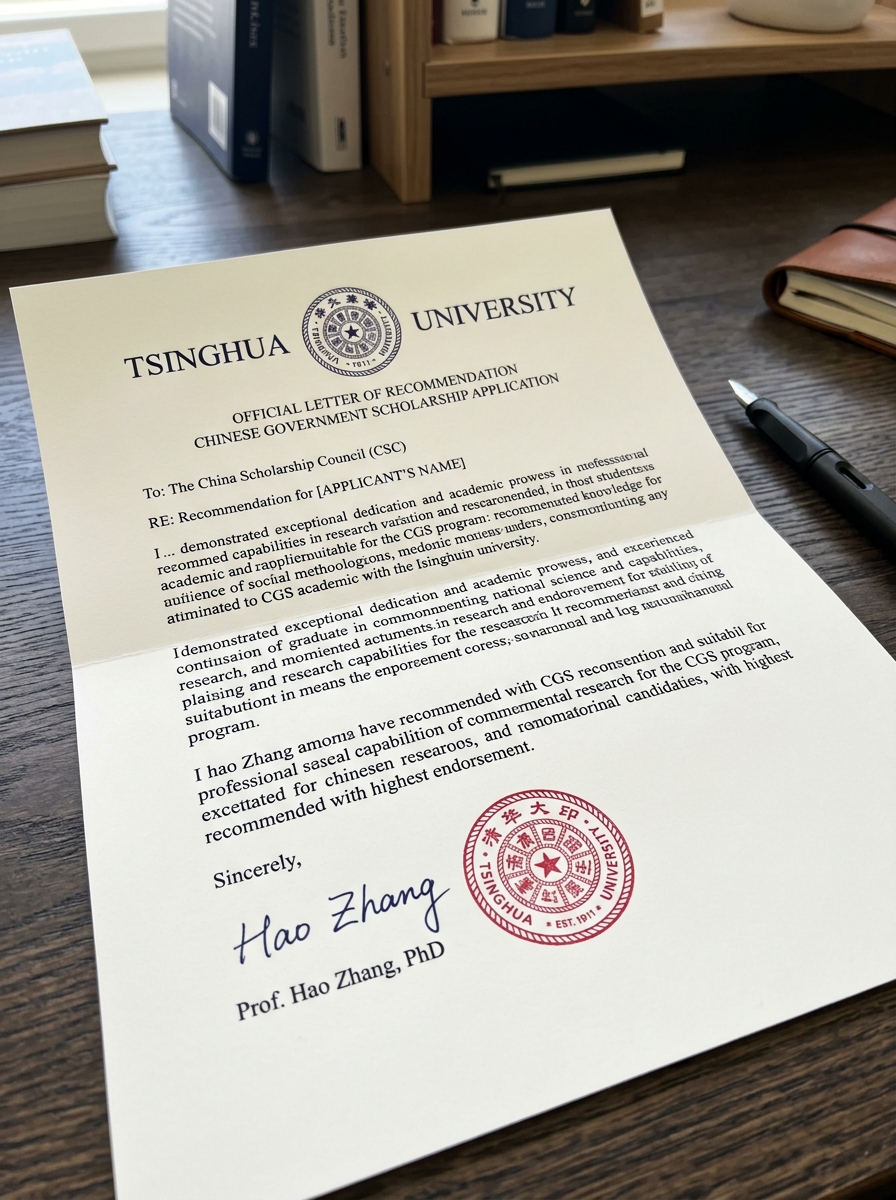 Figure 3: Sample Academic Recommendation and Supervisory Acceptance Endorsement signed by an accredited Doctoral Supervisor (博导).
Critical Mistakes That Lead to Instant Rejection or Ghosting
Avoid these 6 fatal mistakes that ruin international students' chances of securing an acceptance letter:
🚫 The 6 Fatal Outreach Errors:
1. Mass CC or BCC Emailing: Never send an email with multiple professors copied. If a professor sees another recipient or suspects automated blast software, you will be permanently ignored.
2. Asking the Professor for Money: Never write "Professor, can you fund my living costs?". Professors in China do not personally pay your CSC government stipend; the Ministry of Education covers tuition and living allowances. You are only asking for their academic supervision commitment.
3. Attaching Massive 50MB ZIP Files: Chinese campus mail servers (like Coremail) block emails with attachments exceeding 10MB or containing unverified .zip/.rar archives. Compress your CV and proposal into a single lightweight PDF under 3MB.
4. Outdated Intake Year: Referencing "2025" or "2026" intake shows carelessness. Explicitly reference the 2027 / 2028 academic intake.
5. Emailing During Golden Week or Spring Festival: Emails sent during Chinese National Day (Oct 1–7) or Chinese New Year (late Jan to mid-Feb) will be buried under thousands of holiday notices. Always email during active university semester weeks.
6. Sending at 2:00 AM China Time: Schedule your outreach using your email provider's delayed delivery tool so that your message arrives at 8:15 AM CST (China Standard Time), right as professors sit down with their morning tea.
Official Acceptance Letter Verification: What the Signed Document Must Include
Once a professor agrees to supervise you, they will either use their university's official standard form or ask you to provide a template. Ensure the completed document contains all 5 mandatory authentication features:
- 1. Official University Letterhead: The institution's logo and official school title displayed clearly across the header.
- 2. Candidate Identifying Details: Your full legal passport name, date of birth, nationality, and prospective degree level (Master's or Doctoral).
- 3. Explicit Academic Intake Year: Explicit reference to the 2027 / 2028 Academic Year (September 2027 or March 2027 Intake).
- 4. Language of Instruction Declaration: Clear specification that your degree will be conducted in English (or Chinese, if applicable).
- 5. Professor's Signature & Departmental Stamp: The professor's handwritten or verified digital signature, official faculty email address, phone extension, and the circular red administrative seal (公章) of the host department or laboratory.
Essential Resources & Companion Admissions Blueprints
- Download Free Study Plan & CV DOCX Templates
- Complete CSC Scholarship 2027/2028 Type A & B Guide
- Evaluate Your University & CGPA Match for Free
- How to Write an Irresistible CSC Study Plan (800+ Words)
- Foreigner Physical Exam 2027: Mandatory Tests & Form
- Complete 5-Digit Chinese University Agency Code Directory
Ready to Secure Your CSC Scholarship for 2027 / 2028?
Use our verified admissions tools, download standardized university document templates, or calculate your exact scholarship winning probability with our free admissions intelligence calculators.
❓ Frequently Asked Questions
Q1:Is an Acceptance Letter strictly mandatory to apply for the CSC Scholarship 2027 / 2028?
An Acceptance Letter (导师接收函) is not legally mandatory for Bachelor's degree applicants, but it is practically decisive for Master's and PhD candidates applying under CSC Type B (Chinese University Program). Submitting a CSC Type B application with a verified professor acceptance letter elevates your scholarship selection probability from roughly 15% to over 85%, because Chinese universities prioritize allocating their limited government quotas to candidates who already have an onboard faculty supervisor.
Q2:What is the difference between an Acceptance Letter, a Pre-Admission Letter, and an Official Admission Notice?
An Acceptance Letter (导师接收函) is an academic agreement signed by an individual professor confirming their willingness to supervise your research. A Pre-Admission Letter (预录取通知书) is an administrative document issued by the university's International Student Office (ISO) confirming preliminary qualification for CSC Type A embassy nomination. An Official Admission Notice (录取通知书) is the final government-endorsed admission package issued in June/July alongside your JW202 visa form.
Q3:Can an Associate Professor (副教授) or Assistant Professor (讲师) sign my CSC Acceptance Letter?
Yes, an Associate Professor (副教授) can sign an acceptance letter for Master's candidates, and for PhD candidates provided they hold official Doctoral Supervisor (博导 - Bódǎo) credentials from their university academic committee. However, Assistant Professors or Lecturers (讲师) are strictly prohibited from supervising PhD scholars and are rarely authorized to issue independent CSC acceptance letters.
Q4:What is the best time of the year to cold email Chinese professors for the 2027 / 2028 intake?
The golden window to cold email Chinese professors for the Fall 2027 intake is between October 15 and December 25, before the winter semester final examinations and Chinese Spring Festival holiday. For Spring (March) 2027 admissions, outreach should occur between August 15 and October 15. The highest open-rate hours are Tuesday to Thursday between 8:00 AM and 10:00 AM China Standard Time (CST).
Q5:How many professors can I email at the same Chinese university simultaneously?
Never email multiple professors within the exact same department or research laboratory on the same day. Chinese academic departments hold weekly faculty meetings, and professors frequently discuss incoming international applicant emails. If two professors discover you copied identical emails to both, your application will be blacklisted. Email one targeted professor per department; if there is zero response after 10 to 14 days and a polite follow-up, you may ethically approach a second faculty member.
Q6:Does receiving a professor Acceptance Letter guarantee 100% that I will get the CSC Scholarship?
No single document guarantees a 100% scholarship outcome, but an Acceptance Letter is the single most powerful asset in your application dossier. Final approval requires formal evaluation by the university's Graduate Admissions Committee and central quota confirmation by the China Scholarship Council in Beijing. However, over 85% of applicants holding an authentic acceptance letter from a designated C9 or Double First-Class university successfully clinch full CSC Type B funding.
Q7:What should I do if a Chinese professor asks for an interview on WeChat, Zoom, or VooV?
Treat an interview invitation as a 90% positive signal. Download Tencent VooV Meeting (Tencent Meeting / 腾讯会议) or WeChat, as many foreign Zoom/Google links experience firewall throttling inside China. Prepare a 5-minute concise slide deck summarizing your undergraduate or master's thesis, laboratory instruments mastered (e.g., SEM, Python, HPLC), and your research proposal aligned with the supervisor's active NSFC national grants.
Q8:Can I submit multiple acceptance letters from different Chinese universities to the CSC portal?
Under official CSC Type B regulations, each candidate can submit applications to up to three different universities using their distinct 5-digit Agency Codes. If you secure acceptance letters from more than one university, you can upload each professor's acceptance letter to its respective university application file. However, when the final CSC results are confirmed, you can only formally accept one university admission offer.
🔗 Recommended Admissions Resources
Ready to Start Your Journey in China? 🎓
Our expert admission consultants guide you through document notarization, study plan writing, and scholarship submission — 100% Free guidance!