CSC Scholarship 2027 / 2028: How to Apply | CSP Guide
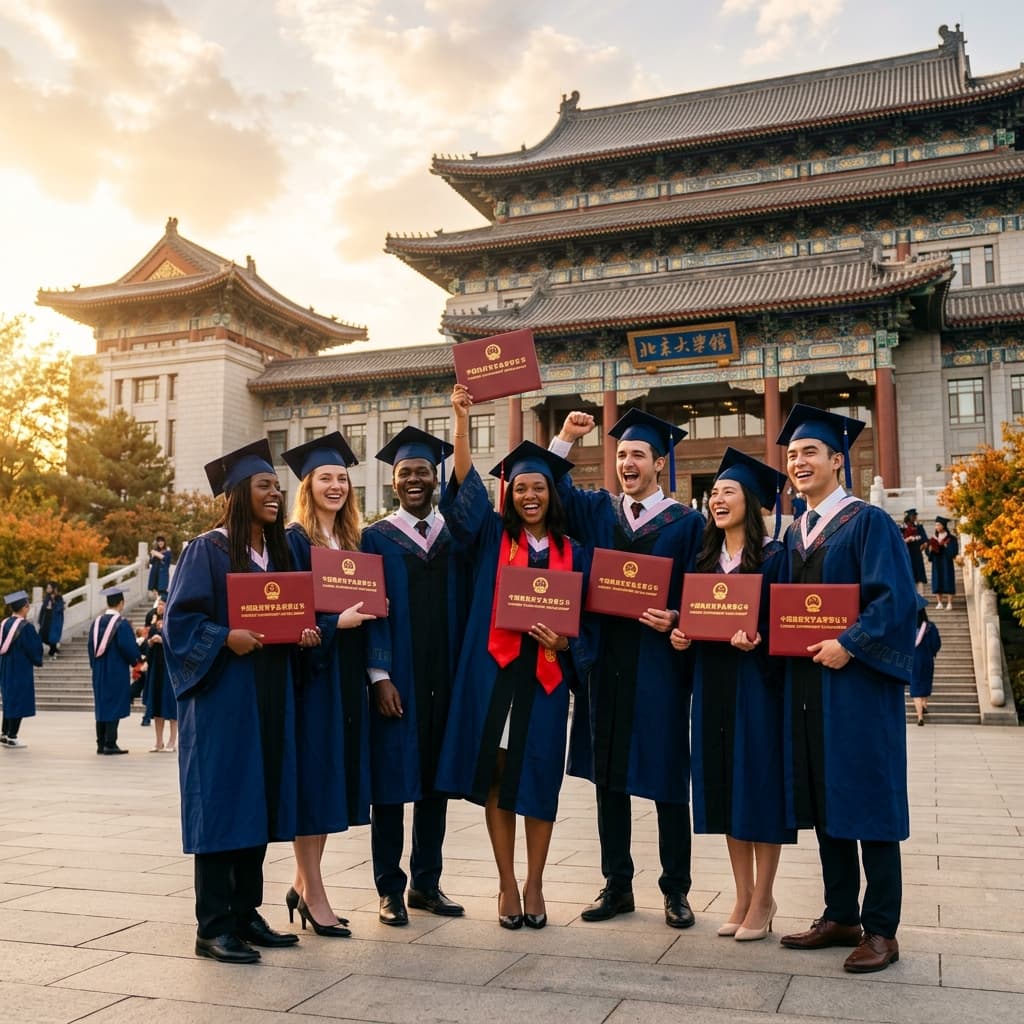
The Chinese Government Scholarship (CSC / CGS 2027 / 2028 Intake), administered by the China Scholarship Council under China's Ministry of Education, is the world's premier fully funded higher education program. Offering over 50,000 scholarship quotas across 280+ designated national universities, the program provides international students with a 100% Full Tuition Waiver, Free On-Campus International Student Dormitory, comprehensive emergency medical insurance, and a monthly living allowance of 2,500 to 3,500 RMB / month with no IELTS required (English Proficiency Certificate accepted). Whether applying via bilateral embassy channels (CSC Type A Bilateral) or direct university nominations (CSC Type B University Programs), this definitive operational blueprint details the exact requirements, agency codes, and submission strategies for 2027 / 2028 success.
Overview of the CSC Scholarship Scheme & Degree Coverage
The China Scholarship Council (CSC) manages admissions across five major applicant categories:
- Undergraduate Programs (Bachelor's Degree): 4 to 5 years duration. Typically conducted in Chinese (1 year preparatory Chinese language included) with an expanding catalog of English-taught engineering, medicine, and international economics programs.
- Postgraduate Programs (Master's Degree): 2 to 3 years duration. Vast majority taught in English across STEM, business, artificial intelligence, and international relations.
- Doctoral Programs (PhD): 3 to 4 years duration. 100% research-focused, fully supervised in English within state key laboratories.
- General & Senior Visiting Scholars: 1 to 2 years academic research fellowships for university lecturers and post-doctoral researchers.
Comprehensive Financial Coverage & Monthly Stipend Breakdown
The Chinese Government Scholarship is one of the world's most generous fully funded scholarships. Recipients of the Full CSC Scholarship receive zero out-of-pocket costs for degree studies:
| Degree / Academic Level | Monthly Living Stipend | Annual Stipend Total | On-Campus Housing Standard | Comprehensive Medical Insurance |
|---|---|---|---|---|
| Undergraduate (Bachelor's) | 2,500 RMB / month (~$350 USD) | 30,000 RMB / year | Free twin international student dorm room | 800 RMB/year emergency medical coverage |
| Master's Degree (Postgraduate) | 3,000 RMB / month (~$420 USD) | 36,000 RMB / year | Free shared/twin international dorm room | 800 RMB/year emergency medical coverage |
| Doctoral Candidates (PhD) | 3,500 RMB / month (~$500 USD) | 42,000 RMB / year | Free single private room or apartment | 800 RMB/year emergency medical coverage |
| General Scholar | 3,000 RMB / month (~$420 USD) | 36,000 RMB / year | Free twin international student dorm room | 800 RMB/year emergency medical coverage |
| Senior Scholar / Postdoc | 3,500 RMB / month (~$500 USD) | 42,000 RMB / year | Free single private room or apartment | 800 RMB/year emergency medical coverage |
Note: If on-campus student accommodation is fully occupied, universities grant an off-campus accommodation allowance of 700 RMB/month for Bachelor's and Master's students and 1,000 RMB/month for Doctoral candidates to subsidize private apartment rentals. Read our Cost of Living in China Guide for city-by-city breakdowns.
CSC Type A vs Type B vs Type C: Decisive Comparison Matrix
Understanding which CSC application category fits your profile is the difference between immediate rejection and winning a fully funded award. Review the three official channels below:
| Evaluation Parameter | CSC Type A (Bilateral Program) | CSC Type B (University Program) | CSC Type C (Regional / Special Programs) |
|---|---|---|---|
| Application Channel | Chinese Embassy or Home Country Nominating Agency (e.g. HEC, MOE) | Directly through host Chinese Universities | Provincial Education Departments or Specialized Regional Bodies |
| Agency Code Used | Embassy or Agency specific code (e.g. 5861 for Pakistan Embassy) | University-specific 5-digit code (e.g. 10003 for Tsinghua) | Regional organization or provincial secretariat code |
| University Choices | Up to 3 university preferences on one application | Up to 3 separate universities (1 code per application) | Restricted to designated partner institutions |
| Acceptance Letter Impact | Beneficial, but embassy testing/interview carries prime weight | Critical (85%+ impact) for Master's & PhD candidates | Moderate to High depending on the provincial scheme |
| Application Deadlines | December to March (set by nominating agencies) | January to April (set individually by universities) | March to May (set by provincial councils) |
| Competition Level | High national competition via exams/merit lists | Department-level evaluation; strategic university targeting works | Moderate; targeted at specific regions (e.g., ASEAN, EU) |
| Strategic Recommendation | Apply if your national agency has bilateral quotas like HEC Type A | Highest success rate for self-directed international candidates | Great backup alongside Silk Road Scholarships |
Official Eligibility Criteria for 2027 / 2028 Admissions
Before beginning your application on the CSC portal, ensure that you fulfill the strict regulatory standards established by the China Scholarship Council:
- Citizenship & Character: Must be a non-Chinese citizen in good physical and mental health with a valid international passport and a clean criminal record (verified via Police Clearance Certificate).
- Age & Educational Credentials:
- Bachelor's Degree Applicants: Must possess a high school diploma / A-Levels / FSc with outstanding academic performance and be under 25 years of age.
- Master's Degree Applicants: Must hold a Bachelor's degree (16 years of education) and be under 35 years of age.
- Doctoral Degree (PhD) Applicants: Must hold a Master's degree (18 years of education) with demonstrated research capability and be under 40 years of age.
- General / Senior Scholars: Must be under 45 or 50 years of age respectively with appropriate academic/professional background.
- Language Proficiency Standards:
- Chinese-Taught Programs: Minimum HSK Level 4 (undergraduate) or HSK Level 5 (graduate degree).
- English-Taught Programs: An official English Proficiency Certificate (EPC) from your graduating university is accepted by over 90% of Chinese universities. IELTS (6.0+) or TOEFL (80+) is required only for select elite faculties.
Mandatory Document Dossier Checklist (Notarized Scans)
Incomplete or improperly formatted documents result in over 60% of first-round rejections. Prepare crisp, color digital scans (under 3MB each in PDF format) of the following dossier:
- Notarized Highest Diploma: Official degree certificate notarized by an authorized notary public or Ministry of Foreign Affairs. Prospective graduates must submit an official Pre-Graduation Certificate.
- Notarized Academic Transcripts: Complete grade sheets from all semesters notarized with an official seal.
- Study Plan or Research Proposal: Minimum 800 words for Master's and 1,000+ words for PhD candidates detailing research methodology and academic motivations. Read our guide: How to Write an Irresistible Study Plan.
- Two Academic Recommendation Letters: Written and signed by full Professors or Associate Professors in English or Chinese, including phone numbers and official institutional email addresses.
- Foreigner Physical Examination Form: Completed within 6 months prior to application. Must include the physician's signature, official round hospital stamp over your passport photo, chest X-ray report, and laboratory blood tests.
- Police Clearance / Non-Criminal Record: Official certificate issued by local police or home department dated within 6 months.
- Passport Copy: Information page with clear photo and at least 12 months remaining validity.
- Professor Acceptance Letter (Type B): Official pre-admission letter or email confirmation from a designated professor at your host university.
Step-by-Step CSC Application Roadmap (6 Crucial Steps)
Follow our authoritative 6-step submission protocol to guarantee that your application is evaluated without administrative disqualification:
Step 1: Select Universities & Contact Supervising Professors
Explore our comprehensive Chinese University Directory to identify 3 to 5 universities matching your academic discipline. Reach out to professors via professional email with your academic CV and research proposal to secure a tentative Acceptance Letter.
Step 2: Complete the Official CSC Portal Application (campuschina.org)
Log in to the official CSC online portal (studyinchina.csc.edu.cn or campuschina.org):
- Select Program Category: Choose Type A (embassy channel) or Type B (university direct channel).
- Input the unique 5-Digit Agency Code of your target institution.
- Complete personal profile, family details, academic background, and upload your notarized PDF documents.
- Submit the online form and immediately download the system-generated CSC Application Form PDF.
Step 3: Complete Host University Dual Portal Application
Crucial Warning: Over 40% of applicants fail to realize that submitting on the CSC portal alone is NOT enough! You must also register on the international student portal of your target university (e.g. Tsinghua, Zhejiang, Harbin Institute of Technology) and upload the CSC Application Form alongside your institutional dossier.
Step 4: Pay University Application Fee (If Applicable)
While the CSC government portal is 100% free, certain host universities charge an institutional application evaluation fee (typically 400 to 800 RMB / ~$60 to $110 USD). Verify payment instructions on the university admissions portal.
Step 5: Attend Departmental Interviews & Entrance Exams
Top universities conduct online video interviews (via Zoom, Tencent Meeting, or Voov) between February and May to evaluate language fluency, research rationale, and technical background. Prepare a 5-minute PowerPoint presentation summarizing your proposed research.
Step 6: Official Admission Notice, JW202 Form & Visa Application
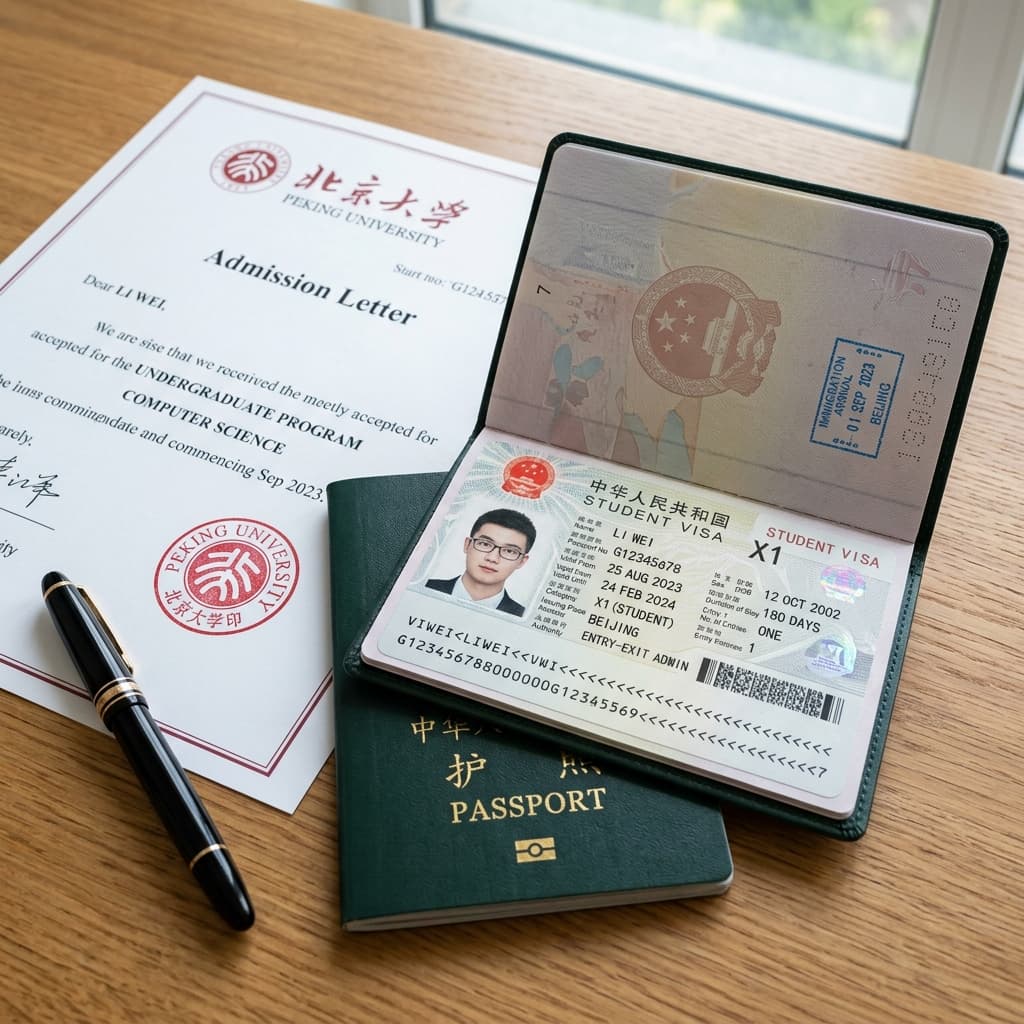
Host universities notify successful applicants between June and July. You will receive an official Admission Notice and the electronic JW202 / JW201 Form. Use these documents to apply for your X1 Student Visa at the Chinese Visa Application Service Center (CVASC). Review our Step-by-Step China Visa Guide for pre-departure protocols.
Top 10 CSC Participating Universities & Agency Codes (2027 / 2028)
The following authoritative reference table provides official 5-digit Agency Codes, global rankings, and flagship English-taught disciplines for China's top scholarship institutions:
| University Name | Location | CSC Agency Code | Global Rank (QS/USN) | Flagship English Programs | Quota & Acceptance |
|---|---|---|---|---|---|
| Tsinghua University | Beijing | 10003 |
#1 in China / #14 Global | Computer Science, AI, Mechanical, Public Policy, Architecture | Elite Tier / Highly Competitive |
| Peking University | Beijing | 10001 |
#2 in China / #17 Global | International Relations, Economics, Chemistry, Life Sciences | Elite Tier / Highly Competitive |
| Zhejiang University | Hangzhou, Zhejiang | 10335 |
#3 in China / Top 45 Global | Robotics, Computer Science, Agriculture, Civil Engineering | Large Quota / High Acceptance |
| Shanghai Jiao Tong Univ. (SJTU) | Shanghai | 10248 |
Top 50 Global | Naval Architecture, Biomedical, Electrical Eng, Business | High Quota / High Acceptance |
| Fudan University | Shanghai | 10246 |
Top 50 Global | Global Health, Economics, International Politics, Data Science | Moderate to High Acceptance |
| Harbin Institute of Tech (HIT) | Harbin, Heilongjiang | 10213 |
#5 Global Engineering | Aerospace, Robotics, Automation, Materials Science, Civil | Very High Acceptance Rate |
| Huazhong Univ of Sci & Tech (HUST) | Wuhan, Hubei | 10487 |
Top 100 Global | Optics, Telecommunications, Mechanical, Public Health | Very High Acceptance Rate |
| Univ of Sci & Tech of China (USTC) | Hefei, Anhui | 10358 |
Top 60 Global | Quantum Computing, Physics, Nanotechnology, Clean Energy | High Quota Allocation |
| Xi'an Jiaotong University (XJTU) | Xi'an, Shaanxi | 10698 |
Top 150 Global | Energy & Power, Electrical, Mechanical, Silk Road Energy | Very High Acceptance Rate |
| Wuhan University | Wuhan, Hubei | 10486 |
Top 150 Global | Remote Sensing, Environmental Law, Chemistry, Water Resources | Very High Acceptance Rate |
⚠️ Critical Warnings & Common Rejection Triggers
1. Incorrect Agency Code: Inputting the wrong 5-digit Agency Code routes your application to the wrong university or embassy where it will sit unreviewed and get automatically rejected.
2. Incomplete Physical Exam: The Foreigner Physical Examination Form must have a hospital doctor signature, round hospital stamp over your photo, and include attached lab reports (blood test for HIV/Syphilis, ECG, chest X-ray).
3. Missing Dual Application: Submitting on the CSC portal without submitting on the target university's international student portal will result in immediate disqualification.
4. Un-notarized Certificates: Submitting plain photocopies of degrees without official notary public stamps is the #1 reason documents fail initial administrative verification.
5. Plagiarized Study Plans: Generic study plans copied from Google or ChatGPT without specific faculty citations or research methodology are immediately filtered out by university selection committees.
❓ Frequently Asked Questions
Q1:Can I apply for the CSC Chinese Government Scholarship without IELTS or TOEFL?
Yes! The majority of Chinese universities accept an official English Proficiency Certificate (EPC) issued by your previous university if your prior degree was taught in English. Only a handful of ultra-competitive departments at Tsinghua or Peking University strictly mandate IELTS (minimum 6.5) or TOEFL (85+).
Q2:What is the crucial difference between CSC Scholarship Type A and Type B?
CSC Type A (Bilateral Program) is applied through the Chinese Embassy or your home country's nominating body (e.g., HEC in Pakistan) using embassy agency numbers. CSC Type B (Chinese University Program) is applied directly to host Chinese universities using each university's unique 5-digit Agency Code (e.g., 10003 for Tsinghua, 10335 for Zhejiang University).
Q3:How many Chinese universities can I apply to under CSC Type B simultaneously?
Under current CSC online regulations, each applicant can submit up to 3 Type B applications using separate 5-digit Agency Codes on the CSC portal (campuschina.org). However, you must also complete each individual university's independent international student application portal.
Q4:Is an Acceptance Letter from a Chinese university professor mandatory to win CSC?
An Acceptance Letter is not officially mandatory for Bachelor's applicants, but it is virtually crucial for Master's and PhD candidates. Having a pre-acceptance letter signed by a professor increases your selection probability under CSC Type B by over 85%.
Q5:When do applications open for CSC 2027 / 2028 and when are results announced?
CSC online applications for the 2027 / 2028 academic intake officially open between October and November 2026, with institutional deadlines falling between January and April 2027. Official final admission results, JW202/JW201 visa documents, and admission letters are dispatched between June and July 2027.
🔗 Recommended Guides for You
Ready to Start Your Journey in China? 🎓
Our expert admission consultants guide you through document notarization, study plan writing, and scholarship submission — 100% Free guidance!