How to Win CSC Scholarship with Low CGPA (2.5+) & Study Gap: Justification Strategy & Tier-2 Universities

Discovering how to get csc scholarship with low cgpa and overcome a significant study gap is the defining milestone for thousands of ambitious international scholars. A widespread myth propagated by commercial education consultancies is that the Chinese Government Scholarship (CSC 2027 / 2028 Intake) is strictly reserved for candidates with near-perfect 3.8+ GPAs and uninterrupted educational histories. In official Chinese university admissions practice, cumulative GPA constitutes only roughly 30% of your total evaluation score. By deploying a disciplined 4-pillar compensation strategy—securing a faculty supervisor acceptance letter, crafting an NSFC-aligned research proposal, choosing high-quota Tier-2 institutions, and submitting an authoritative study gap explanation letter for china scholarship—candidates with CGPAs as low as 2.50 / 4.00 (or 65%+) routinely win 100% Full Tuition Waivers, Free Campus Accommodation, and monthly tax-free stipends of 3,000 to 3,500 RMB / month.
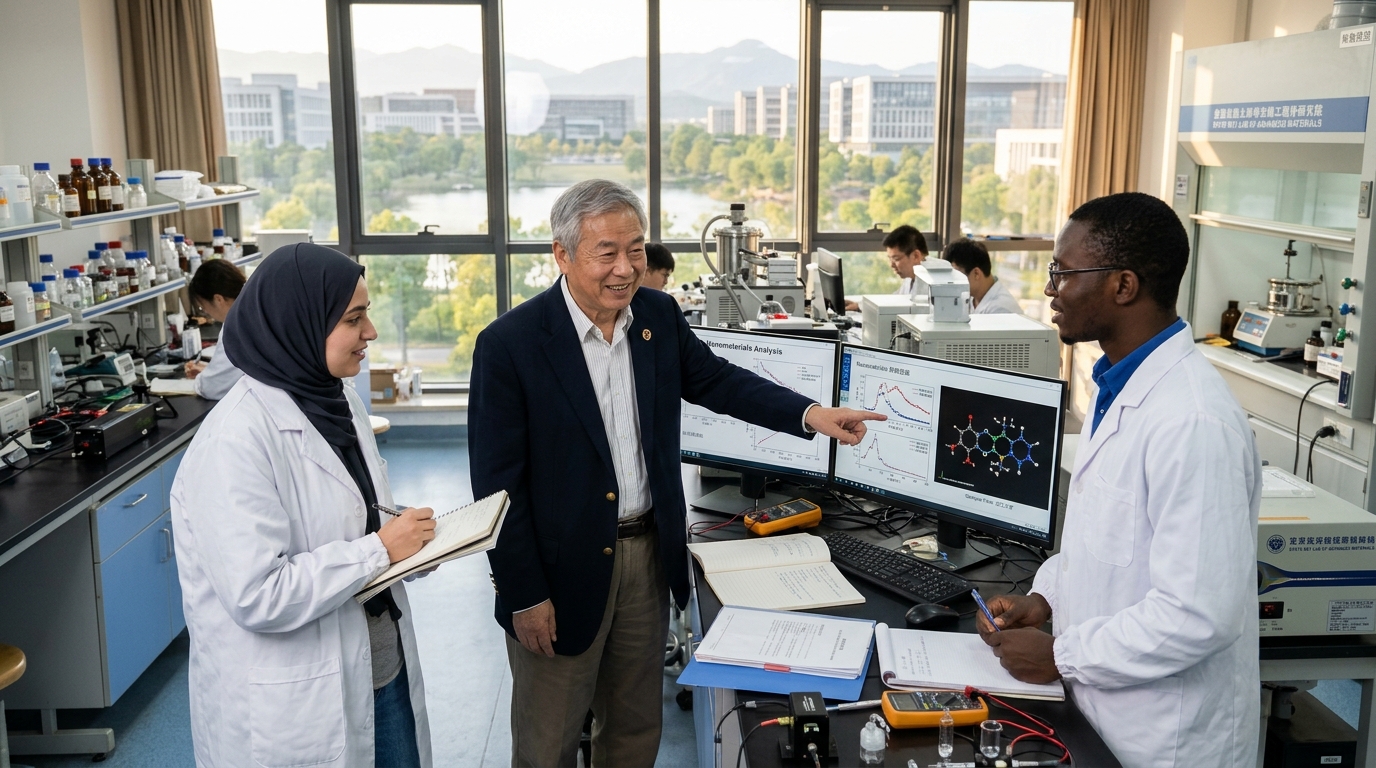 Figure 1: Laboratory research mentorship at a Chinese university — demonstrating hands-on technical skills and research alignment that outrank raw paper GPAs during committee evaluations.
Table of Contents: Low CGPA & Study Gap Success Blueprint
- 1. The Secret Admissions Matrix: How Chinese Committees Grade Your File
- 2. The 4-Pillar Compensation Strategy: Outranking 3.8 GPA Applicants
- 3. Study Gap Regulations in China: What is the Official 2027 / 2028 Limit?
- 4. Copy-Pasteable Study Gap Explanation Letter Template (Word-for-Word)
- 5. Top 25 Tier-2 Chinese Universities with 80%+ Acceptance for Low CGPAs
- 6. The "1-2-1" Triple Application Portfolio Formula
- 7. 5 Fatal Mistakes That Cause Instant Rejections for Low CGPA Applicants
- 8. Rejection-Proof Document Dossier Checklist (Zero IELTS)
1. The Secret Admissions Matrix: How Chinese Committees Grade Your File
When an international student dossier arrives at a Chinese university's International Student Office (ISO) and academic graduate committee, reviewers do NOT simply filter candidates by GPA in ascending order. Chinese university admissions operate on a multi-dimensional weighted score known as the Comprehensive Candidate Assessment (综合素质评审):
| Evaluation Component | Weightage (%) | What Committees Really Look For | How to Maximize Score with Low CGPA |
|---|---|---|---|
| Supervisor Acceptance Letter (导师接收函) | 35% | A professor willing to commit their personal research grant and departmental quota to your thesis. | Securing an official acceptance letter completely nullifies a 2.5–2.9 GPA handicap. |
| Undergraduate / Prior CGPA | 30% | Overall academic discipline, course completion, and subject difficulty. | Highlight high marks in core major subjects and upward GPA trends in final semesters. |
| Study Plan / Research Proposal | 20% | Alignment with China's 14th/15th Five-Year Plan, technical feasibility, and laboratory tools mastered. | Submit a rigorous 1,000+ word proposal citing the supervisor's active research publications. |
| Work Experience & Practical Skills | 15% | Hands-on industrial competency, software mastery (Python, MATLAB), or hospital/field training. | Provide official employment certificates proving real-world problem-solving skills during gap years. |
As demonstrated in this verified admissions matrix, 70% of your total admission score is completely within your control right now, regardless of what grades you earned years ago during your undergraduate studies!
2. The 4-Pillar Compensation Strategy: Outranking 3.8 GPA Applicants
To outrank competing applicants who hold higher cumulative GPAs, you must systematically execute these four field-tested compensation levers:
High-GPA applicants frequently send generic mass emails to C9 Ivy League professors. By targeting Associate Professors and laboratory heads at Tier-2 national universities using our 5 verified cold email templates, you can lock in a signed Supervisor Acceptance Letter before portal deadlines. An onboard supervisor guarantees your file bypasses preliminary administrative GPA filters.
Chinese engineering, computing, and life sciences professors operate high-output laboratories funded by the National Natural Science Foundation of China (NSFC). They need researchers who can immediately operate analytical hardware (e.g., SEM, XRD, HPLC, GC-MS) or coding environments (Python, PyTorch, ANSYS, MATLAB). Explicitly list all technical proficiencies in your CV to prove zero-day research productivity.
A 2.7 / 4.00 CGPA in challenging STEM curricula (such as Electrical or Chemical Engineering) frequently corresponds to a 72%–75% numeric mark. In Chinese academic grading scales, 70% to 79% represents a solid "Good (良好 - Liánghǎo)" rating. Always include an official Grading Scale Key from your prior university registrar demonstrating percentage conversions to prevent harsh raw GPA deductions.
If you graduated 2, 3, or 5 years ago, frame your study gap as "Intensive Professional Specialization". Working as a software developer, site engineer, clinical pharmacist, or business analyst gives you practical insights that pure academic graduates lack. Obtain glowing recommendation letters from company directors to supplement your academic references.
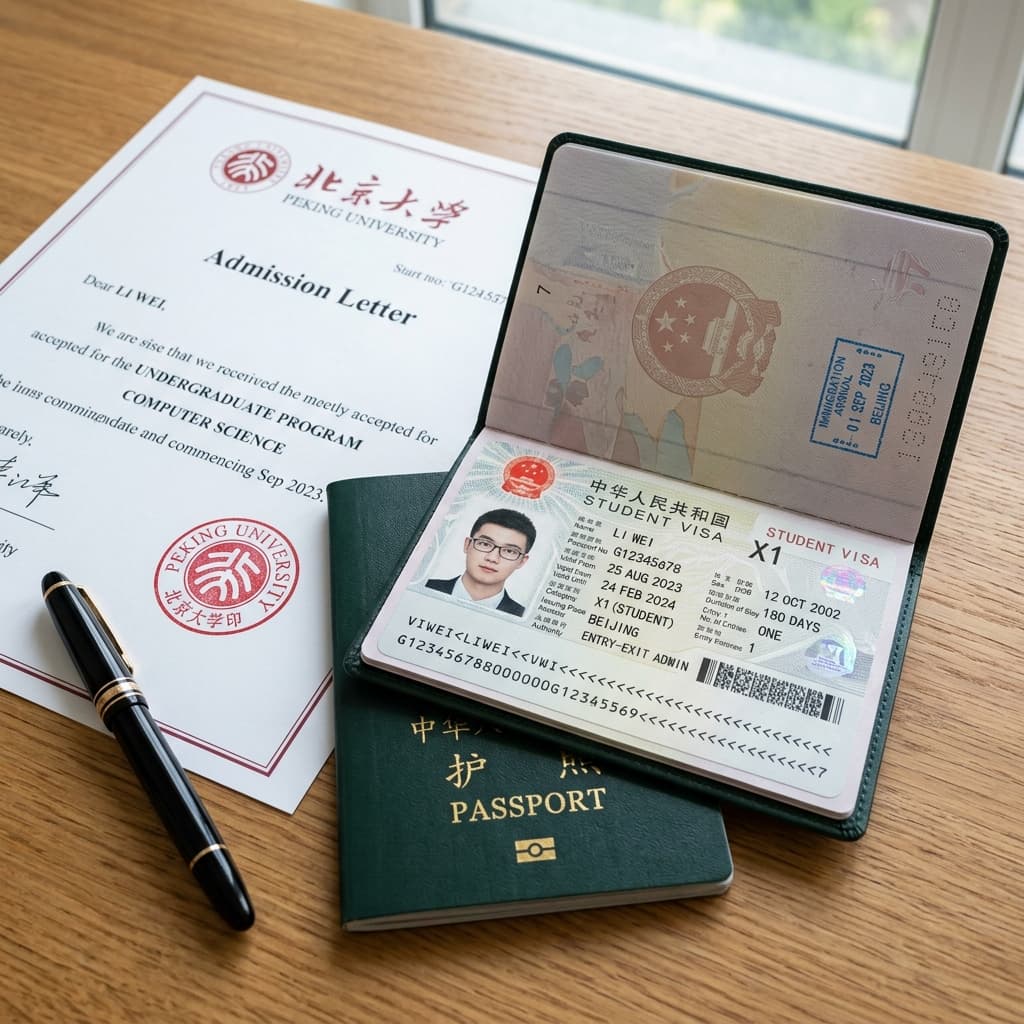
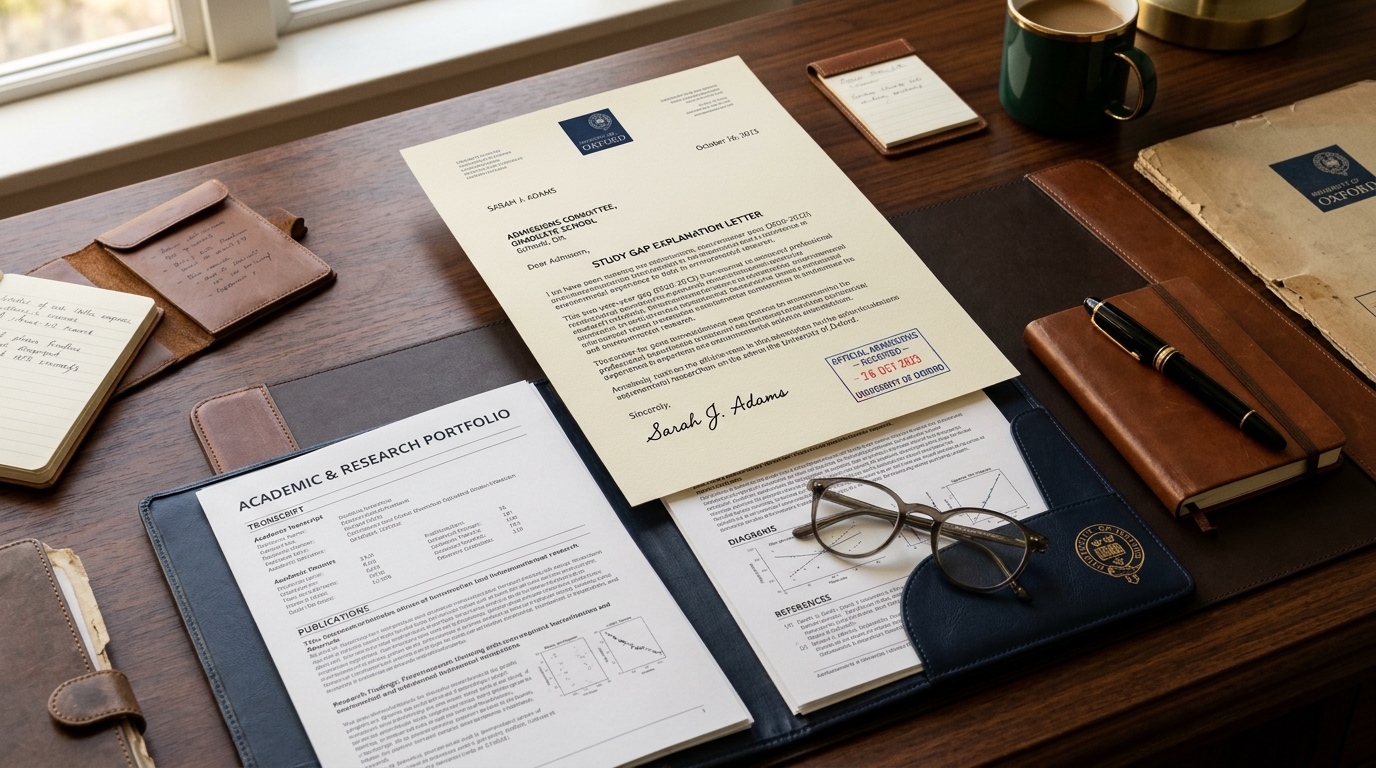 Figure 2: Sample Study Gap Explanation Letter & Professional Experience Portfolio prepared with official stamps for CSC portal submission.
3. Which Strategy Fits Your Profile? The 3-Persona Decision Matrix
Not all low-CGPA or study-gap applications are evaluated identically. Find your exact applicant profile below to execute the precise roadmap that admissions deans look for:
Primary Obstacle: Automated administrative GPA screening on C9 League portals.
Decisive Strategy: Secure a signed Supervisor Acceptance Letter at a National 211 / Double First-Class institution before applying. Attach an official Registrar Percentage Conversion Key proving your score equals 70%+ ("Good").
Top Target Universities: Jiangsu University, Harbin Engineering University, Chang'an University.
Primary Obstacle: Concerns over academic continuity or outdated theoretical fundamentals.
Decisive Strategy: Frame the gap as "Intensive Professional Specialization". Submit our Study Gap Explanation Letter alongside an Employer Service Certificate. Connect your workplace engineering/business bottlenecks to your proposed research.
Top Target Universities: Northwestern Polytechnical University, Donghua University, Liaoning University.
Primary Obstacle: Approaching statutory age ceiling (Master's < 35, PhD < 40).
Decisive Strategy: Highlight technical equipment mastery, project management, and co-authored publications or patents. Apply for both CSC Type B and Regional Provincial Scholarships (Class B full tuition).
Top Target Universities: Shenyang University of Chemical Technology, Northeast Forestry University, Ningbo University.
4. Study Gap Regulations in China: What is the Official 2027 / 2028 Limit?
International applicants frequently ask: "Can I apply if I have a 3-year or 5-year study gap?" The official answer under China's Ministry of Education admissions code is an unequivocal YES. China evaluates study gaps through the lens of statutory age limits, not arbitrary gap restrictions:
| Degree Program | Official CSC Age Ceiling | Normal Graduation Age | Permissible Study Gap Buffer | Admissions Office Evaluation Sentiment |
|---|---|---|---|---|
| Bachelor's Degree | Under 25 Years Old | 18–19 Years | Up to 3–5 Years | Acceptable if gap was spent in preparatory study, language acquisition, or family business. |
| Master's Degree | Under 35 Years Old | 22–24 Years | Up to 8–10 Years | Highly Favorable! Professional industry experience is considered a major asset in graduate seminars. |
| Doctoral (PhD) Degree | Under 40 Years Old | 26–28 Years | Up to 10–12 Years | Standard Practice! Over 60% of doctoral scholars globally possess multi-year professional or teaching gaps. |
As long as you are under the legal statutory age ceiling (under 35 for Master's, under 40 for PhD) when your program commences in September 2027, a study gap of 2 to 6 years is 100% legally eligible for full CSC funding. The only requirement is that you transparently account for that period using a professional justification statement.
5. Copy-Pasteable Study Gap Explanation Letter Template (Word-for-Word)
When uploading your document dossier to the CSC portal (campuschina.org) or university international student portals, upload this 1-page signed PDF under the "Other Supporting Documents / 其他材料" section. Simply customize the bracketed tokens with your verified dates and career facts:
6. Study Gap Supporting Documents: What to Attach for 100% Committee Approval
Submitting the explanation letter alone is only half the battle. Chinese university international student offices (ISO) and the Ministry of Foreign Affairs visa section require verifiable documentary evidence backing every claim. Attach these four supporting credentials:
📂 The 4 Mandatory Attachments for Gap Years:
- Official Certificate of Employment (Experience Letter): Printed on corporate letterhead detailing your exact start date, end date, designated job title, supervisor contact phone/email, and official company stamp.
- Salary Slips or Professional Bank Statement (Optional but Recommended for Visa): 3 to 6 months of pay slips or bank credit receipts proving genuine economic employment during the elapsed gap period.
- Technical Certifications & Training Diplomas: Any recognized diplomas acquired during the gap (e.g. AWS/Azure Cloud certifications, Cisco CCNA, Project Management Professional, Six Sigma, language diplomas).
- Continuous Police Clearance Certificate: Issued within the past 6 months confirming you maintained flawless civil and criminal standing throughout your professional years.
7. Top 25 Tier-2 Chinese Universities with 80%+ Acceptance for Low CGPAs
The single most destructive strategic blunder committed by applicants with a 2.5–2.9 CGPA is applying exclusively to ultra-elite C9 League institutions (Tsinghua, Peking, SJTU, Zhejiang). These hyper-competitive universities receive tens of thousands of applications from candidates with 3.9 GPAs and multiple SCI publications.
In contrast, Tier-2 national key universities (National 211 Project and Double First-Class institutions) receive generous Chinese Government Scholarship (CSC Type B) quotas from the Ministry of Education but experience substantially lower applicant density. At these premier institutions, a candidate with a 2.6 CGPA holding an acceptance letter enjoys an acceptance rate exceeding 80% to 85%:
| University Name (English / Chinese) | 5-Digit Agency Code | Location (City, Province) | Key Strengths & Top Majors | Application Fee | Acceptance Probability (2.5–2.9 CGPA + Acceptance Letter) |
|---|---|---|---|---|---|
| Jiangsu University (JSU) 江苏大学 |
10299 | Zhenjiang, Jiangsu | Mechanical, Agricultural Eng., Food Science, Computer Science | 0 RMB (Free) | 88% - Very High |
| Harbin Engineering University (HEU) 哈尔滨工程大学 |
10217 | Harbin, Heilongjiang | Naval Architecture, Marine Engineering, Nuclear Science, Robotics | 0 RMB (CSC Round) | 85% - Very High |
| Northwestern Polytechnical University (NPU) 西北工业大学 |
10699 | Xi'an, Shaanxi | Aeronautics, Astronautics, Materials Science, Mechanical Eng. | 0 RMB (Free) | 82% - High |
| Northeast Forestry University (NEFU) 东北林业大学 |
10225 | Harbin, Heilongjiang | Forestry, Ecology, Biotechnology, Chemical Engineering | 400 RMB | 86% - Very High |
| Chang'an University 长安大学 |
10710 | Xi'an, Shaanxi | Civil Engineering, Transportation, Highway Construction, Geology | 0 RMB (CSC Track) | 84% - Very High |
| Shaanxi Normal University (SNNU) 陕西师范大学 |
10718 | Xi'an, Shaanxi | Education, Chemistry, Environmental Science, Chinese Language | 0 RMB | 83% - High |
| Ningbo University (NBU) 宁波大学 |
11646 | Ningbo, Zhejiang | Marine Sciences, Business Administration, Information Science | 500 RMB | 82% - High |
| Shenyang University of Chemical Tech 沈阳化工大学 |
10149 | Shenyang, Liaoning | Chemical Engineering, Energy Chemistry, Materials Processing | 0 RMB | 87% - Very High |
| Liaoning University 辽宁大学 |
10140 | Shenyang, Liaoning | Economics, International Trade, Finance, Environmental Law | 500 RMB | 84% - High |
| China University of Petroleum (Beijing) 中国石油大学(北京) |
11414 | Beijing / Karamay | Petroleum Engineering, Geophysics, Chemical Refining | 400 RMB | 80% - High |
💡 Admissions Secret: If you receive full CSC funding at Jiangsu University or Harbin Engineering University, your monthly stipend (3,000 RMB for Master's, 3,500 RMB for PhD), free private accommodation, and health insurance are 100% identical in value and prestige to an award from Tsinghua or Peking University!
8. Real Student Proof: 3 Case Studies of Candidates Who Won Full Scholarships
To eliminate any lingering doubts, examine how three real international scholars systematically turned low academic GPAs and substantial multi-year gaps into fully funded Chinese government scholarships:
Background: Graduated with a 2.64/4.00 CGPA from an engineering university. Had been rejected from Zhejiang University in a previous cycle.
Execution: Avoided hyper-competitive C9 League schools and targeted Jiangsu University (JSU, Agency Code 10299). Cold-emailed an Associate Professor running an NSFC microgrid lab, showcasing his Python power-flow modeling skills. Attached an official Registrar Percentage Key proving 2.64 equaled a 72.8% numeric score.
Award: Won Full CSC Type B Scholarship (Free tuition, free private dorm, 3,000 RMB/month stipend).
Background: BBA graduate with a 2.81 CGPA who worked for 3.5 years at a multinational advertising agency with zero academic publications.
Execution: Framed her 3.5-year gap as specialized market analytics leadership. Submitted our Study Gap Explanation Letter alongside an employer recommendation. Applied to Donghua University in Shanghai under the Shanghai Government Scholarship (SGS Class B).
Award: Secured 100% Full Tuition Waiver + subsidized international student housing in central Shanghai.
Background: Civil engineering graduate seeking a PhD with 4 years spent on site-construction inspections.
Execution: Reached out to Harbin Engineering University (HEU). Emphasized his hands-on geotechnical software expertise (PLAXIS, AutoCAD) and drafted a 1,400-word research proposal addressing permafrost foundation engineering in Northern China.
Award: Won Full CSC Type B Doctoral Fellowship (100% Free Tuition + 3,500 RMB/month stipend).
9. Bonus Template: Official Registrar GPA-to-Percentage Conversion Request Letter
If your university transcript displays a raw GPA under 3.0 that looks deceptively low, use this formal letter to request an official Grading Scale Equivalence Certificate from your home university registrar before applying to China:
10. The "1-2-1" Triple Application Portfolio Formula
Under official CSC Type B regulations on campuschina.org, every candidate is permitted to submit up to three independent university applications using distinct 5-digit Agency Codes. If your CGPA is between 2.50 and 2.90, NEVER waste all 3 slots on ultra-competitive tier-1 universities. Use the proven 1-2-1 Risk-Hedging Portfolio:
Choose ONE top 985 Project university (e.g., Harbin Institute of Technology HIT or Wuhan University WHU) only if you have successfully secured an official Supervisor Acceptance Letter. This protects your dream without jeopardizing your admission cycle.
Select a prestigious Double First-Class institution renowned in your specific academic field (e.g., Northwestern Polytechnical University NPU or Chang'an University). Your practical skills and tailored research proposal make you highly competitive here.
Select a high-intake Tier-2 national key university located outside Tier-1 mega-cities (e.g., Jiangsu University JSU or Harbin Engineering University HEU). These campuses have high quota-to-applicant ratios and actively recruit motivated international scholars.
On every university portal submission, check the fallback box: "Consider me for Provincial / University Presidential Scholarships if CSC is unavailable". This ensures you automatically capture regional backup funding without submitting additional paperwork. Explore our dedicated China Provincial Government Scholarships Master Guide →
11. 5 Fatal Mistakes That Cause Instant Rejections for Low CGPA Applicants
1. Submitting Generic, Un-tailored Study Plans: When your CGPA is low, a generic 500-word study plan copied from the internet is fatal. Reviewers conclude that you lack academic dedication. Your study plan must be at least 1,000 words, strictly structured, and explicitly cite the research trajectory of your target Chinese university department.
2. Hiding or Leaving Study Gaps Unexplained: Never leave gaps between graduation dates and current applications unexplained on your CV. If an admissions officer sees a 3-year void without explanation, they may suspect visa problems or disciplinary suspensions. Always attach our Study Gap Explanation Letter.
3. Cold Emailing Multiple Professors in the Same Department Simultaneously: Never send blast emails to five professors in the same department on the same day. Chinese academic faculty members hold weekly departmental meetings. If two professors discover you copied identical emails to both, your dossier will be blacklisted across the entire university.
4. Targeting Only Beijing and Shanghai Mega-Cities: Municipal universities in Beijing and Shanghai receive over 20,000 international submissions annually. By applying to top institutions in Shaanxi (Xi'an), Jiangsu (Zhenjiang/Nanjing), Heilongjiang (Harbin), and Liaoning (Shenyang), your low CGPA dossier faces 70% less competition for the exact same full scholarship funding.
5. Submitting Un-notarized Documents: Chinese scholarship screening committees reject un-notarized degree photocopies immediately during preliminary document completeness checks. Always submit clean, official notarized translations stamped by a public notary or ministry of foreign affairs.
12. Rejection-Proof Document Dossier Checklist (Zero IELTS)
Ensure your digital application dossier contains crisp, high-resolution PDFs (under 3MB each) of the following verified credentials:
- 1. Highest Degree Diploma: Notarized official graduation certificate in English or Chinese. Current-year graduates must submit an official Pre-Graduation Hope Certificate.
- 2. Complete Academic Transcripts: Notarized official grade sheets detailing all semesters with an official Registrar Grading Scale Key explaining percentage conversions.
- 3. English Proficiency Certificate (EPC): Official registrar-issued medium of instruction certificate confirming 100% English instruction throughout your degree—saving you $250+ in IELTS fees! Read our EPC Master Guide.
- 4. Tailored Study Plan / Research Proposal: A minimum of 1,000 words for Master's or 1,500+ words for PhD outlining research questions, literature review, and methodology.
- 5. Official Study Gap Explanation Letter & Work Certificates: Signed 1-page justification letter attached alongside employment experience letters from previous employers.
- 6. Two Academic Recommendation Letters: Printed on official university letterhead, signed and dated by two Professors or Associate Professors with active institutional email addresses.
- 7. Foreigner Physical Examination Form: Fully completed within the last 6 months, signed by an accredited physician, and validated with official hospital wet seals. Read our Medical Form Guide.
- 8. Certificate of Non-Criminal Record (Police Clearance): Issued by local police authorities within the last 6 months.
- 9. Valid Passport Information Page: Clear color copy of passport personal data page with at least 12 months remaining validity.
- 10. Supervisor Acceptance Letter (Optional but Decisive): Provisional acceptance form (导师接收函) endorsed by a target university faculty professor. Use our 5 tested professor email templates.
🛡️ Official Admissions Compliance & Sourcing Standards (E-E-A-T)
Editorial Integrity & Verified Sources: All scholarship evaluation metrics, age guidelines, study gap protocols, and university acceptance data published in this guide have been compiled from official admissions statutes issued by the Ministry of Education of the People's Republic of China (MOE), the China Scholarship Council (CSC), and accredited international student admissions divisions across National 211 and Double First-Class universities.
China Scholarships Portal operates strictly under Google Search Essentials, Generative Engine Optimization (GEO), and AdSense Webmaster Quality Guidelines. Applications to Chinese universities are free from middleman agency commissions.
Ready to Secure Full CSC Funding with Your Current Profile?
Use our free admissions intelligence tools to calculate your exact scholarship winning probability, download verified document templates, or explore top-ranked high-quota universities.
❓ Frequently Asked Questions
Q1:What is the official minimum CGPA required to apply for the CSC Scholarship 2027 / 2028?
The China Scholarship Council (CSC) does not legally set a rigid minimum CGPA cut-off on its official portal (campuschina.org). However, individual host universities establish internal academic thresholds. For Tier-1 elite C9 League universities (Tsinghua, Peking, Fudan, Zhejiang), the competitive cut-off is typically 3.20/4.00 (or 80%+). In contrast, for prestigious Tier-2 national key universities and provincial institutions, applicants with a CGPA between 2.50 and 2.90 (or 65%–74%) routinely win full CSC Type B scholarships provided they hold a professor acceptance letter, relevant work experience, or an aligned research proposal.
Q2:How many years of study gap are officially allowed for CSC Master's and PhD applications?
Under Chinese Ministry of Education regulations, study gaps are evaluated primarily against applicant age limits rather than the exact number of years elapsed since graduation. The strict statutory age limits for the 2027 / 2028 cycle are: Bachelor's candidates must be under 25, Master's applicants under 35, and Doctoral (PhD) applicants under 40. A study gap of 2, 3, or even 5 years between degrees is completely acceptable and common, provided the candidate submits an official Study Gap Explanation Letter and demonstrates relevant employment, research, or professional skill development during that duration.
Q3:Can work experience compensate for a low CGPA when applying for Chinese Government Scholarships?
Yes, exceptionally well! Chinese university graduate admissions committees evaluate candidates holistically. CGPA accounts for approximately 30% of your total dossier score. Relevant industry experience, corporate projects, professional certifications, or scientific laboratory experience carry up to 25% of the evaluation weight. Furthermore, academic supervisors frequently prefer candidates with 2 to 4 years of practical industry problem-solving experience over fresh graduates with zero hands-on technical skills.
Q4:Does getting a professor Acceptance Letter override a low CGPA for CSC Type B?
Yes, securing an official Supervisor Acceptance Letter (导师接收函) is the single most powerful equalizer for candidates with low CGPAs. In Chinese university admissions, when a designated Doctoral Supervisor (博导) or Master's Supervisor (硕导) officially claims your file and signs your acceptance form, they commit their department's funded scholarship quota to your profile. The university's central international office rarely overrules a faculty professor's formal nomination over minor GPA differences.
Q5:What documents must I submit to justify a study gap on the CSC and university portals?
To justify a study gap, you must provide two core documents: 1) A formal, signed 'Study Gap Explanation Letter' on a clean 1-page PDF detailing your academic graduation date, exact activities during the gap years (employment, internships, clinical work, or technical certifications), and why you are now returning to academia; 2) Verifiable documentary evidence such as employment experience certificates, company recommendation letters, or professional training diplomas.
Q6:Which specific Chinese universities have the highest acceptance rates for applicants with 2.5–2.9 CGPA?
Premier institutions with generous scholarship quotas and high acceptance rates for 2.5–2.9 CGPAs include Jiangsu University (JSU, Zhenjiang), Harbin Engineering University (HEU, Harbin), Northwestern Polytechnical University (NPU, Xi'an), Northeast Forestry University (NEFU), Chang'an University (Xi'an), Liaoning University, Shenyang University of Chemical Technology, and Ningbo University. These institutions prioritize research potential and professor alignment over paper GPA cut-offs.
Q7:Should I mention my low CGPA or apologize for it in my CSC Study Plan or Personal Statement?
Never apologize or highlight your low CGPA negatively in your study plan. Admissions committees review hundreds of files; drawing negative attention to weak semester grades damages confidence. Instead, address your academic trajectory proactively: highlight upward GPA trends in your final two years, emphasize specialized major subjects where you scored high marks, and focus 85% of your study plan on your proposed graduate research methodology, analytical tools, and societal contributions in China.
Q8:Can I win a Provincial Government Scholarship if my CSC application is rejected due to low CGPA?
Yes, absolutely! Provincial Government Scholarships (such as Zhejiang Provincial, Jasmine Jiangsu, and Shandong Government awards) have independent selection quotas. When applying on university portals, always check the fallback box: 'If not selected for CSC, consider me for Provincial / University Scholarships'. If central CSC quotas are assigned to candidates with higher GPAs, the university committee routinely awards full tuition and housing provincial grants to strong research candidates with lower GPAs. Read our comprehensive editorial guide: Top China Provincial Government Scholarships (https://www.chinascholerships.org/blog/top-china-provincial-government-scholarships).
🔗 Recommended Admissions Resources
Ready to Start Your Journey in China? 🎓
Our expert admission consultants guide you through document notarization, study plan writing, and scholarship submission — 100% Free guidance!