Chinese Language Scholarship 2027 | 1-Year CIS CLEC Guide
The Chinese Language Program in China (2027 / 2028 Intake) is the premier linguistic, academic, and cultural gateway for international students seeking higher education and global careers in the People's Republic of China. Administered centrally by the Center for Language Education and Cooperation (CLEC) under China's Ministry of Education (MOE)—commonly recognized worldwide as the Confucius Institute Scholarship (CIS)—this program provides fully funded scholarships and ultra-affordable university pathways for both 1-Academic-Year (11 Months) and 6-Month (1-Semester / 5 Months) intensive Mandarin study.
Whether you are a fresh high school graduate with 12 years of education (FSc, ICS, I.Com, DAE, A-Levels) looking for an IELTS-free college launchpad, or a university graduate preparing for a fully funded Master's or PhD degree under the CSC Chinese Government Scholarship, Chinese language programs offer an unbeatable package: 100% Free Tuition, Free On-Campus International Student Dormitory, comprehensive national health insurance, and a monthly tax-free living allowance of 2,500 RMB / month (~$350 USD) with zero IELTS required.
Quick Summary: Chinese Language Programs & CIS Scholarships 2027 / 2028 At a Glance
- Official Program Focus: Non-degree Mandarin Chinese linguistic immersion, cultural education, and HSK 3.0 academic training.
- Available Study Durations: 1 Academic Year (11 months, September Intake, X1 Visa) or 6 Months / 1 Semester (5 months, March Spring or September Fall Intake, X2 Visa).
- Admission Right After High School: Students who completed 12th grade / Intermediate (FSc, ICS, I.Com, DAE, A-Levels, or High School Diploma) are 100% eligible (Ages 16–35).
- Fully Funded CIS Financial Package: 100% Free Tuition + Free Double Dormitory + 2,500 RMB / month Living Allowance + Comprehensive Medical Insurance.
- Affordable Self-Funded Alternative: Direct university language programs cost only 6,000 to 12,000 RMB / year ($850 to $1,700 USD / year) for students without prior HSK.
- Core Required Documents: White background 2x2 photo, passport (18+ mo), Foreigner Physical Exam Form, Police Clearance, and notarized high school certificate & transcripts.
- Central Directory & Tools: For matched host universities, open quotas, and eligibility calculators, explore our Chinese Language Scholarships Master Hub.
1. What is the Chinese Language Program in China? (CIS / CLEC vs University Tracks)
The Chinese Language Program is an intensive non-degree linguistic immersion curriculum taught directly inside accredited Chinese national universities. In 2020, China's Ministry of Education restructured international Mandarin initiatives under the Center for Language Education and Cooperation (CLEC), creating the official title: International Chinese Language Teachers Scholarship (CIS).
Today, over 150 top Chinese national universities host international language scholars—including the world-famous Beijing Language and Culture University (BLCU), East China Normal University (ECNU) in Shanghai, Beijing Foreign Studies University (BFSU), Tianjin Foreign Studies University (TFSU), and Zhejiang University (ZJU) in Hangzhou. Students learn daily practical conversation, HSK grammar, Hanzi character writing, and Chinese business communications taught exclusively by native professors specialized in Teaching Chinese as a Second Language (TCSL).
2. 1-Year vs 6-Month (1-Semester) Language Program Comparison
CLEC and Chinese national universities offer two distinct program durations tailored to different student goals, budgets, and timelines:
A. 1-Academic-Year Chinese Language Program (11 Months)
- Intake & Timeline: Commences annually in September (Fall Intake) and concludes in July of the following year (11 continuous months).
- Language Progression: Designed to take complete beginners or low-level speakers (HSK 0–2) to complete operational fluency (HSK 4 or HSK 5). Students take a placement test during orientation week to be grouped into Beginner, Intermediate, or Advanced classes.
- Monthly Living Stipend: Full CIS scholars receive 2,500 RMB / month for 11 months (totaling 27,500 RMB cash allowance directly into their Chinese ICBC or Bank of China account).
- Visa Category: X1 Student Visa (>180 days). Converted into a multi-entry Foreigner Residence Permit inside China within 30 days of arrival.
B. 6-Month / 1-Semester Chinese Language Program (5 Months)
- Intake & Timeline: Offered twice every academic year: Spring (March) Intake and Fall (September) Intake. Ideal for students who want a fast semester abroad or missed the Fall cycle.
- Language Progression: Covers foundation Mandarin, daily survival conversation, and fundamental Hanzi characters (elevating students from HSK 0/1 to HSK 2/3).
- Monthly Living Stipend: Full CIS scholars receive 2,500 RMB / month for 5 months (totaling 12,500 RMB cash allowance).
- Visa Category: X2 Student Visa (≤180 days). Valid for the full duration of your study without needing local medical conversion or residence permit processing.
| Program Feature | 1-Academic-Year Program | 6-Month (1-Semester) Program | Low-Budget Self-Funded Option |
|---|---|---|---|
| Program Duration | 11 Months (2 Semesters) | 5 Months (1 Semester) | 1 Semester or 1 Year Flexible |
| Intake Windows | September (Fall Intake Only) | March (Spring) & Sept (Fall) | March (Spring) & Sept (Fall) |
| Tuition Fee | 100% Free (Saved ~18,000 RMB) | 100% Free (Saved ~10,000 RMB) | Low: 6,000–12,000 RMB / year |
| Campus Dormitory | 100% Free On-Campus Dorm | 100% Free On-Campus Dorm | Subsidized: 250–500 RMB / mo |
| Monthly Living Stipend | 2,500 RMB / month (~$350 USD) | 2,500 RMB / month (~$350 USD) | None (Self-funded meals & living) |
| Student Visa Type | X1 Visa (Converts to Residence Permit) | X2 Visa (Short-Term Study Visa) | X1 (1 Year) or X2 (1 Semester) |
| Total Scholarship Value | ~48,000 RMB (~$6,750 USD) | ~24,000 RMB (~$3,400 USD) | Economical Self-Funded |
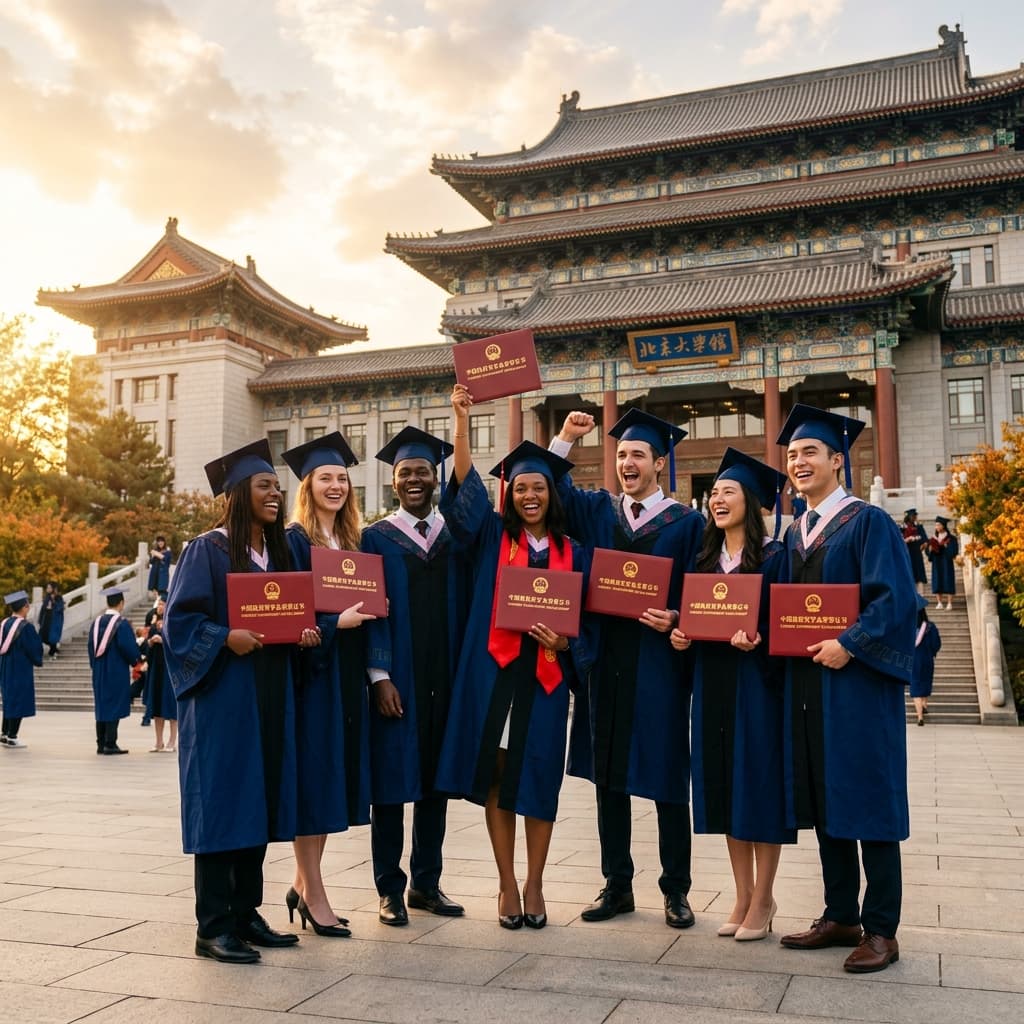
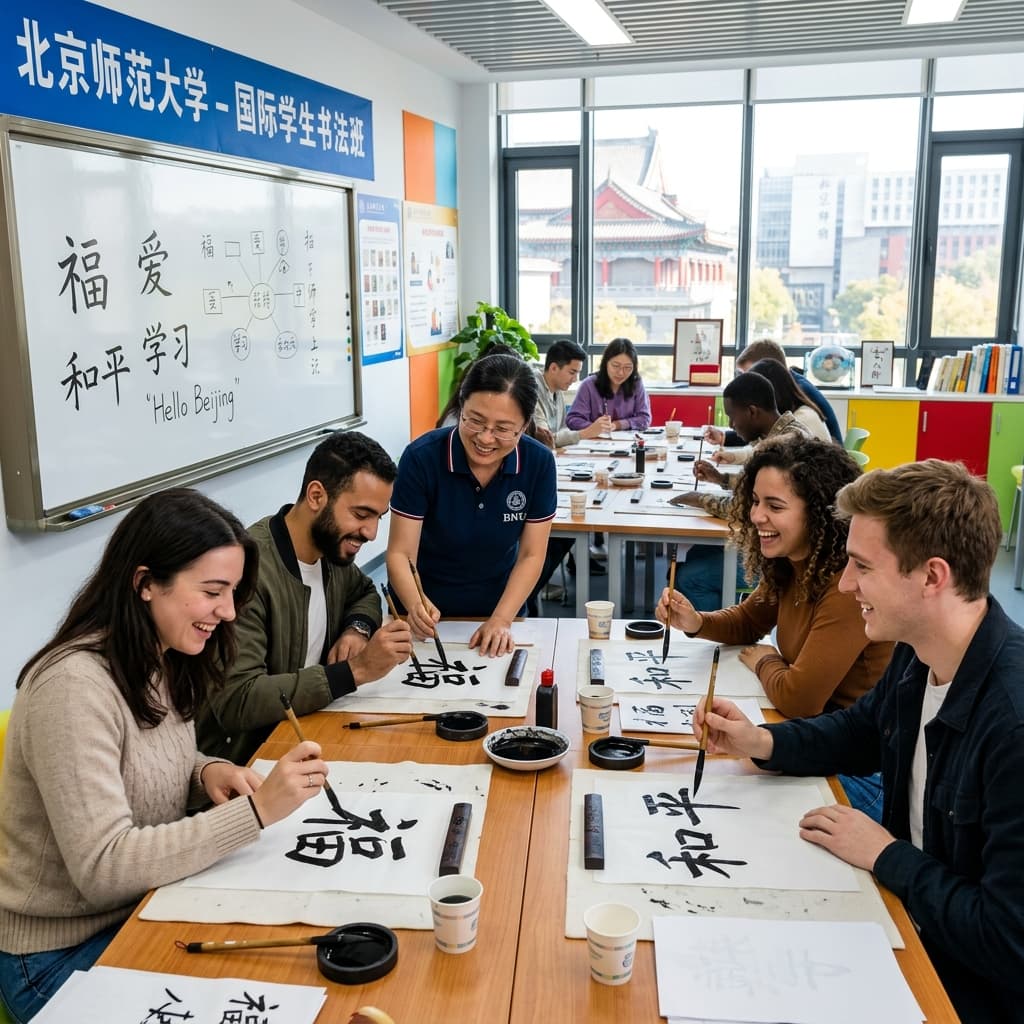
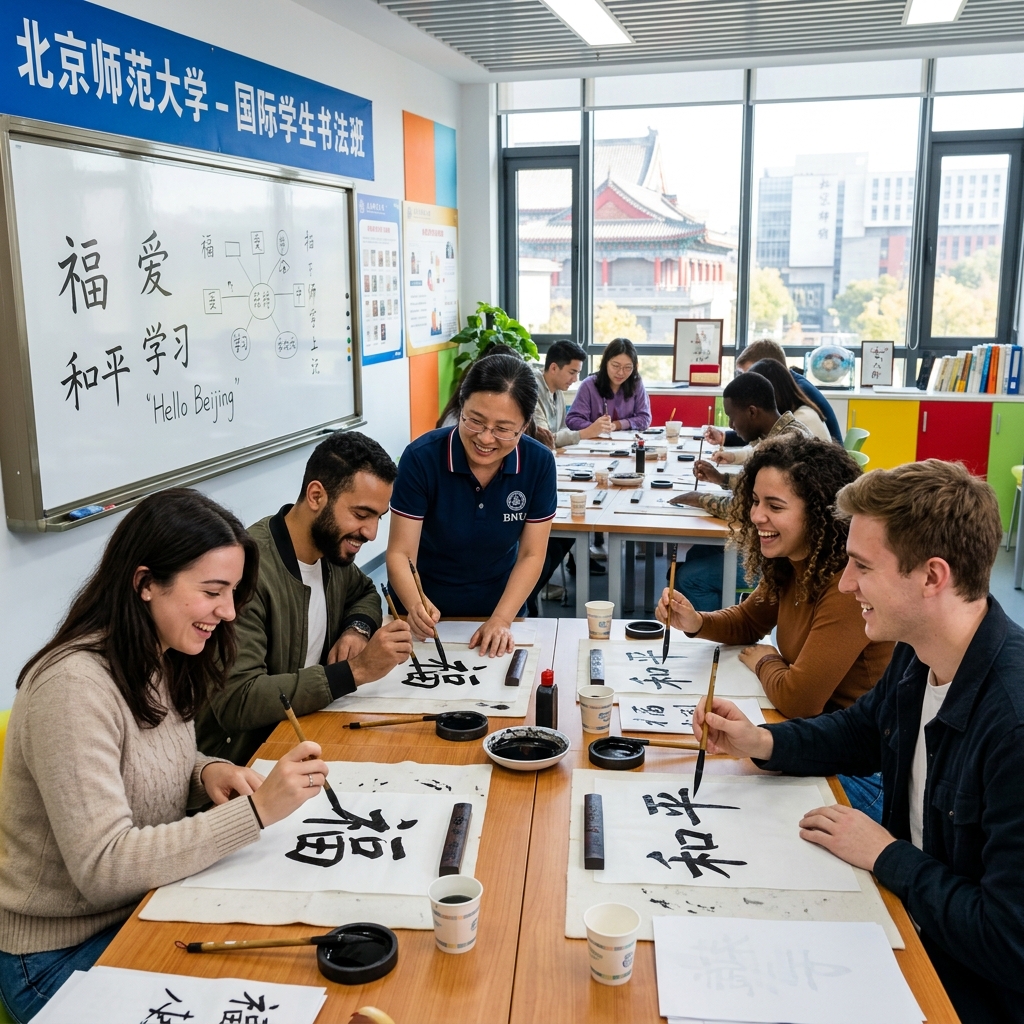 Immersive Chinese language and cultural education at top Chinese universities provides complete conversational fluency and direct pathways to CSC degree scholarships.
3. Direct Admission After High School (12th Grade / Intermediate / DAE / A-Levels)
A common misconception among international students is that scholarships in China are reserved only for university graduates. This is 100% incorrect! Students who have completed high school (12 years of education) are fully eligible to apply for both 1-Year and 6-Month Chinese Language Programs.
Eligible secondary credentials include:
- Intermediate / Higher Secondary Certificate (HSSC): FSc Pre-Medical, FSc Pre-Engineering, ICS (Computer Science), and I.Com from Pakistan, Bangladesh, and India.
- 3-Year Diploma of Associate Engineering (DAE): DAE in Civil, Mechanical, Electrical, Chemical, or Information Technology. (Explore our specialized 3-Year Polytechnic & Vocational Diploma Hub).
- A-Levels / Cambridge International: High school graduates holding Cambridge GCE A-Levels or International Baccalaureate (IB) diplomas.
- High School Diploma: 12th grade graduation certificates from Central Asian, African, and Middle Eastern national educational boards.
Age Limits & Eligibility Criteria: Applicants must be between 16 and 35 years of age (active Chinese language teachers can qualify up to 45 years of age). You must hold a minimum academic average of 60% and possess a clean physical and criminal background.
Why This is the Ultimate Pre-College Strategy: Taking a 1-year language scholarship after high school allows students to master Mandarin under a 2,500 RMB/month stipend. Once in China with HSK Level 4 or 5 in hand, students seamlessly transition into fully funded Bachelor's degrees under CSC Type B (University Program), saving tens of thousands of dollars compared to Western universities.
4. Country-Specific Scholarships & Priority Quotas
China maintains bilateral educational agreements with partner nations, offering dedicated scholarship quotas and expedited approvals for specific regions:
- Pakistan (CPEC Priority Quotas): Under the China-Pakistan Economic Corridor (CPEC) framework, Pakistani students receive massive bilateral support. Confucius Institutes operating at the National University of Modern Languages (NUML Islamabad), University of the Punjab (Lahore), University of Karachi, and University of Agriculture Faisalabad (UAF) nominate hundreds of Pakistani students annually for 1-year language scholarships.
- Bangladesh & South Asia: Confucius Institutes at the University of Dhaka, North South University, and BRAC University provide direct recommendation letters for Bangladeshi scholars seeking language tracks before STEM and textile engineering degrees.
- Central Asian Nations (Silk Road Quotas): Candidates from Kazakhstan, Uzbekistan, Kyrgyzstan, Tajikistan, and Turkmenistan benefit from expansive Belt and Road language quotas, training cross-border logistics and trade coordinators.
- African Nations (FOCAC Framework): Under the Forum on China-Africa Cooperation (FOCAC), students from Nigeria, Kenya, Ghana, Ethiopia, Tanzania, and Egypt receive dedicated CLEC language grants to study in major Chinese industrial centers.
- ASEAN & Lancang-Mekong Countries: Dedicated language exchange programs for scholars from Thailand, Vietnam, Indonesia, and Malaysia.
5. Low-Fee & Affordable Chinese Language Programs (Self-Funded Alternative)
What if you do not meet the HSK 3 requirement for a full CIS scholarship, or the annual scholarship quota at your local Confucius Institute is exhausted? You should still study in China! Chinese national universities offer the most economical, high-quality language tuition on Earth.
While language schools in the UK, USA, Canada, or Australia cost between $12,000 and $25,000 USD per year, Chinese universities in Tier-2 and Tier-3 cities provide accredited language training for just a fraction of that cost:
- Annual Tuition Fees: Only 6,000 to 12,000 RMB / year ($850 to $1,700 USD / year), or 3,500 to 6,000 RMB / semester ($500 to $850 USD).
- On-Campus Accommodation: International student double rooms range from 250 to 500 RMB / month ($35 to $70 USD / month) including utilities, high-speed WiFi, and air conditioning.
- Monthly Living & Food Costs: Nutritious meals in university canteens cost approximately 1,000 to 1,500 RMB / month ($140 to $210 USD / month). (Calculate your personal budget using our Student Cost Calculator Tool).
- Second-Semester Scholarships: Over 70% of self-funded language students who achieve top grades and perfect attendance in their first semester are awarded university presidential or provincial partial scholarships covering 50% to 100% of their second semester tuition!
6. Comprehensive Document Checklist (Exhaustive & Mandatory)
To avoid instant rejection by university admissions bureaus and CLEC portal reviewers, assemble all seven mandatory documents strictly according to official specifications:
-
1. White Background Passport-Sized Photograph:
- Dimensions: 2-inch x 2-inch (or 33mm x 48mm), high-resolution digital studio scan.
- Background: Pure plain white background only (blue, grey, or colored backgrounds are disqualified).
- Attire: Dark or contrasting clothing (do NOT wear a white shirt, which blends into the background).
- Features: Both ears, forehead, and natural hairline must be completely visible. No eyeglasses with glare, no colored contact lenses, and no excessive shadows.
-
2. Valid International Passport:
- Color scan of the main photo & bio data page.
- Validity: Must be valid for at least 18 months from the date of submission.
- Must have at least two blank visa pages.
-
3. Foreigner Physical Examination Form (MOE Medical Form):
- Must use the official bilingual Chinese/English form issued by China's Ministry of Education. (Download Verified Medical Form Template).
- Critical Stamp Rule: The official round stamp of the designated hospital must be stamped directly across the applicant's photograph on Page 1 AND at the bottom conclusion of Page 2 alongside the examining physician's signature. Forms without the round stamp over the photo are rejected automatically.
- All mandatory lab tests must be completed: Chest X-ray, ECG, HIV, Syphilis, Hepatitis B/C, and liver function blood panels.
- Validity: Strictly valid for 6 months only from the date of medical examination.
-
4. Police Clearance Certificate (Non-Criminal Record):
- Issued by your local police department, city security division, or Ministry of Foreign Affairs.
- Must be issued within 6 months of your application submission.
- Must be officially translated into English or Chinese and notarized.
-
5. High School Passing Certificate & DMC / Marksheet Transcript:
- For high school graduates: Matriculation / Secondary Certificate + Intermediate / FSc / ICS / DAE / A-Level diploma and detailed mark sheets.
- For university graduates: Bachelor's degree certificate and complete academic transcript.
- Color scanned from original documents and officially notarized by an authorized notary public.
-
6. Confucius Institute Recommendation Letter:
- Issued and personally signed by the Director of your local Confucius Institute (CI) or Confucius Classroom (CC).
- If your region has no CI: An authorized recommendation letter from the Education Section of the Chinese Embassy or Consulate General in your home country.
-
7. HSK & HSKK Score Reports (For CIS Scholarship Track):
- For 1-Year Program: Minimum score of 210 on HSK Level 3, plus an official HSKK Oral score.
- For 1-Semester Program: Minimum score of 180 on HSK Level 3, plus an official HSKK score.
- Validity: Valid within 2 years of the test date. (Note: Self-funded direct university applicants do NOT need prior HSK scores).
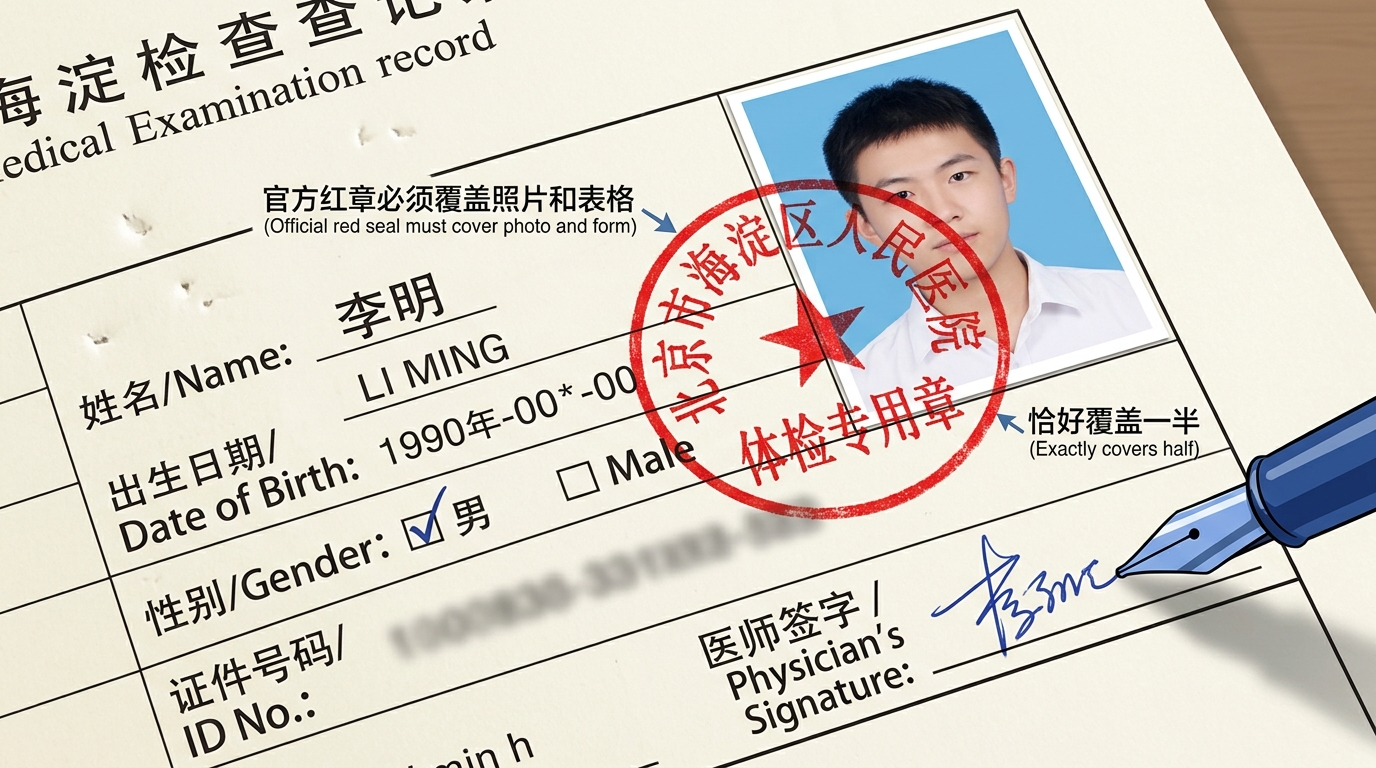 Official Foreigner Physical Examination Form requirement: The official round hospital stamp must overlap the student's photograph on Page 1 and appear on the final conclusion of Page 2.
7. Visa Regulations: X1 Visa vs X2 Visa Differences & Post-Arrival Procedures
Once you win admission and receive your official JW202 / DQ visa certificate and university admission letter, you must apply for your student visa at the nearest Chinese Visa Application Service Center (CVASC) or Chinese Embassy. The duration of your language course determines your visa category:
X1 Student Visa (1-Academic-Year Students — Study > 180 Days)
- Validity: Issued as a single-entry visa valid for 30 days from your date of entry into China.
- Residence Permit Conversion: Within 30 days of landing in China, your host university's International Student Office will take you to the local Entry-Exit Inspection and Quarantine Bureau for health verification and then to the Public Security Bureau (PSB) Exit-Entry Administration.
- Foreigner Residence Permit (居留许可): The PSB converts your X1 visa into a green Foreigner Residence Permit sticker inside your passport. This permit allows unlimited multiple entries in and out of China for the entire duration of your scholarship year.
X2 Student Visa (6-Month / 1-Semester Students — Study ≤ 180 Days)
- Validity: Issued for short-term study with validity matching your semester (typically 150 to 180 days). Can be single or double entry.
- No Residence Permit Required: You do NOT need to convert an X2 visa into a residence permit. You remain on the X2 visa for your entire stay in China, saving approximately 800 to 1,200 RMB in Chinese medical inspection and residence permit issuance fees!
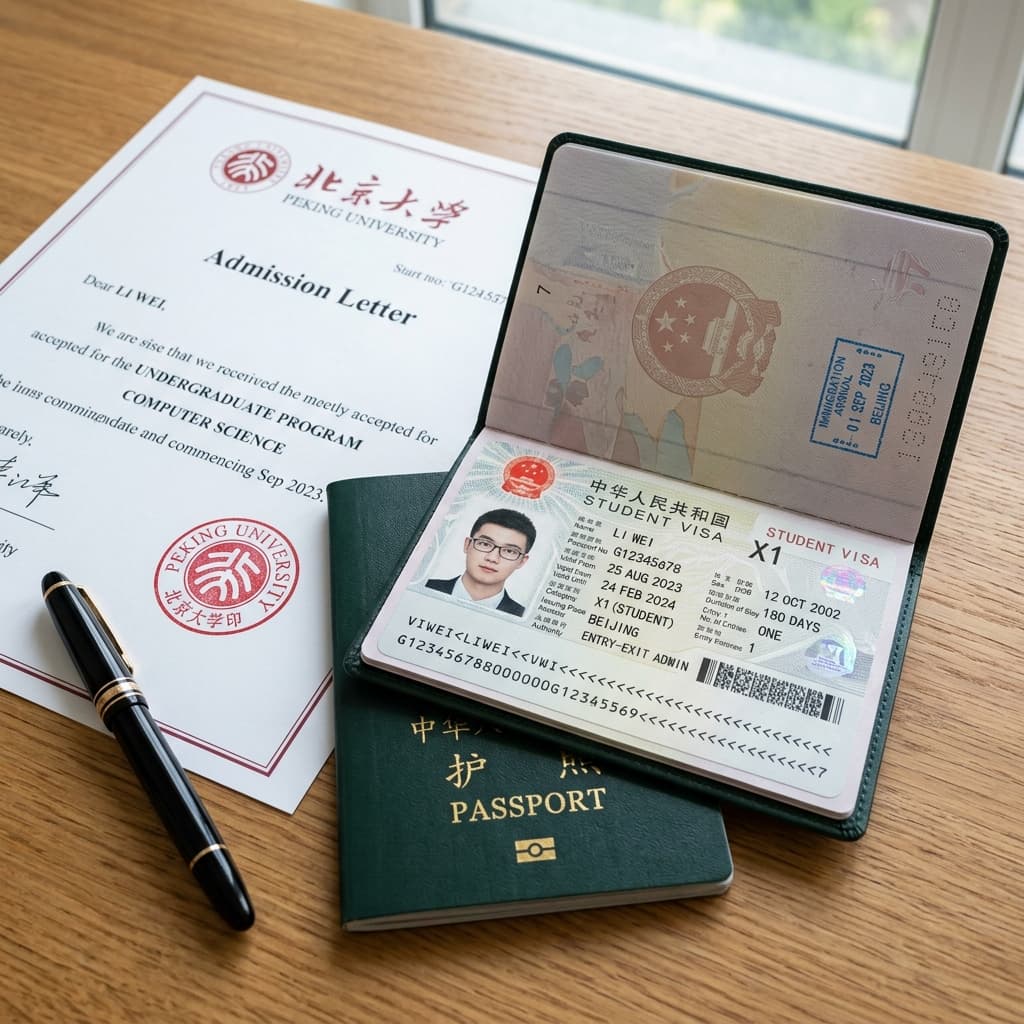
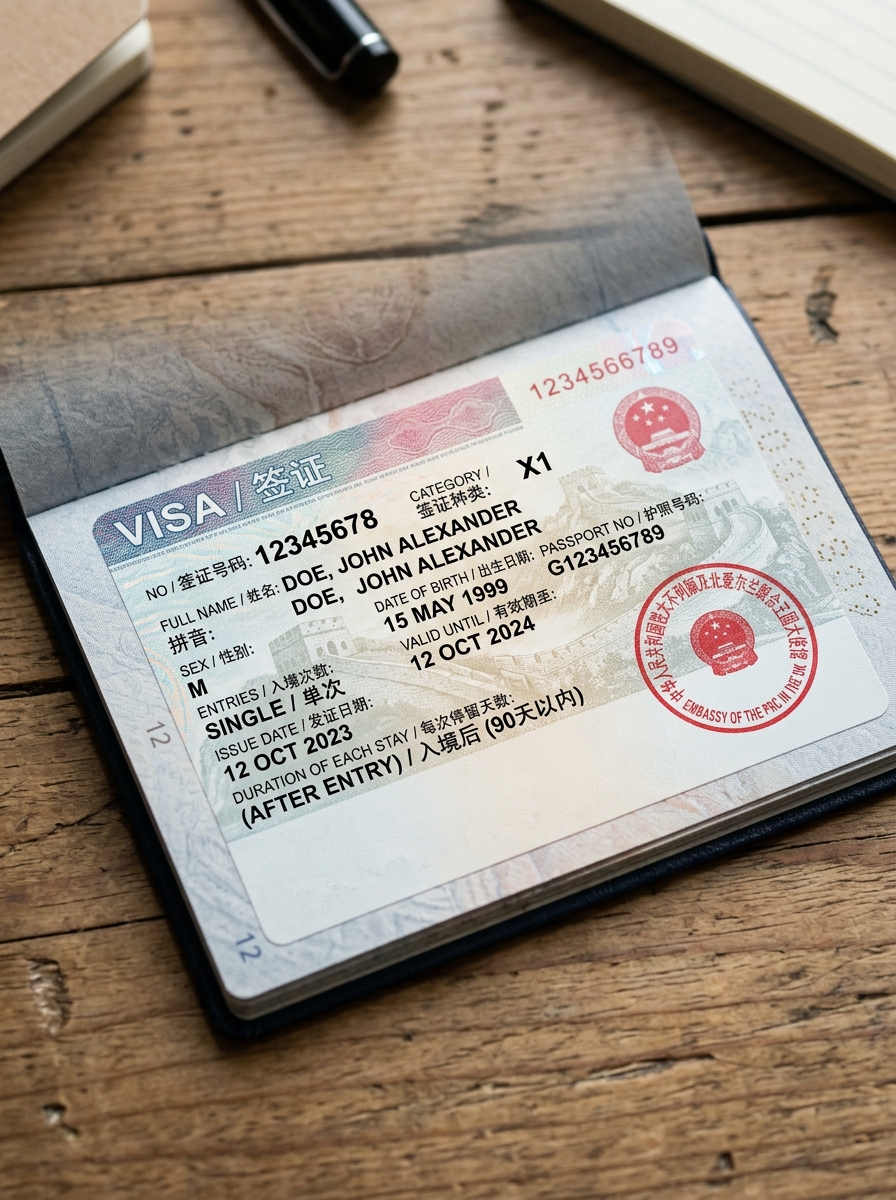 Official sample of an X1 Chinese Student Visa. 1-Year language scholars must convert this entry visa into a multi-entry Foreigner Residence Permit within 30 days of arrival.
8. Step-by-Step Application Walkthrough on cis.chinese.cn
Follow this exact operational roadmap to register and submit your scholarship dossier without portal errors:
- Step 1: Account Registration: Visit cis.chinese.cn (International Chinese Language Teachers Scholarship portal) and create an applicant account using your active personal email address.
- Step 2: Basic Information & Recommending Institution: Complete your biographical details, passport number, and emergency contacts. In the dropdown, carefully select your designated Recommending Institution (your local Confucius Institute or Chinese Embassy education desk).
- Step 3: Host University Selection: Choose your first-choice and second-choice host institutions (e.g., First Choice: BLCU Beijing, Second Choice: TFSU Tianjin). Ensure both universities have open quotas for your selected program duration (1-Year or 1-Semester).
- Step 4: Upload Required Documents: Upload high-resolution color PDF/JPG scans of your white-background photo, valid passport, notarized high school diploma & transcripts, Foreigner Physical Examination form, police clearance, and HSK/HSKK score reports.
- Step 5: Submit & Notify Recommending Body: Click Submit and immediately email or visit your Confucius Institute coordinator with your application reference ID so they can log into the CLEC backend and click "Approve Recommendation".
- Step 6: University Review & CLEC Verification: Your target universities will review your dossier and conduct virtual interviews if needed. Once approved by the university, CLEC conducts final quota verification and dispatches your official admission letter and electronic JW202 / DQ visa certificate.
9. Top Host Universities for Chinese Language & Cultural Immersion
Selecting the right host university is crucial for scholarship odds, academic standard, and living comfort. Below are the top 6 national institutions recommended by our admissions editorial board:
- Beijing Language and Culture University (BLCU), Beijing: Known globally as the "Mini-United Nations", BLCU is the undisputed world leader in teaching Chinese as a foreign language. Home to thousands of international students and top HSK test designers.
- East China Normal University (ECNU), Shanghai: Located in central Shanghai, ECNU is famous for its intensive business Chinese curricula and direct ties to multinational trade corporations.
- Tianjin Foreign Studies University (TFSU), Tianjin: Renowned for massive annual CIS scholarship quota allocations, patient faculty, and affordable living expenses just 30 minutes by bullet train from Beijing.
- Zhejiang University (ZJU), Hangzhou: A prestigious C9 Ivy League institution located near West Lake. Ideal for students who want to combine Chinese language with modern technology and e-commerce exposure.
- Xi'an Jiaotong University (XJTU), Xi'an: Set in China's historical ancient capital, XJTU offers unmatched cultural immersion in classical Chinese history and Silk Road heritage.
- Sun Yat-sen University (SYSU), Guangzhou: Flagship comprehensive university in South China, offering exceptional language facilities and proximity to Hong Kong and the Canton Fair commercial network.
10. Launchpad Strategy: How to Bridge from 1-Year Language to a 3,500 RMB/Month CSC Degree Scholarship
The smartest strategy used by tens of thousands of successful international students is using the 1-year language scholarship as a launchpad. Applying directly for Bachelor's, Master's, or PhD degrees from abroad can be competitive due to quota limitations. However, once you are physically inside China on a language program:
- You will pass HSK Level 4 or Level 5 within 9 to 12 months under daily native immersion.
- You can visit professors, laboratories, and departmental deans in person to secure direct Professor Acceptance Letters.
- Your host university will prioritize current on-campus language scholars when awarding their internal CSC Type B (University Program) quotas for Bachelor's (2,500 RMB/mo), Master's (3,000 RMB/mo), and PhD (3,500 RMB/mo) degrees.
11. Common Disqualification Mistakes & How to Avoid Them
- Expired HSK Scores: HSK and HSKK score reports are strictly valid for 2 years from the examination date. Double-check your test date before uploading.
- Incomplete Physical Examination Form: The doctor must sign and date the final evaluation, and official round hospital stamps must appear across your photograph on Page 1 AND at the bottom of Page 2. Forms lacking the photo stamp are rejected immediately.
- Missing Police Clearance: The Non-Criminal Record must be issued within 6 months of your application date and officially translated into English or Chinese.
- Failure to Apply to the University Portal: Several host universities require applicants to register on their internal campus portal in addition to cis.chinese.cn. Always check the specific host university's international student prospectus.
Editorial Integrity & Verified Sources: All scholarship figures, stipend allowances, document specifications, and procedural steps published in this guide have been validated against official statutes released by the Center for Language Education and Cooperation (CLEC) under the Ministry of Education of the People's Republic of China, and host university admissions bureaus for the 2027 / 2028 intake.
China Scholarships Portal operates strictly under Google Search Essentials, Generative Engine Optimization (GEO), and AdSense Webmaster Quality Guidelines. Applications to Chinese national universities and Confucius Institutes are processed free from middleman agency fees.
Ready to Secure Your Fully Funded Chinese Language Scholarship?
Explore our interactive smart matcher, find host universities with open quotas, or connect with our verified admissions advisors for 100% free guidance.
❓ Frequently Asked Questions
Q1:What is the difference between a 1-Year and a 6-Month (1-Semester) Chinese Language Program?
The 1-Year Chinese Language Program lasts 11 months (commencing every September), provides an intensive two-semester curriculum elevating students from beginner level (HSK 0/1) up to academic fluency (HSK 4 or 5), provides 11 months of a 2,500 RMB/month living stipend (~27,500 RMB total), and requires an X1 Visa converted into an annual Foreigner Residence Permit. The 6-Month (1-Semester) Program lasts 5 months (available in both Spring March and Fall September intakes), provides foundation to intermediate Mandarin (HSK 2/3), provides 5 months of a 2,500 RMB/month stipend (~12,500 RMB total), and utilizes an X2 Visa with zero local medical inspection or residence permit conversion required.
Q2:Can students apply for the Chinese Language Program right after High School (12th grade / Intermediate / DAE)?
Yes, 100%! High school graduates who have completed 12 years of education—such as FSc (Pre-Medical, Pre-Engineering), ICS, I.Com, DAE (Diploma of Associate Engineering), or A-Levels—are fully eligible to apply for Chinese Language Programs. Applicants must be between 16 and 35 years of age and hold a minimum of 60% academic grades. Thousands of high school students use the 1-year language program as a high-value gap year or preparatory bridge before entering fully funded CSC Bachelor's degree programs.
Q3:What is the monthly stipend for the Confucius Institute Scholarship (CIS / CLEC) in 2027?
Under official Center for Language Education and Cooperation (CLEC) regulations under China's Ministry of Education, both 1-Academic-Year and 1-Semester Chinese Language scholars receive a tax-free monthly living allowance of 2,500 RMB / month (~$350 USD). Master of Teaching Chinese to Speakers of Other Languages (MTCSOL) candidates receive 3,000 RMB / month (~$420 USD). This stipend is deposited directly into your local Chinese bank account alongside 100% free university tuition, free international student dormitory housing, and comprehensive national medical insurance.
Q4:What is the key difference between an X1 Visa and an X2 Visa for Chinese language students?
An X1 Visa is issued for academic studies exceeding 180 days (such as the 1-Academic-Year program). It is issued as a single-entry visa valid for 30 days from your arrival date in China. Within those 30 days, your host university assists you in undergoing health verification and converting the visa into a multi-entry Foreigner Residence Permit (居留许可). An X2 Visa is issued for short-term study of 180 days or less (such as the 1-Semester / 6-Month program). It is valid for your entire stay in China as a single or double-entry visa, meaning you do NOT need to convert it into a residence permit, saving medical exam and PSB permit fees.
Q5:What documents are strictly required to apply for the Chinese Language Program in China?
The mandatory document checklist includes: 1) White background 2x2 passport-sized digital photograph (studio quality, no white shirt), 2) Valid international passport with at least 18 months validity, 3) Foreigner Physical Examination Form (with physician signature and official round hospital stamps on your photo and Page 2 bottom, issued within 6 months), 4) Police Clearance / Non-Criminal Record Certificate (issued within 6 months, notarized), 5) High school diploma & DMC / marksheet transcript (notarized in English), 6) Signed Confucius Institute Recommendation Letter (or Chinese Embassy recommendation), and 7) Valid HSK and HSKK score reports (if applying for CIS full scholarship; direct university programs do not require prior HSK).
Q6:Are there special Chinese language scholarship quotas for students from Pakistan, Bangladesh, Central Asia, and Africa?
Yes! The Chinese government and CLEC allocate specialized bilateral and regional quotas. Pakistani students benefit from dedicated CPEC cultural exchange and bilateral Confucius Institute quotas across centers in Islamabad (NUML), Lahore (PU), and Karachi. Students from Bangladesh, Nepal, and Sri Lanka receive South Asian regional CI quotas. Central Asian nations (Kazakhstan, Uzbekistan, Kyrgyzstan, Tajikistan) have extensive Silk Road language quotas, while 45+ African nations receive dedicated FOCAC language development scholarships.
Q7:How much does a self-funded Chinese Language Program cost if I do not get a scholarship?
If you miss the CIS full scholarship deadline or lack HSK scores, China offers the most affordable university language tuition worldwide. Direct university language tuition ranges between only 6,000 to 12,000 RMB / year ($850 to $1,700 USD / year) or 3,500 to 6,000 RMB / semester ($500 to $850 USD). Campus dormitory accommodation costs just 250 to 500 RMB / month ($35 to $70 USD), and monthly food/living expenses in Tier-2 and Tier-3 cities average 1,000 to 1,500 RMB / month ($140 to $210 USD). Furthermore, high-performing self-funded language students can earn internal university scholarships covering 50% to 100% tuition for their second semester.
Q8:Can I apply for the Confucius Institute Scholarship without IELTS or TOEFL?
Yes, 100%! English language tests like IELTS or TOEFL are never required for Chinese Language programs. The medium of instruction is Mandarin Chinese. For the CIS full scholarship, applicants are evaluated on their Chinese proficiency (HSK and HSKK scores). For direct low-fee university language courses, complete beginners with zero prior Chinese knowledge can apply without any language test whatsoever.
Q9:When are the application deadlines for Spring (March) and Fall (September) 2027 language intakes?
For the Spring (March) 2027 Intake (1-Semester / 6-Month program), applications run from October 15 to December 15, 2026. For the Fall (September) 2027 Intake (both 1-Year and 1-Semester programs), the official application portal (cis.chinese.cn) opens on March 1, 2027, and closes on May 15, 2027. Early submission in March is strongly recommended to secure quota approval before university seats fill up.
Q10:Can I transition from a 1-Year Language Course to a fully funded CSC Bachelor's or Master's degree scholarship?
Yes! Over 85% of students who complete 1 year of intensive Mandarin in China achieve HSK Level 4 or Level 5. Armed with high HSK scores, strong academic transcripts from their Chinese host institution, and direct face-to-face relationships with university professors, these students smoothly transition into fully funded Chinese Government Scholarships (CSC Type B) or Provincial Government Scholarships offering 100% free tuition, free dorms, and 2,500 to 3,500 RMB / month living stipends for Bachelor's, Master's, or PhD degrees.
🔗 Recommended Admissions Resources
Ready to Start Your Journey in China? 🎓
Our expert admission consultants guide you through document notarization, study plan writing, and scholarship submission — 100% Free guidance!
Never Miss a Deadline: Join our Official WhatsApp Channel!
Get real-time alerts for open university agency codes, CSC Type B direct quotas, professor acceptance letters, and interview testing dates directly on your phone.