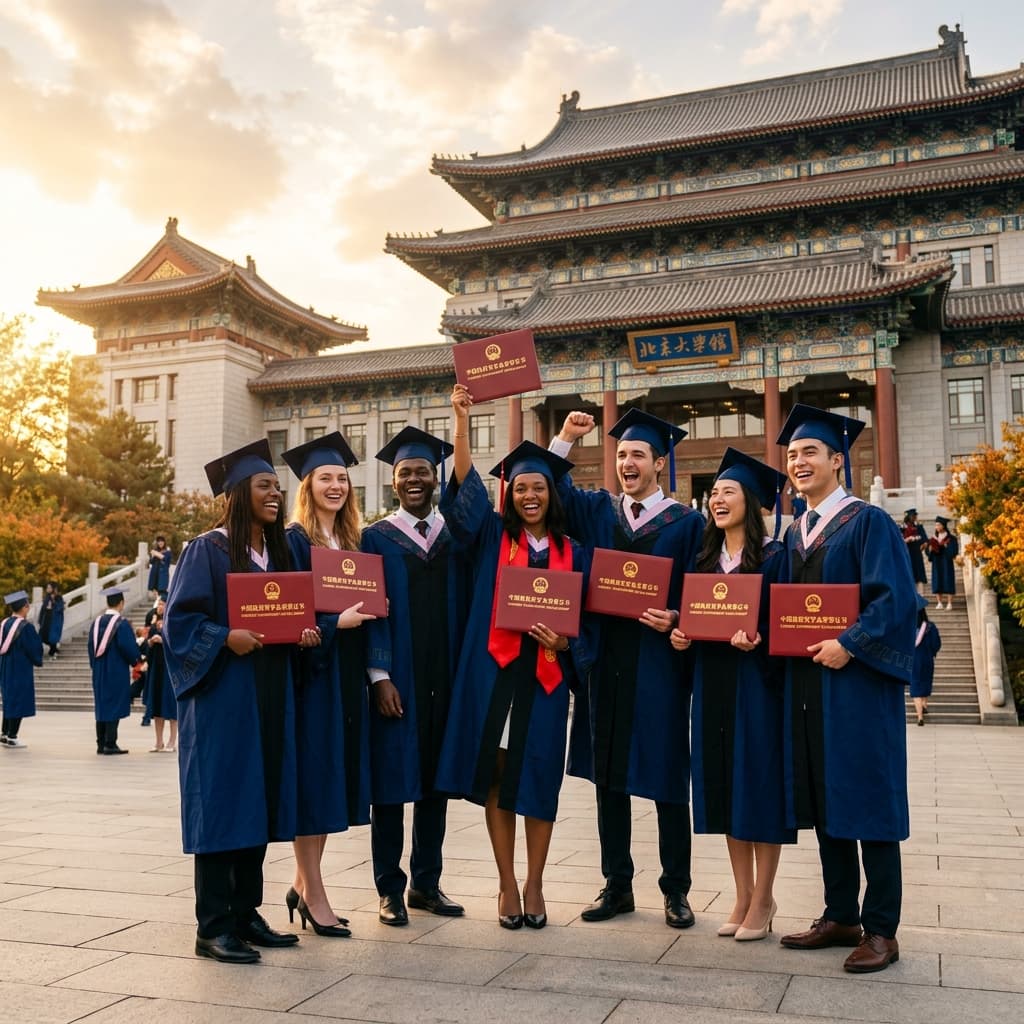
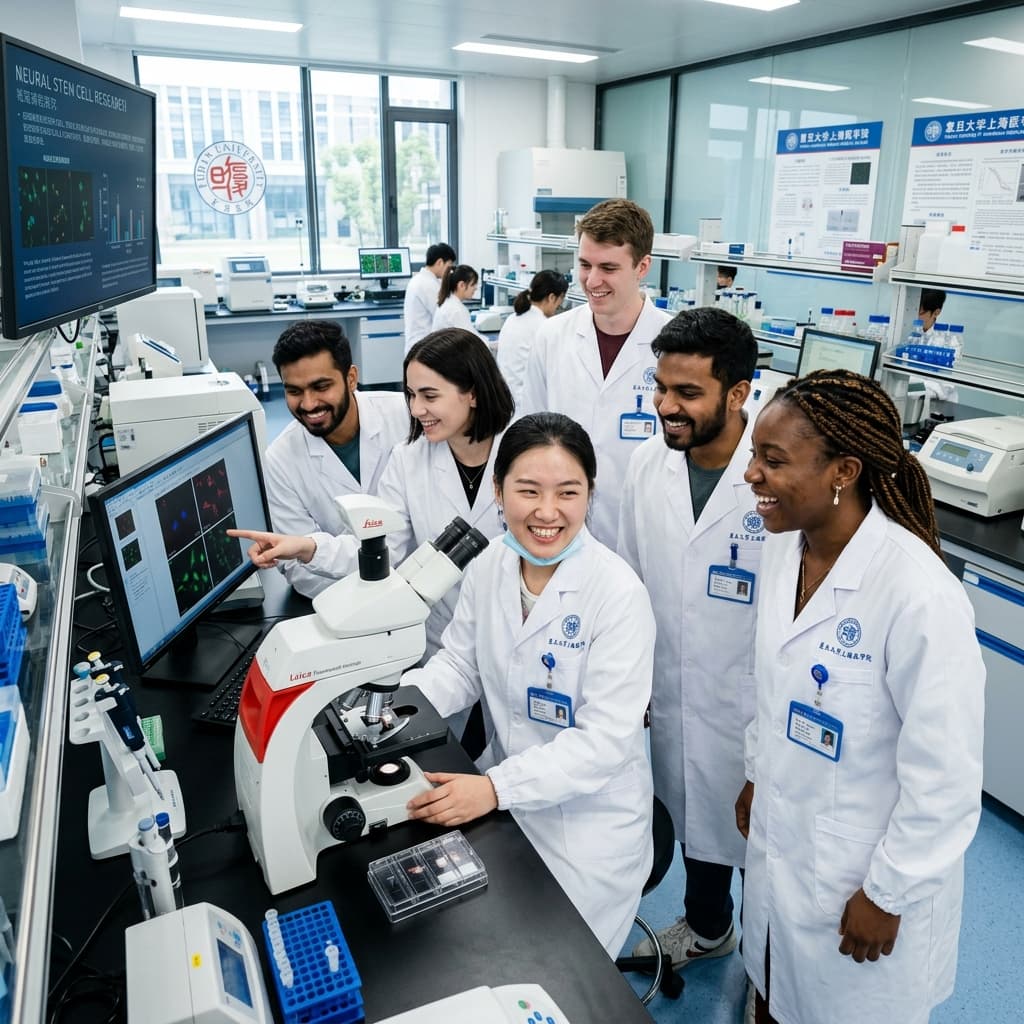
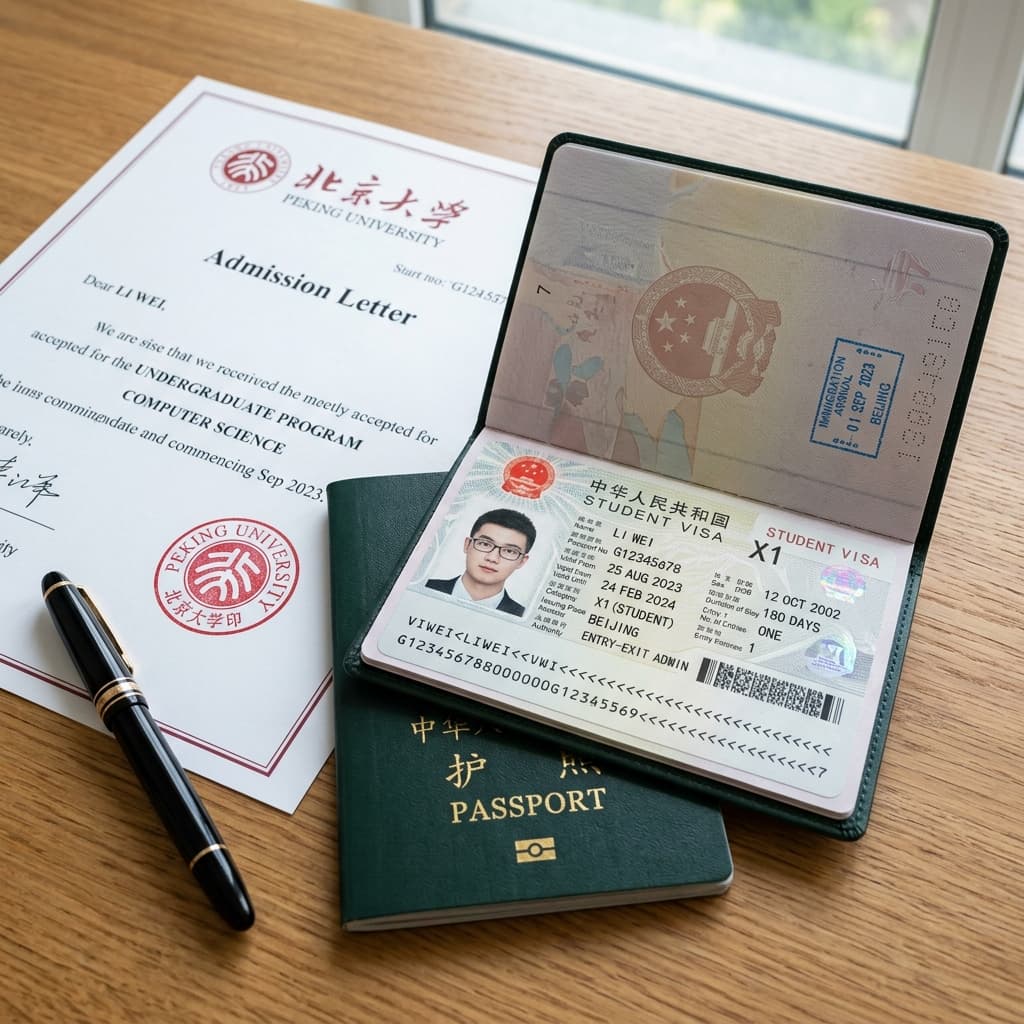
Study Engineering in China 2027: Top English-Taught Programs & Full Scholarships
Choosing to Study Engineering in China for International Students (2027 / 2028 Intake) places you directly at the epicentre of the world's technological and industrial transformation. From artificial intelligence, quantum computing, and autonomous robotics to high-speed rail networks, civil mega-structures, and renewable energy, Chinese technical universities now dominate global STEM subject rankings. With 100% Full Tuition Waivers, free campus dormitory housing, and monthly stipends of 3,000 to 3,500 RMB / month under the Fully Funded CSC Scholarship 2027 / 2028, international scholars can earn Washington Accord-accredited engineering degrees with no IELTS required (EPC accepted) and zero middleman agency charges.
Why China is the Global Engineering Epicenter of the 21st Century
China has transformed from the world's factory floor into the world's premier engineering laboratory. Over the past two decades, China has constructed the world's most extensive high-speed railway grid (over 45,000 km), pioneered 5G/6G telecommunications infrastructure, launched the Beidou satellite navigation constellation, and built the world's largest electric vehicle (EV) manufacturing ecosystem. Key strategic advantages of pursuing your engineering degree in China include:
- Multi-Billion Dollar State Key Laboratories: Chinese engineering faculties house national laboratories equipped with state-of-the-art supercomputing clusters, hypersonic wind tunnels, semiconductor cleanrooms, and robotic fabrication facilities that surpass Western university benchmarks.
- Direct Industry Integration & Paid Internships: Top universities partner directly with tech titans like Huawei, BYD, DJI, Tencent, Alibaba Cloud, Xiaomi, and State Grid Corporation, allowing international students to complete practical capstone projects and industrial internships.
- Unmatched Scholarship Abundance: Engineering is designated as a national strategic priority discipline by China's Ministry of Education, meaning engineering candidates receive over 60% of all fully funded CSC Type B University Quotas and Silk Road Scholarships.
- English-Medium Instruction with Zero Language Barrier: More than 3,500 engineering degree programs are offered entirely in English, featuring international faculty members trained at Cambridge, Stanford, and Oxford.
Washington Accord Accreditation: Global Degree Recognition (USA, UK, Canada, Pakistan)
The single most important question prospective international engineering students ask is: “Will my engineering degree from China be recognized by professional licensing bodies back home?”
The answer is an unequivocal YES. In June 2016, China became a full permanent signatory member of the Washington Accord through the China Engineering Education Accreditation Association (CEEAA) under the China Association for Science and Technology (CAST).
The Washington Accord is the premier international multilateral agreement governing professional engineering degree accreditation. Under this accord, engineering programs accredited by CEEAA are recognized as substantially equivalent to programs accredited by:
- United States: Accreditation Board for Engineering and Technology (ABET).
- United Kingdom: The Engineering Council (EngC).
- Canada: Engineers Canada (Canadian Engineering Accreditation Board - CEAB).
- Australia: Engineers Australia.
- Pakistan: Pakistan Engineering Council (PEC).
- Japan, Singapore, South Africa, and Ireland: Respective national engineering licensing councils.
This means international students graduating with an accredited Bachelor's of Engineering in China can directly sit for the Fundamentals of Engineering (FE) and Professional Engineer (PE) examinations in the US, register as a Chartered Engineer (CEng) in the UK, or obtain immediate professional registration with PEC in Pakistan without having to complete expensive bridge courses or credential evaluations.
Major Engineering Disciplines Taught in English: Comprehensive University Matrix
The following authoritative matrix details the top Chinese engineering disciplines, world rankings, official 5-digit CSC Agency Codes, and affiliated State Key Laboratories:
| Engineering Stream | Top Chinese Universities & Global Subject Rank | Official CSC Agency Code | Degree Levels (100% English) | Key State Laboratories & Industry Partners |
|---|---|---|---|---|
| Computer Science & Artificial Intelligence | Tsinghua (#1 Global) Zhejiang University (#6) SJTU (#11) USTC (#25) |
10003 (Tsinghua)10335 (ZJU)10248 (SJTU)10358 (USTC) |
Bachelor's, Master's & PhD | State Key Lab of Intelligent Technology; Alibaba DAMO Academy; Tencent AI Lab; Baidu Apollo Autonomous Driving |
| Mechanical, Mechatronics & Robotics | Harbin Institute of Tech (#1) Shanghai Jiao Tong (#3) Huazhong Univ of Sci & Tech (#8) BIT (#15) |
10213 (HIT)10248 (SJTU)10487 (HUST)10007 (BIT) |
Bachelor's, Master's & PhD | State Key Lab of Robotics & System; DJI Innovation Drones; SANY Heavy Industry; BYD Autonomous Robotics |
| Civil, Structural & High-Speed Railway | Tongji University (#1 Global) Central South Univ (CSU, #3) Southeast University (#5) Tsinghua University (#7) |
10247 (Tongji)10533 (CSU)10286 (SEU)10003 (Tsinghua) |
Bachelor's, Master's & PhD | National Rail Transit High-Speed Test Track; China State Construction (CSCEC); World Longest Bridge Aerodynamics Lab |
| Electrical, Telecom & Microelectronics | UESTC (#2 Global Telecom) Xidian University (#5) Southeast University (#8) Tsinghua University (#10) |
10614 (UESTC)10701 (Xidian)10286 (SEU)10003 (Tsinghua) |
Bachelor's, Master's & PhD | State Key Lab of Electronic Thin Films; Huawei 5G/6G Wireless Center; State Grid Ultra-High Voltage Lab |
| Aerospace, Aeronautical & Spaceflight | Beihang University (BUAA, #1) Harbin Institute of Tech (#2) Northwestern Polytechnical (NPU, #3) |
10006 (BUAA)10213 (HIT)10699 (NPU) |
Master's & PhD (Select BSc) | National Key Lab of Spaceflight Dynamics; COMAC C919 Commercial Jetliner; CASC Lunar & Mars Rover Projects |
| Chemical, Renewable Energy & Battery Tech | Tianjin University (#3 Global) ECUST Shanghai (#5) Xi'an Jiaotong (XJTU, #9) Dalian Univ of Technology |
10056 (Tianjin)10251 (ECUST)10698 (XJTU)10141 (DUT) |
Bachelor's, Master's & PhD | State Key Lab of Chemical Engineering; CATL Solid-State Lithium Battery Research Center; Sinopec Advanced Lab |
 Central South University (CSU, Changsha): The birthplace of China's high-speed rail dynamic aerodynamics and advanced rail transit engineering.
Top 5 Flagship Engineering Universities in China: Institutional Spotlights
1. Tsinghua University (清华大学) — Beijing (World #1 Engineering)
Ranked #1 globally for Engineering and Computer Science by U.S. News, Tsinghua is China's undisputed engineering beacon. Tsinghua operates the prestigious Schwarzman Scholars Program, the Institute for Interdisciplinary Information Sciences (led by Turing Award winner Andrew Yao), and the State Key Laboratory of Intelligent Technology and Systems. Graduate engineering applicants must possess top-tier GPA scores, published research papers, and strong faculty recommendations.
2. Harbin Institute of Technology (HIT, 哈尔滨工业大学) — Harbin & Shenzhen
Ranked #5 globally in engineering, HIT is renowned as “The Cradle of Chinese Engineers.” HIT was the first Chinese university to design, build, and launch its own satellite into lunar orbit. HIT boasts premier laboratories in spaceflight robotics, precision machinery, advanced welding, and autonomous vehicles. Crucially for international students, HIT possesses one of China's largest departmental allocations for CSC Type B scholarships, resulting in high scholarship acceptance rates for qualified candidates.
3. Shanghai Jiao Tong University (SJTU, 上海交通大学) — Shanghai
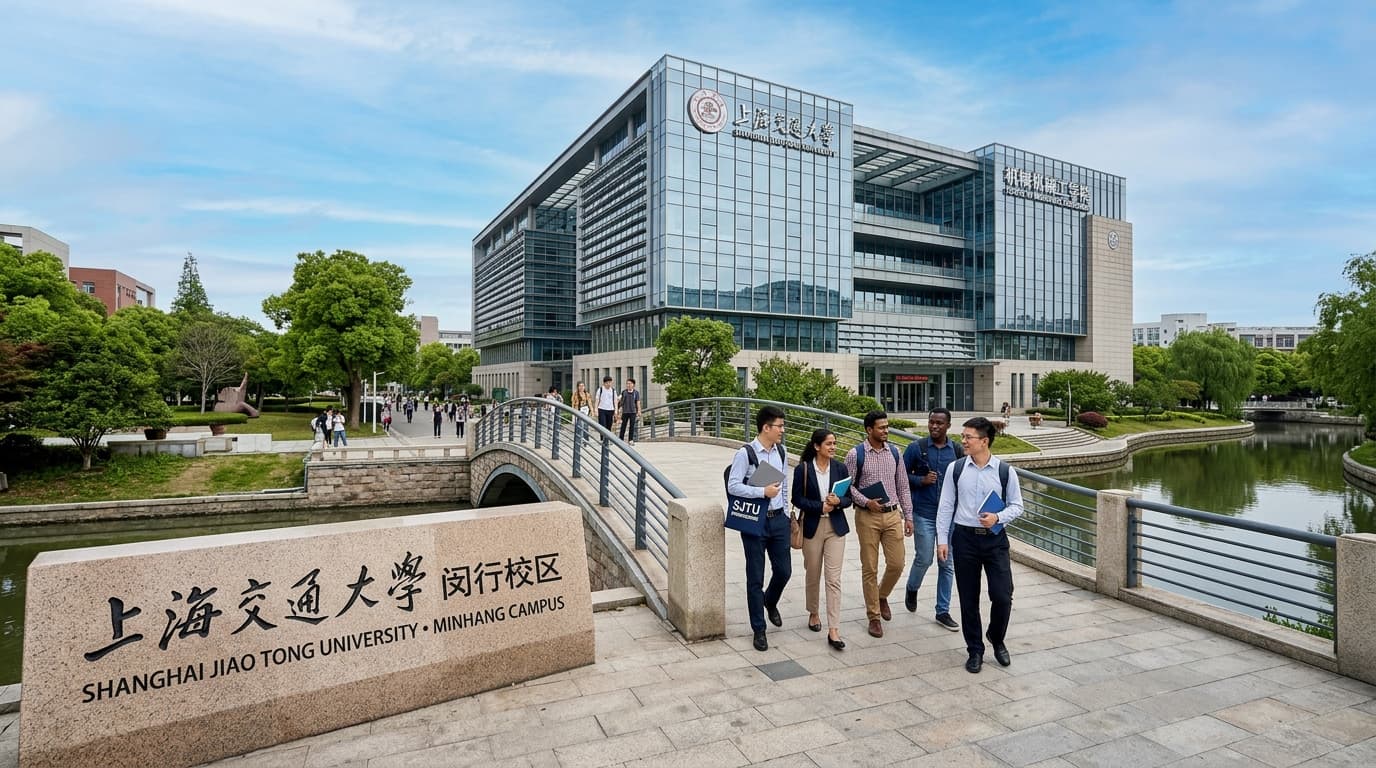
Located in China's financial and commercial capital, SJTU is world-famous for Naval Architecture, Ocean Engineering, Robotics, and Advanced Manufacturing. Its sprawling Minhang campus houses deep-sea ocean engineering basins, medical robotics laboratories, and world-class cleanrooms. SJTU maintains extensive double-degree partnerships with premier engineering schools in France, Germany, and the United States.
4. Huazhong University of Science and Technology (HUST, 华中科技大学) — Wuhan
Often termed “China's Silicon Valley University,” HUST is located next to Wuhan's Optics Valley high-tech corridor. HUST hosts the Wuhan National Laboratory for Optoelectronics (WNLO) and the Pulsed High Magnetic Field Facility. It is China's premier hub for laser engineering, optical communications, mechanical design, and power systems engineering.
5. Beijing Institute of Technology (BIT, 北京理工大学) — Beijing
BIT is an elite Double First-Class university specializing in autonomous vehicle dynamics, mechatronics, intelligent weapon systems, and computer vision. BIT offers a welcoming international environment with numerous fully English-taught Bachelor's and Master's programs in Computer Science, Mechanical Engineering, and Aerospace Engineering supported by generous BIT Presidential Scholarships.
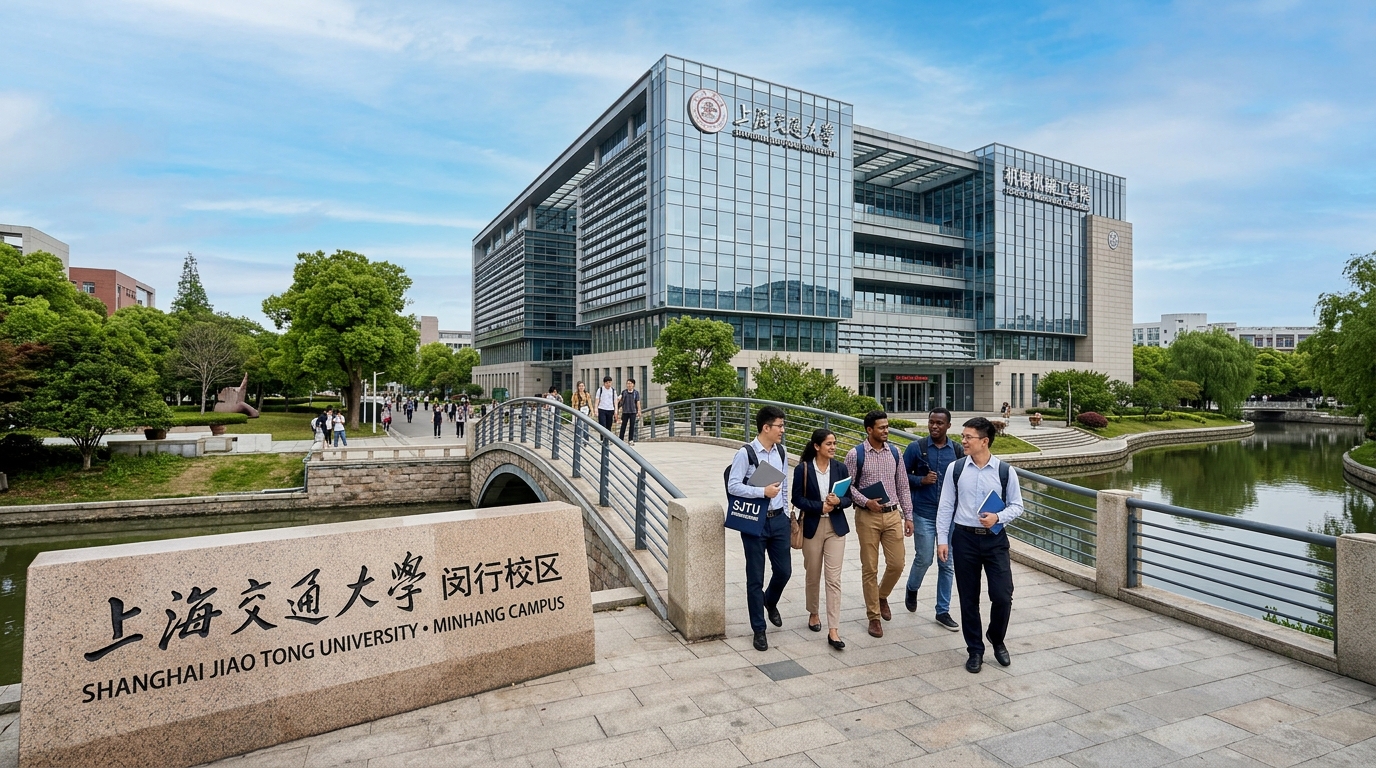 Shanghai Jiao Tong University (SJTU): Combining advanced robotics and naval engineering with Shanghai's international technology ecosystem.
Full Scholarships Specifically Available for International Engineering Scholars
Because engineering talent directly fuels China's Belt and Road infrastructure initiatives, engineering students have access to the most generous funding streams available in international higher education:
- Chinese Government Scholarship (CSC Type B - University Program): Administered via
studyinchina.csc.edu.cn. Provides 100% full tuition waiver, free on-campus university dormitory accommodation, comprehensive health insurance, and monthly stipends:- Bachelor's Engineering Scholars: 2,500 RMB / Month (~PKR 100,000 / month)
- Master's Engineering Scholars: 3,000 RMB / Month (~PKR 120,000 / month)
- Doctoral (PhD) Research Scholars: 3,500 RMB / Month (~PKR 140,000 / month)
- Silk Road Belt & Road Engineering Scholarship: Dedicated funding for students from Belt and Road partner countries (Pakistan, Kazakhstan, Indonesia, Egypt, Nigeria, Malaysia, etc.) pursuing degrees in High-Speed Rail, Civil Infrastructure, Energy & Power, and Artificial Intelligence.
- Provincial Government Engineering Grants: High-value regional scholarships including the Jiangsu Jasmine Scholarship (Southeast University, Nanjing University of Science & Technology) and Zhejiang Provincial Scholarship (Zhejiang University).
- University Presidential & Enterprise Fellowships: Direct university grants like the HIT International Scholarship and BIT Presidential Fellowship that offer full tuition waivers and monthly stipends without requiring embassy nomination.
Admission Prerequisites, STEM Benchmarks & No IELTS (EPC Letter) Regulations
Securing admission and full scholarship funding at a top Chinese engineering university requires meeting clear academic thresholds:
- Strong Foundations in Mathematics and Physics: Transcripts are heavily scrutinized for performance in Calculus, Differential Equations, Linear Algebra, and General Physics. A minimum score of 70% to 75% in these subjects is required for competitive consideration.
- Undergraduate CSCA Exam (Bachelor's Applicants): Under new Ministry of Education guidelines, international applicants applying for undergraduate engineering degrees must complete the CSCA Exam (China Scholastic Competency Assessment) in Mathematics and Physics.
- No IELTS Required (English Proficiency Certificate - EPC): Over 95% of Chinese engineering universities officially accept an English Proficiency Certificate (EPC) issued by your previous university or college verifying that your degree was conducted in English. Costly IELTS or TOEFL exams are not required.
- Supervisor Acceptance Letter (Master's and PhD): Securing an official supervisor acceptance letter from a research professor before submitting your CSC portal dossier increases your scholarship award probability to over 85%. Use our proven Acceptance Letter Email Templates to contact professors between October and January.
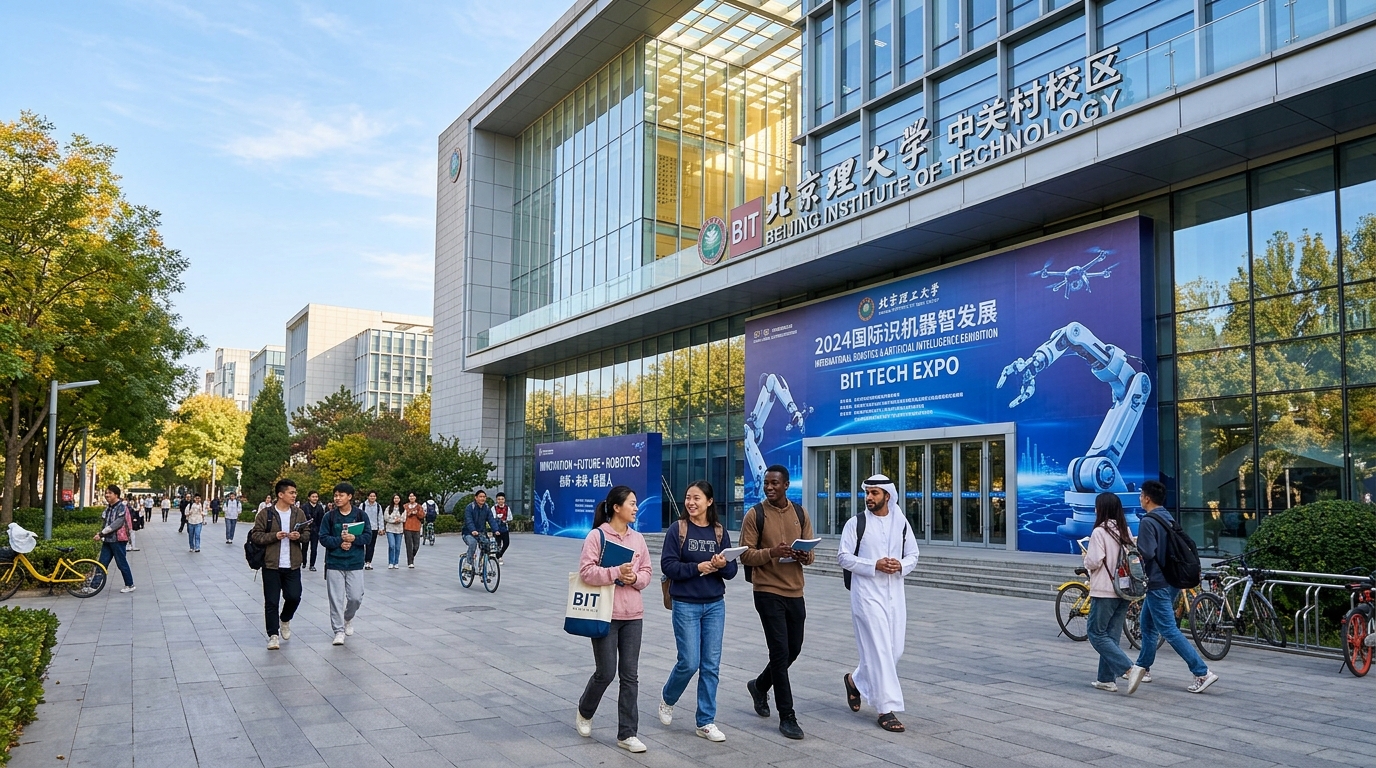 Beijing Institute of Technology (BIT): Elite research center for autonomous vehicle engineering, mechatronics, and artificial intelligence.
Direct Career Gateways: Fortune 500 Tech Giants & Belt and Road Projects
Graduating with an accredited engineering degree from a Chinese university positions you at the top of the international employment pyramid. Chinese engineering graduates possess fluency in cutting-edge industrial workflows and bilingual cultural competence that global employers desperately seek:
- Multinational Tech Giants: International alumni are recruited by tech conglomerates including Huawei, Tencent, Alibaba Cloud, Xiaomi, Lenovo, and ZTE for engineering and project management roles across Asia, Europe, the Middle East, and Africa.
- Electric Vehicles & Clean Energy: Global clean tech powerhouses like BYD (the world's #1 electric vehicle maker), CATL (the world's largest EV battery manufacturer), and Goldwind routinely hire international engineers for global expansion.
- International Infrastructure & Mega-Projects: State-owned engineering enterprises such as China State Construction Engineering (CSCEC), CRRC Corporation (High-Speed Trains), and PowerChina hire international graduates for multi-billion-dollar infrastructure developments across the globe.
- Post-Study Work & Residency Permits: China permits international STEM graduates from Double First-Class universities to obtain a 2-year Entrepreneurship/Internship Residence Permit or transition directly to an official Foreign Expert Work Permit (Z-Visa) upon securing enterprise employment.
⚠️ Critical Engineering Application Pitfalls to Avoid
1. Neglecting to Verify 100% English Instruction: Always verify on the university's official international student admissions portal that your engineering curriculum is cataloged as 100% English medium. Some universities offer “bilingual” tracks that require HSK 4 Mandarin for technical subjects.
2. Applying Without a Supervisor for Postgraduate Degrees: Applying for a Master's or PhD in engineering without first obtaining a professor's acceptance letter drastically lowers your chances of winning a CSC Type B scholarship.
3. Missing the 2-Stamp Physical Examination Protocol: Your medical checkup must feature the official hospital seal stamped across your photograph on Page 1 and the final doctor's stamp on Page 2 using our official Foreigner Physical Examination Form Guide.
Ready to Target Top Chinese Engineering Universities?
Our admissions desk evaluates your STEM background, matches you with Washington Accord-accredited faculties, and assists with professor outreach with 100% free guidance.
Frequently Asked Questions About Engineering Programs in China
Which university in China is best for studying engineering?
Tsinghua University in Beijing is ranked #1 globally for Engineering and Computer Science by U.S. News Best Global Universities, outranking institutions like MIT and Stanford. Other premier engineering powerhouses include Harbin Institute of Technology (HIT, ranked #5 globally for engineering), Shanghai Jiao Tong University (SJTU), Zhejiang University, and Huazhong University of Science and Technology (HUST).
Are Chinese engineering degrees recognized in the USA, UK, Canada, and Pakistan under the Washington Accord?
Yes. China is a full permanent signatory member of the Washington Accord through the China Engineering Education Accreditation Association (CEEAA). Under this multilateral treaty, engineering degrees earned from accredited Chinese universities are formally recognized as academically equivalent to ABET-accredited degrees in the United States, Engineering Council degrees in the UK, Engineers Canada degrees, and Pakistan Engineering Council (PEC) accredited programs, allowing graduates to register as professional engineers worldwide.
Can I study Computer Science or Engineering in China without IELTS?
Yes! Over 95% of top Chinese engineering universities accept an official English Proficiency Certificate (EPC) issued by your previous degree-granting institution if your prior medium of instruction was English. Standardized IELTS (6.0+) or TOEFL is only required for a tiny handful of hyper-competitive programs at Tsinghua and Peking University.
What full scholarships are available for international engineering students in China?
International engineering scholars enjoy China's highest funding allocations. The primary full awards include the Chinese Government Scholarship (CSC Type B - 100% tuition, free housing, and monthly living stipends of 2,500 to 3,500 RMB/month), the Silk Road Belt & Road Scholarship, Provincial Government Scholarships (such as Jiangsu Jasmine and Zhejiang Provincial), and University Presidential Fellowships (such as HIT and BIT international grants).
What are the minimum academic GPA and high school/undergraduate prerequisites for engineering admissions?
For Bachelor's engineering programs, applicants must hold a recognized high school diploma with minimum grades of 70% to 75% in core STEM disciplines (Advanced Mathematics, Calculus, and Physics/Chemistry). For Master's and PhD programs, applicants must hold a relevant Bachelor's or Master's degree in engineering or computing with a minimum CGPA of 3.0/4.0 (or 75%+).
Which Chinese universities offer the highest acceptance rate for engineering scholarships?
Harbin Institute of Technology (HIT, CSC Agency Code 10213), Xi'an Jiaotong University (XJTU, Agency Code 10698), Huazhong University of Science and Technology (HUST, Agency Code 10487), and Central South University (CSU, Agency Code 10533) offer the highest scholarship selection probabilities. These institutions maintain massive international STEM quotas and professors respond favorably to supervisor cold emails.
How does the Washington Accord help me register as a Professional Engineer (PE / Engr) back home?
Because CEEAA-accredited engineering programs meet the international benchmark standards of the Washington Accord, your degree is treated as substantially equivalent to domestic accredited engineering degrees. Licensing boards (such as the National Council of Examiners for Engineering and Surveying NCEES in the USA, the Engineering Council in the UK, or the Pakistan Engineering Council PEC) waive supplementary equivalency coursework, allowing you to take the licensing exam directly.
What are the career and post-study employment prospects for engineering graduates in China?
Graduates possess high international employability across Fortune Global 500 multinationals operating in China and abroad, including Huawei, BYD, DJI, Tencent, Xiaomi, State Grid Corporation, and China State Construction (CSCEC). International graduates can also apply for China's post-study 2-year Entrepreneurship/Internship Residence Permit or work visas (Z-Visa) with enterprise sponsorship.
❓ Frequently Asked Questions
Q1:Which university in China is best for studying engineering?
Tsinghua University in Beijing is ranked #1 globally for Engineering and Computer Science by U.S. News Best Global Universities, outranking institutions like MIT and Stanford. Other premier engineering powerhouses include Harbin Institute of Technology (HIT, ranked #5 globally for engineering), Shanghai Jiao Tong University (SJTU), Zhejiang University, and Huazhong University of Science and Technology (HUST).
Q2:Are Chinese engineering degrees recognized in the USA, UK, Canada, and Pakistan under the Washington Accord?
Yes. China is a full permanent signatory member of the Washington Accord through the China Engineering Education Accreditation Association (CEEAA). Under this multilateral treaty, engineering degrees earned from accredited Chinese universities are formally recognized as academically equivalent to ABET-accredited degrees in the United States, Engineering Council degrees in the UK, Engineers Canada degrees, and Pakistan Engineering Council (PEC) accredited programs, allowing graduates to register as professional engineers worldwide.
Q3:Can I study Computer Science or Engineering in China without IELTS?
Yes! Over 95% of top Chinese engineering universities accept an official English Proficiency Certificate (EPC) issued by your previous degree-granting institution if your prior medium of instruction was English. Standardized IELTS (6.0+) or TOEFL is only required for a tiny handful of hyper-competitive programs at Tsinghua and Peking University.
Q4:What full scholarships are available for international engineering students in China?
International engineering scholars enjoy China's highest funding allocations. The primary full awards include the Chinese Government Scholarship (CSC Type B - 100% tuition, free housing, and monthly living stipends of 2,500 to 3,500 RMB/month), the Silk Road Belt & Road Scholarship, Provincial Government Scholarships (such as Jiangsu Jasmine and Zhejiang Provincial), and University Presidential Fellowships (such as HIT and BIT international grants).
Q5:What are the minimum academic GPA and high school/undergraduate prerequisites for engineering admissions?
For Bachelor's engineering programs, applicants must hold a recognized high school diploma with minimum grades of 70% to 75% in core STEM disciplines (Advanced Mathematics, Calculus, and Physics/Chemistry). For Master's and PhD programs, applicants must hold a relevant Bachelor's or Master's degree in engineering or computing with a minimum CGPA of 3.0/4.0 (or 75%+).
Q6:Which Chinese universities offer the highest acceptance rate for engineering scholarships?
Harbin Institute of Technology (HIT, CSC Agency Code 10213), Xi'an Jiaotong University (XJTU, Agency Code 10698), Huazhong University of Science and Technology (HUST, Agency Code 10487), and Central South University (CSU, Agency Code 10533) offer the highest scholarship selection probabilities. These institutions maintain massive international STEM quotas and professors respond favorably to supervisor cold emails.
Q7:How does the Washington Accord help me register as a Professional Engineer (PE / Engr) back home?
Because CEEAA-accredited engineering programs meet the international benchmark standards of the Washington Accord, your degree is treated as substantially equivalent to domestic accredited engineering degrees. Licensing boards (such as the National Council of Examiners for Engineering and Surveying NCEES in the USA, the Engineering Council in the UK, or the Pakistan Engineering Council PEC) waive supplementary equivalency coursework, allowing you to take the licensing exam directly.
Q8:What are the career and post-study employment prospects for engineering graduates in China?
Graduates possess high international employability across Fortune Global 500 multinationals operating in China and abroad, including Huawei, BYD, DJI, Tencent, Xiaomi, State Grid Corporation, and China State Construction (CSCEC). International graduates can also apply for China's post-study 2-year Entrepreneurship/Internship Residence Permit or work visas (Z-Visa) with enterprise sponsorship.
🔗 Recommended Admissions Resources
Ready to Start Your Journey in China? 🎓
Our expert admission consultants guide you through document notarization, study plan writing, and scholarship submission — 100% Free guidance!
Never Miss a Deadline: Join our Official WhatsApp Channel!
Get real-time alerts for open university agency codes, CSC Type B direct quotas, professor acceptance letters, and interview testing dates directly on your phone.